
Bitcoin and other major cryptocurrencies started the week on a weaker note, retreating from the record highs reached just days ago. The move reflects a mix of shifting macroeconomic expectations and new policy signals out of Washington — two forces investors can’t afford to ignore.
Bitcoin’s Retreat From $124,000
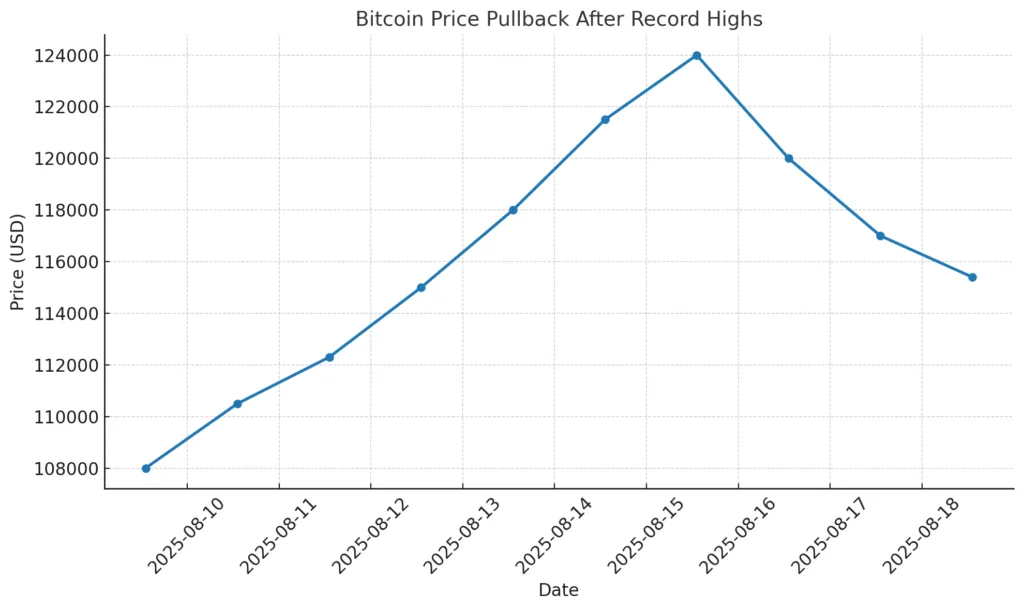
Bitcoin was trading around $115,400 on Monday morning, down roughly 2.5% over the past 24 hours. This marks a notable pullback from last week, when the world’s largest cryptocurrency surged above $124,000, a new all-time high.
The rally was fueled by optimism that the Federal Reserve might soon cut interest rates. Lower borrowing costs typically support speculative assets like cryptocurrencies and growth stocks, as they reduce the appeal of bonds and strengthen demand for riskier alternatives. A weaker dollar also tends to boost crypto valuations.
But the optimism proved short-lived. Recent U.S. wholesale price data suggested inflationary pressures may not be cooling fast enough to justify aggressive rate cuts. That report, paired with fresh comments from Treasury Secretary Scott Bessent that the U.S. government does not plan to add to its Bitcoin reserve, gave traders reason to hit pause.
Altcoins Follow Bitcoin Lower
The weakness wasn’t limited to Bitcoin. A wave of selling swept across the broader digital asset market:
- Ethereum (ETH) dropped 5.7%
- XRP (XRP) slid 5.3%
- Solana (SOL) sank 6.2%
- Dogecoin (DOGE) lost 5.6%
This broad-based decline underscores how dependent crypto markets remain on macroeconomic narratives and liquidity conditions. While Bitcoin tends to lead the pack, altcoins often move in exaggerated fashion.
Why This Matters for Investors
The current volatility doesn’t mean the structural story for crypto has changed. According to Antonio Di Giacomo, a markets analyst at XS, “Bitcoin’s recent pullback after reaching an all-time high highlights the significant impact of macroeconomic indicators on the cryptocurrency market. Short-term volatility contrasts with a backdrop of rising institutional adoption and increasingly sophisticated corporate strategies.”
In other words, the near-term noise is colliding with longer-term momentum. Institutional investors — from asset managers to publicly traded companies — are still expanding their crypto exposure. Corporate treasuries, ETFs, and reserves are all part of a trend that didn’t exist just five years ago.
For investors, this creates two key takeaways:
- Expect volatility around Fed commentary. Events like the upcoming Jackson Hole Symposium, where Fed Chair Jerome Powell will speak, could move markets sharply. The release of the Fed’s meeting minutes will also provide clues.
- Separate short-term moves from long-term adoption. Corrections in crypto are not new, and often present entry points for investors who believe institutional adoption and broader digital asset integration will continue.
Fed Policy Still in the Driver’s Seat
The crypto market has become more tethered to global monetary policy than ever before. The Jackson Hole Symposium and the Fed minutes are the week’s two biggest catalysts. Traders will be dissecting Powell’s language for any hints of dovishness — or hawkishness.
If the Fed signals rate cuts are still on the table this year, digital assets could rally again. If instead the central bank stresses caution on inflation, Bitcoin and its peers may face more downside pressure.
Investor Takeaway
For long-term investors, the lesson is clear: macroeconomic headlines will continue to drive short-term volatility, but the strategic adoption of crypto assets by institutions remains a bullish signal. The near-term pullback may be unnerving, but corrections are part of the crypto cycle.
Investors should focus on:
- Risk management: Position sizing and diversification matter more than ever in volatile markets.
- Policy tracking: Keep a close watch on Fed communications — they’re moving Bitcoin almost as much as ETFs and adoption news.
- Opportunistic entries: Pullbacks can be opportunities, provided investors understand their time horizon.
Crypto’s trajectory is no longer just about retail enthusiasm — it’s increasingly shaped by the same macro forces that drive equities, bonds, and commodities. This integration makes digital assets both riskier and more relevant to the broader portfolio conversation.
About Author