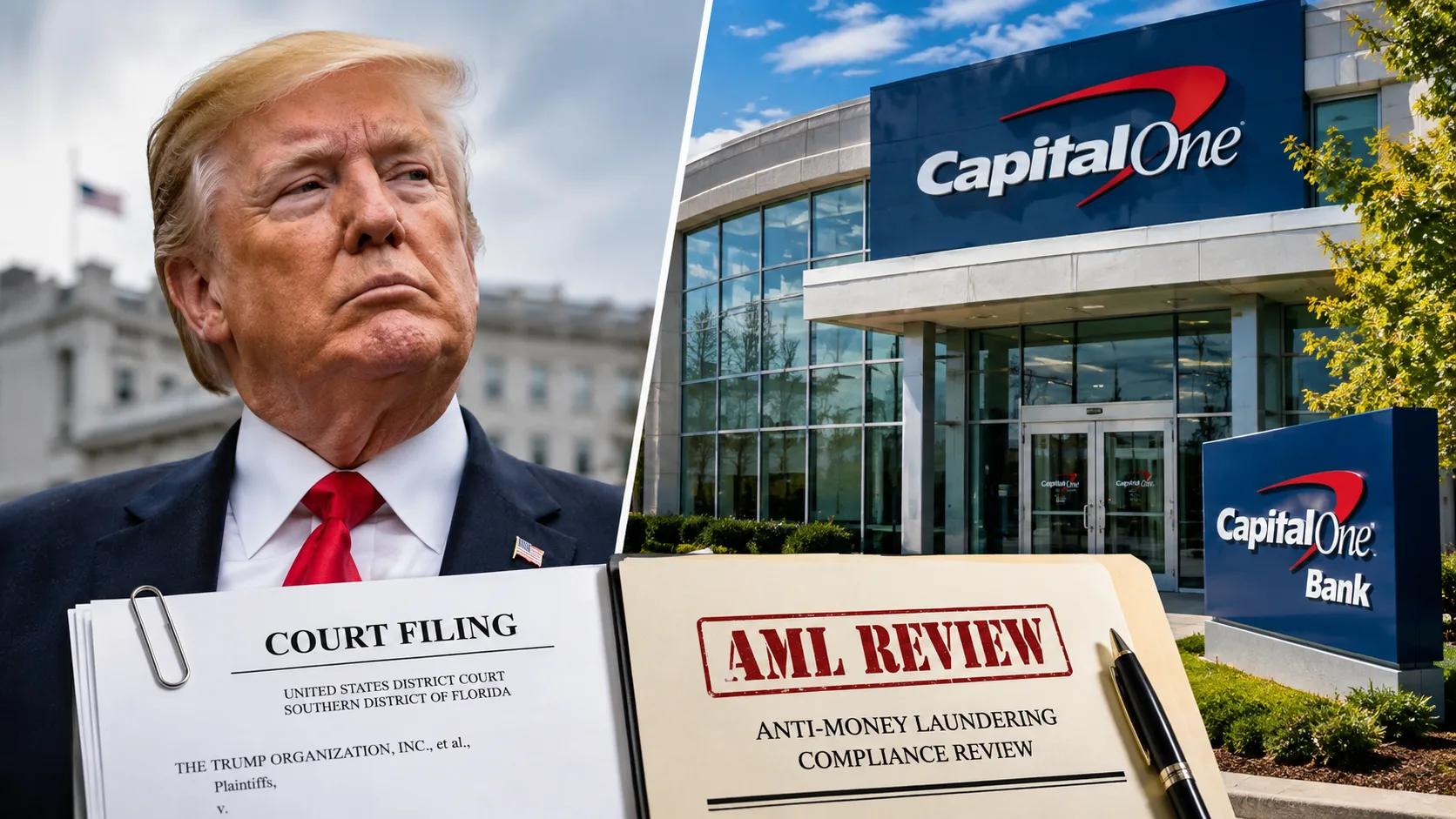
In a new court filing, Capital One says it closed more than 300 Trump Organization accounts following a months-long anti-money laundering (AML) review, not because of Donald Trump’s political views.
The filing marks the first time the bank has publicly detailed why it ended its relationship with the Trump Organization, setting up a high-profile legal battle over whether the move was driven by compliance concerns or political bias.
A Different Story Emerges
The dispute stems from a lawsuit filed by the Trump Organization and Eric Trump, who claim Capital One “debanked” the company in the aftermath of the January 6, 2021 Capitol riot because of Donald Trump’s political beliefs.
Capital One is now asking the court to dismiss that lawsuit.
According to the bank’s filing, the decision to close the accounts came only after its anti-money laundering compliance team spent months reviewing the relationship. The bank says the closures were made under its internal risk management policies and federal banking guidance.
The filing states that the review identified activity that warranted ending the banking relationship under the bank’s compliance framework.
What Capital One Is — And Isn’t — Saying
The distinction is important.
Capital One is not accusing Donald Trump or the Trump Organization of money laundering or any criminal wrongdoing.
Banks routinely conduct anti-money laundering reviews as part of federal regulatory requirements. Those reviews can lead institutions to end customer relationships if they determine the risk no longer fits the bank’s policies, even without alleging illegal conduct.
In other words, an AML review is not the same thing as accusing a customer of committing a crime.
That nuance has become one of the central issues in the lawsuit.
The Trump Organization Disagrees
The Trump Organization continues to argue that the account closures were politically motivated.
Its lawsuit alleges Capital One terminated more than 300 business accounts because of Donald Trump’s political positions following the events of January 6.
The lawsuit seeks damages while arguing the company was unfairly targeted by one of the nation’s largest banks.
Capital One denies those allegations and says politics had nothing to do with its decision.
Why Investors Should Pay Attention
The case comes as “debanking” has become a major political and regulatory issue.
Lawmakers from both parties have increasingly questioned whether banks should be allowed to terminate customer relationships based on reputational, political, or regulatory concerns.
If the Trump Organization ultimately succeeds in court, it could reshape how banks document and justify account closures.
If Capital One prevails, it could reinforce banks’ broad discretion to end customer relationships based on internal compliance and risk-management policies.
Either outcome could have significant implications for financial institutions, corporate banking clients, and future banking regulations.
What Happens Next
The court will now determine whether the Trump Organization’s lawsuit can move forward or should be dismissed based on Capital One’s latest filing.
For now, both sides remain firmly at odds.
The Trump Organization says it was the victim of politically motivated “debanking.”
Capital One says the decision resulted from a routine but lengthy anti-money laundering compliance review.
The legal fight is just beginning, and its outcome could become one of the most closely watched banking cases in the country.
What This Means
Regardless of how the case is ultimately resolved, Capital One’s filing shifts the conversation.
Until now, the public narrative largely centered on allegations of political discrimination. The bank has now put a specific compliance rationale on the record, while stopping short of alleging any criminal misconduct by the Trump Organization.
Whether the court accepts that explanation could influence not only this lawsuit but also how banks, regulators, and businesses approach politically sensitive account closures in the years ahead.
About Author