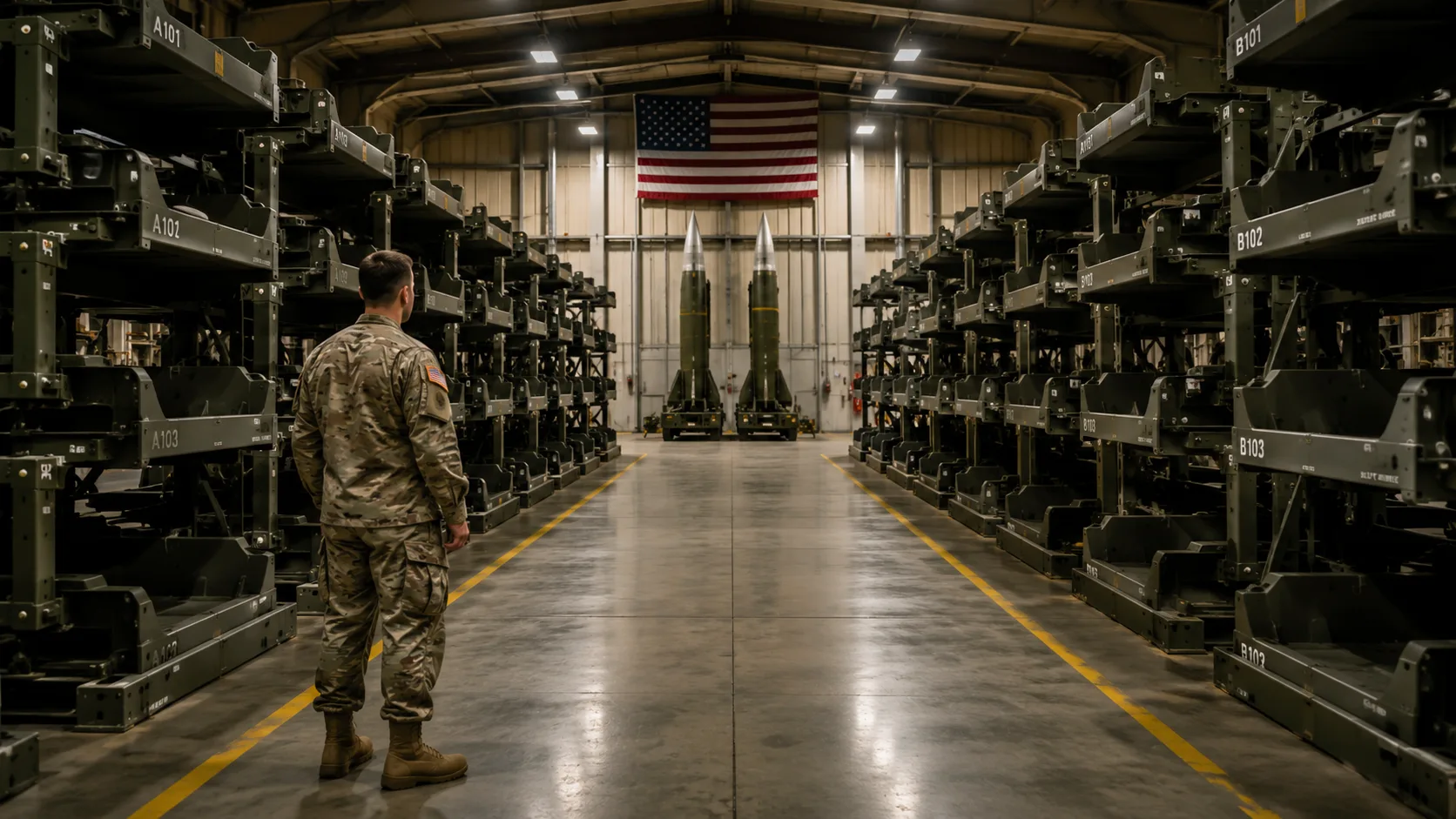
The U.S. military has reportedly burned through nearly its entire stockpile of some of its most advanced long-range precision missiles during the five-month war with Iran, raising fresh questions about America’s ability to respond to another major conflict.
According to a Reuters report citing multiple people familiar with internal U.S. military data, the Army has used “virtually all” of its inventory of Army Tactical Missile Systems (ATACMS) and the newer Precision Strike Missile (PrSM), two of the military’s most important long-range land-based strike weapons.
The revelation comes as the conflict with Iran continues well beyond the short campaign President Donald Trump initially predicted, fueling concerns inside the Pentagon about military readiness.
Long-Range Missile Stockpiles Reportedly Running Low
Reuters reported that ATACMS and PrSM inventories have been heavily depleted after months of strikes against Iranian military targets.
These precision-guided missiles allow U.S. forces to destroy high-value targets from long distances while keeping pilots and aircraft out of harm’s way.
Military analysts have long viewed these weapons as critical not only for Middle East operations but also for any potential conflict involving China or Russia.
The newer PrSM is intended to replace the aging ATACMS fleet, offering greater range and improved capabilities. However, production is still ramping up, meaning existing inventories were relatively small before the Iran war began.
The sources declined to disclose exactly how many missiles remain.
Officials Say Global Supplies Are Being Reallocated
One source told Reuters that U.S. Central Command has largely exhausted the long-range missiles it had available when the war began.
To sustain operations, the military has reportedly transferred weapons from stockpiles positioned elsewhere around the world.
The report says internal discussions have intensified over whether continued strikes against Iran could reduce inventories to levels that weaken America’s ability to respond to crises in other regions.
Trump Pushes Back on Supply Concerns
The White House dismissed suggestions that the U.S. military is running short.
President Trump said the United States possesses “far more munitions than anyone in the world” and insisted defense manufacturers are expanding production at record levels.
“Our defense companies are, at this moment, making more munitions than they have ever made before,” Trump said.
Pentagon spokesman Sean Parnell echoed that message, stating that America’s military remains fully capable of executing operations anywhere the president directs.
Analysts Warn Production Still May Not Be Enough
Defense analysts generally agree that U.S. weapons manufacturers have significantly increased production of missiles, artillery shells, and other precision-guided munitions.
However, they caution that replenishing inventories consumed during months of high-intensity combat will likely take years, not months.
ATACMS and PrSM missiles each cost more than $1 million per round, making rapid replacement expensive and time-consuming.
Lockheed Martin manufactures both ATACMS and PrSM, while Raytheon produces Tomahawk cruise missiles and Patriot air defense interceptors.
Neither company commented on reported stockpile levels.
Defensive Missile Inventories Have Also Declined
The Reuters report also points to growing pressure on America’s defensive missile systems.
According to a recent analysis from the Center for Strategic and International Studies (CSIS):
- Roughly 65% of Patriot interceptor missiles have been expended since the war began.
- THAAD interceptor inventories are estimated to be 38% lower than at the start of the conflict.
- The U.S. has also reportedly used nearly half of its global Tomahawk cruise missile inventory, although Reuters said it could not independently verify that figure.
Two Reuters sources said the Patriot and THAAD estimates closely matched internal government data.
Why These Missiles Matter
The depletion of precision-guided munitions extends beyond the Iran conflict.
ATACMS, PrSM, Tomahawk cruise missiles, Patriot interceptors, and THAAD systems form the backbone of America’s ability to strike heavily defended targets while protecting U.S. forces from incoming missile attacks.
Military planners have repeatedly identified these weapons as essential in any potential conflict with China over Taiwan or in a broader confrontation with Russia.
Some officials reportedly favored using long-range missiles instead of manned aircraft during strikes against Iran to reduce risks to American pilots, a decision that accelerated the drawdown of inventories.
Debate Grows Over Continued Military Operations
The prolonged campaign has also renewed debate in Washington over presidential war powers.
According to Reuters, Congress has not voted on either a declaration of war or an Authorization for Use of Military Force (AUMF) covering the conflict with Iran, despite months of sustained U.S. military operations.
Reports last week suggested President Trump opted against launching another major offensive after military advisers warned about shrinking weapons inventories, although one U.S. official disputed that characterization, saying diplomatic pressure from Gulf allies influenced the decision instead.
The Bigger Picture
The Reuters report highlights the enormous logistical demands of modern warfare. Even the world’s largest military can consume years’ worth of precision-guided munitions during a prolonged conflict.
While the White House insists America’s arsenal remains more than sufficient, reports that key missile stockpiles have been significantly depleted are likely to intensify scrutiny of U.S. defense production capacity and military readiness as geopolitical tensions remain elevated around the world.
About Author