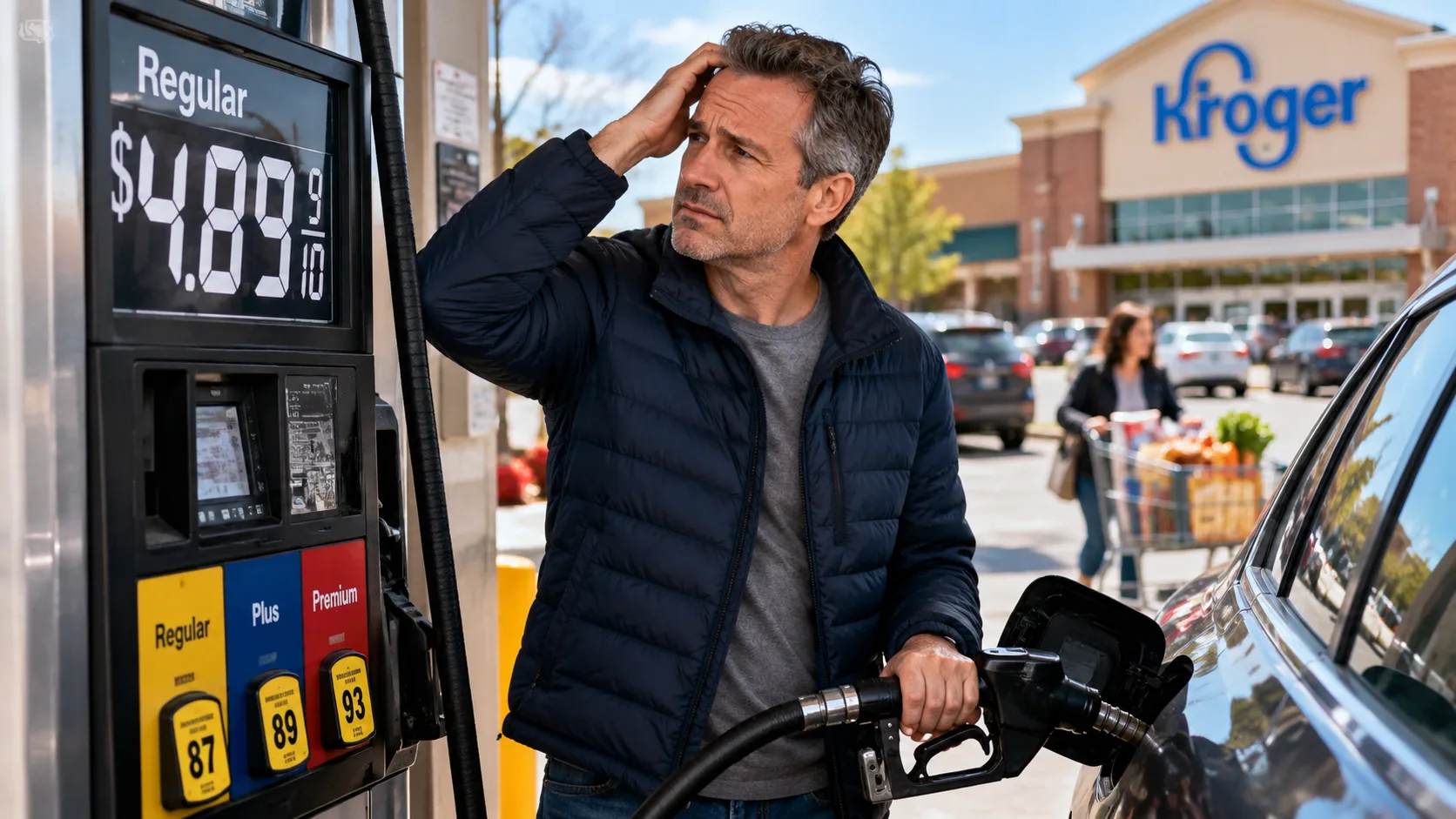
For years, Amazon set the standard for convenience. Prime’s free two-day shipping fundamentally changed what Americans expected from online shopping, eventually forcing nearly every major retailer to rethink how quickly it could get products to customers.
Now Costco is making an aggressive push into territory once dominated by Amazon, and in one important category, the warehouse giant is already moving considerably faster.
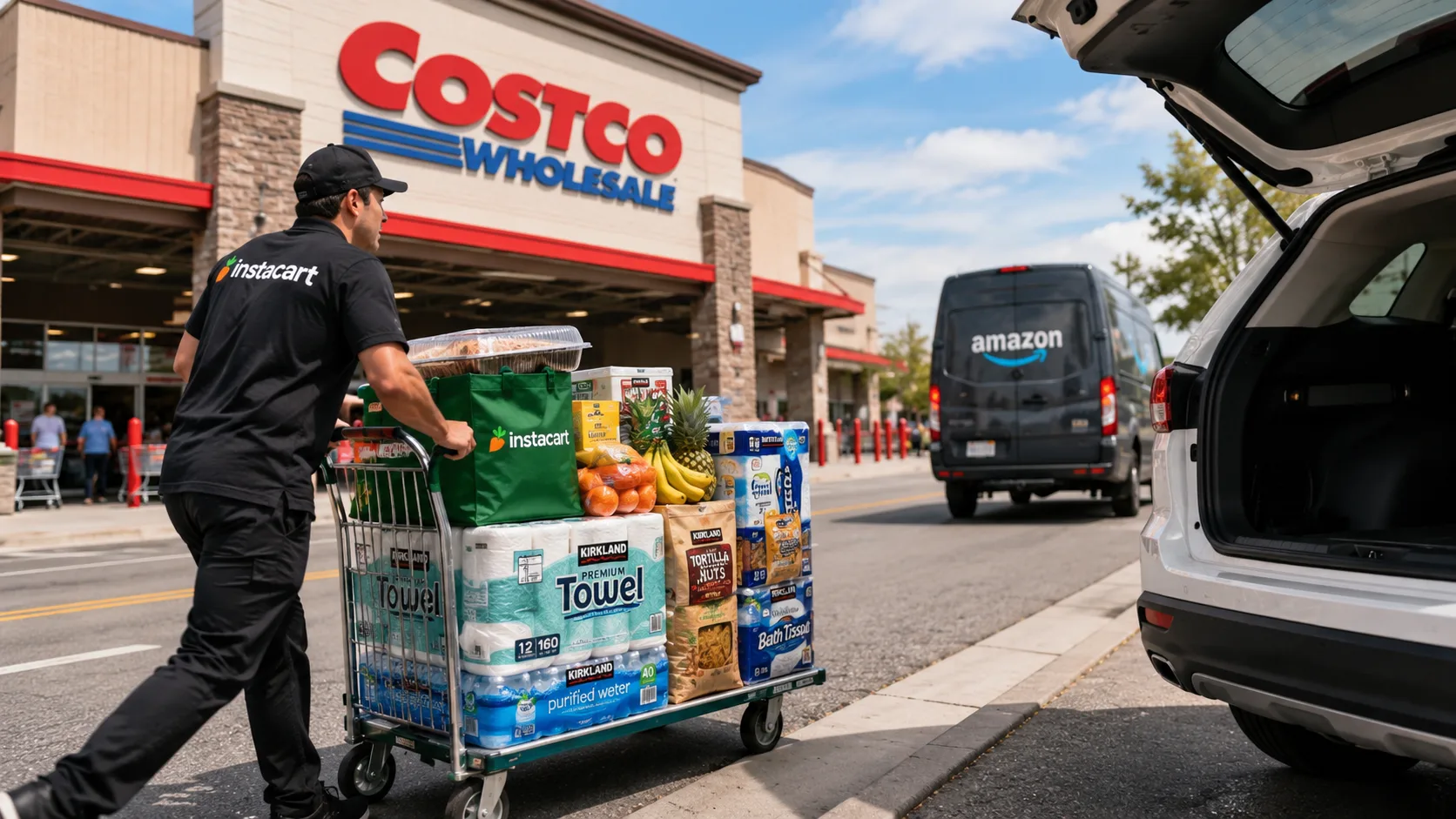
Through its partnership with Instacart, Costco says the average same-day delivery in the U.S. now arrives in less than 45 minutes. That’s fast enough to turn a company best known for giant warehouses, bulk purchases and packed parking lots into a serious player in the instant-delivery economy.
And Costco says some of its most valuable customers are embracing it.
Costco Members Are Getting Deliveries in Under 45 Minutes
Costco has partnered with Instacart to offer same-day delivery of groceries and other warehouse products. Members can have Costco favorites delivered directly to their homes, with delivery fees waived on qualifying orders over $35.
Costco promotes the service as delivery “in as fast as 1 hour,” but CEO Ron Vachris says the company is doing even better than that on average.
“Average same-day delivery time in the U.S. is now less than 45 minutes, and the average member satisfaction rating is 4.8 out of 5,” Vachris said during Costco’s third-quarter earnings call.
Even more important for Costco, the service is growing faster than the company’s overall digital business.
That gives Costco something it historically hasn’t been known for: speed.
Amazon delivery times can vary dramatically depending on where customers live and which products they order. Same-day and next-day delivery are readily available in some areas, while customers elsewhere may still wait two days or longer.
Costco’s Instacart partnership takes a different approach. Instead of shipping an item from a distribution center, the service effectively turns Costco’s existing warehouses into local fulfillment centers, with Instacart shoppers picking up products and delivering them directly to members.
For groceries and everyday household necessities, that can make Costco dramatically faster than conventional e-commerce shipping.
Costco Has Another Reason to Make Delivery Work
The bigger story may be what ultra-fast delivery does for Costco’s membership business.
Unlike traditional retailers, Costco generates a significant portion of its profits from annual membership fees. That means keeping customers happy enough to renew year after year is critical to the company’s economics.
Management believes delivery is helping.
Vachris described the service as a “strong driver of loyalty,” adding that Costco’s highest-spending members are often the customers using it.
That matters because Costco wants members to see the company as useful for more than the occasional warehouse run.
If customers can order groceries, drinks, paper products and household necessities from Costco and have them at their door in less than an hour, Costco suddenly becomes a viable option for purchases that once might have gone to Amazon, Walmart, Target or a local supermarket.
The company is giving its biggest-spending members another incentive to use the service.
Executive members, who pay $130 annually compared with $65 for a Gold Star membership, receive a $10 monthly credit toward qualifying Instacart orders of at least $150.
For members already making large Costco purchases, that can make delivery more attractive.
There Is a Catch: You May Pay More
The convenience comes with an important trade-off.
Customers should not necessarily expect the exact same prices they see inside their local Costco warehouse.
Third-party delivery platforms have historically charged higher prices for some products, allowing retailers and delivery services to offset the added costs associated with picking, handling and delivering orders.
Instacart has been pushing retailers toward greater price parity, arguing that lower online markups can increase adoption and sales. The company has said Costco has reduced the markup on its U.S. and Canadian same-day delivery websites.
But that does not necessarily mean every Costco product costs exactly the same online as it does in a warehouse.
Costco previously addressed the issue directly on its same-day delivery website, explaining that item prices were marked up compared with local warehouse prices, although the markup was reduced for Costco members. That language has since been removed.
GlobalData Managing Director Neil Saunders told RetailWire that this pricing difference is one reason delivery is unlikely to replace the traditional Costco shopping experience.
“The rub is that shopping via third party apps does not give consumers access to the sharp Costco prices found in stores,” Saunders said.
There are other differences as well. Online selections can be more limited, and delivery obviously eliminates some of what makes visiting Costco unique, including free samples, discovering unexpected bargains and wandering through aisles filled with constantly changing merchandise.
Instead of replacing warehouse visits, delivery could give members another reason to spend money with Costco between trips.
Costco Doesn’t Need to Replace Amazon
That distinction is important.
Costco does not need to build an Amazon-style delivery empire to make this strategy successful. It simply needs to capture a larger percentage of its existing members’ spending.
Consider a household that normally visits Costco once or twice a month but uses Amazon, Target, Walmart or a supermarket when it needs something immediately.
Fast same-day delivery gives Costco a chance to win some of those purchases.
And unlike Amazon, Costco already has a dense network of large warehouses filled with food, beverages, cleaning supplies, electronics, appliances and other products that customers regularly need.
Instacart provides the last-mile infrastructure without requiring Costco to recreate an enormous delivery network from scratch.
It’s a relatively simple strategy that could make Costco’s membership more valuable while increasing how frequently customers shop with the company.
Americans Don’t Necessarily Need Everything in an Hour
There is also a twist to the battle over delivery speed: Consumers may not actually care about getting everything as quickly as possible.
A 2024 McKinsey study found that 90% of consumers were willing to wait two or three days for deliveries, particularly if doing so helped them avoid shipping charges.
Reliability and cost can matter more than raw speed.
The same research found that 90% of consumers were likely to abandon shopping carts when confronted with high shipping costs on standard purchases.
That suggests Costco’s biggest advantage may not simply be saying it can deliver groceries in under 45 minutes. The real opportunity is combining speed with the value customers already associate with their memberships.
For someone planning a major Costco trip, driving to the warehouse will probably remain the cheapest option. But when a customer realizes at 4 p.m. that the house is out of paper towels, bottled water, coffee or dinner ingredients, a delivery arriving before 5 p.m. becomes much more compelling.
Costco Is Turning Convenience Into a Membership Benefit
Amazon spent decades conditioning shoppers to expect purchases to arrive quickly and conveniently. Other retailers have spent billions trying to catch up.
Costco has taken a different route.
Rather than building its own massive last-mile delivery infrastructure, it is using Instacart to bring its warehouses directly to customers’ doors. With average U.S. delivery times now below 45 minutes and satisfaction ratings of 4.8 out of 5, Costco appears to have found a formula that members like.
There are still compromises. Delivered products can cost more than warehouse purchases, selection may be narrower, and no app can recreate the experience of stumbling across an unexpected Costco bargain.
But Costco doesn’t need delivery to replace the warehouse.
If the service convinces members to make even a few purchases from Costco that otherwise would have gone to Amazon, Walmart, Target or a grocery store, it can increase spending while giving customers another reason to renew their memberships.
For a company that built its empire around getting people into its warehouses, figuring out how to profitably bring the warehouse to their front door could be a significant next step.
About Author