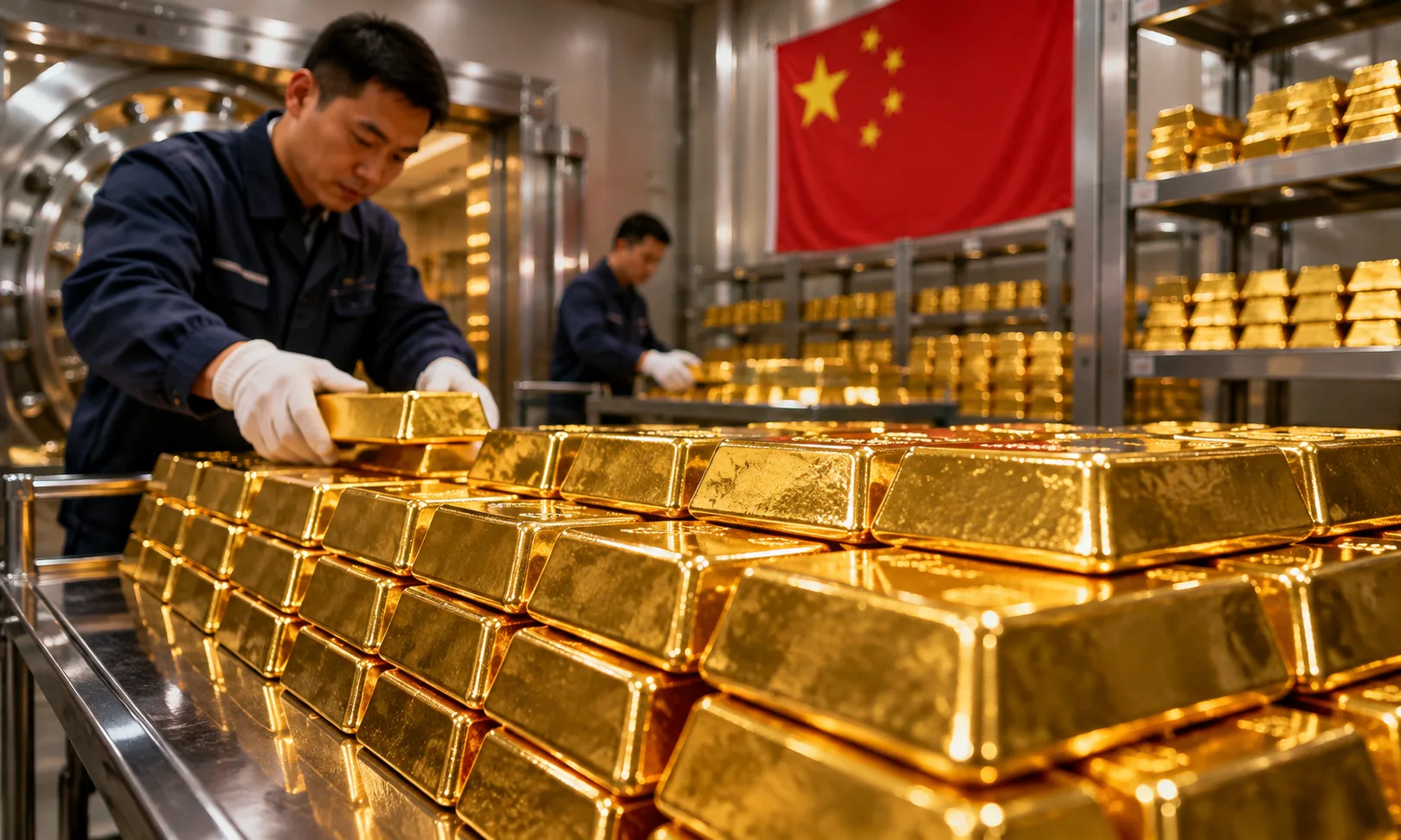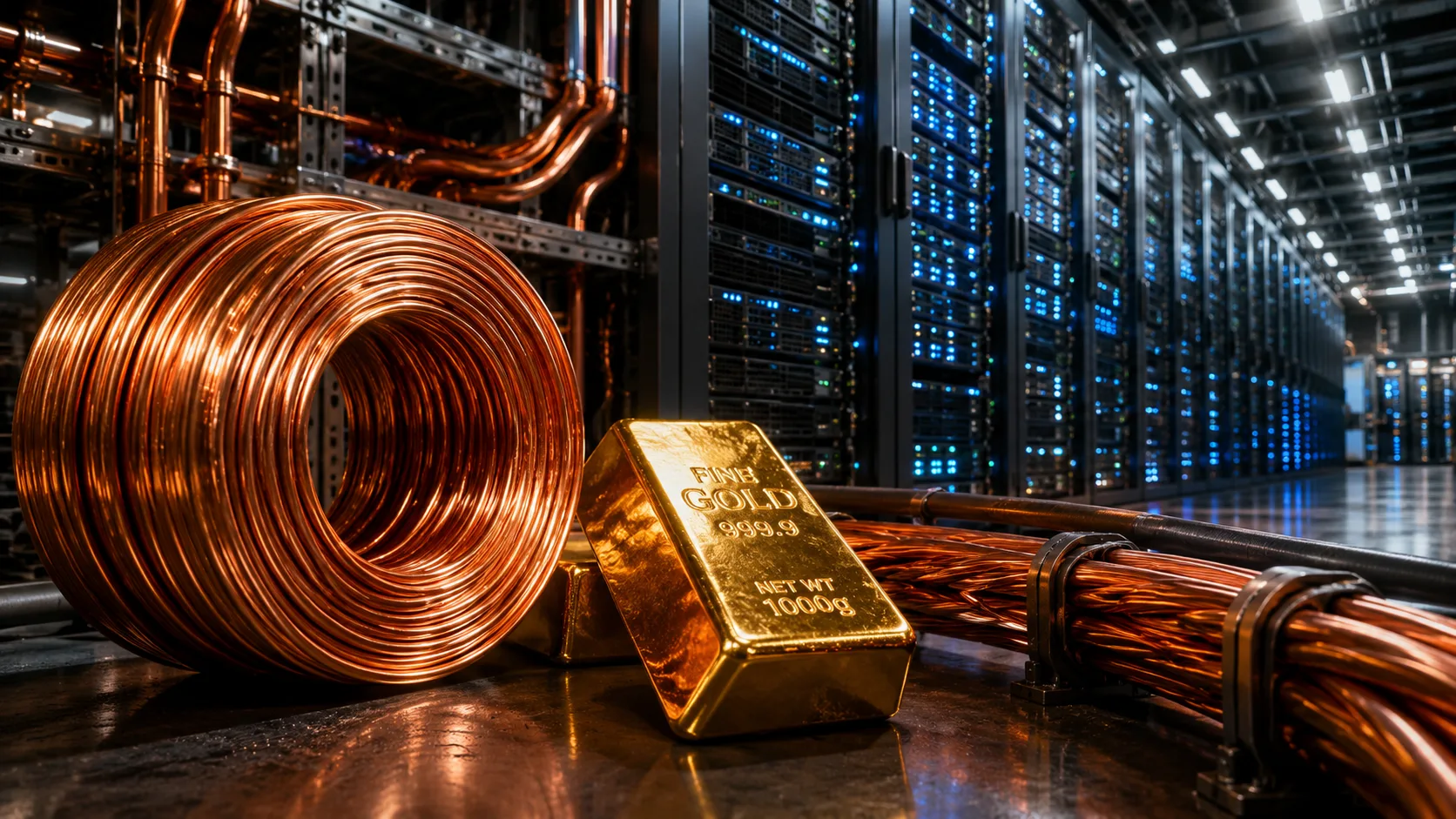
Copper is having a moment that would normally belong to gold.
As geopolitical tensions, inflation concerns and economic uncertainty have rattled markets this year, investors might have expected gold to be the clear winner. Instead, copper has emerged as one of the standout commodities of 2026, climbing to record levels while demonstrating surprising resilience during periods of market stress.
And according to analysts at Panmure Liberum, there may be a straightforward reason: copper is increasingly giving investors some of the characteristics they want from gold, while adding something gold cannot offer — rapidly growing industrial demand.
That demand is being driven in part by one of the biggest investment booms in the world right now: artificial intelligence and the enormous data centers needed to power it.
Add electrification, constrained mine production, potential U.S. tariffs and speculative investment flows, and copper is suddenly looking like what Panmure Liberum calls a “commodity for all seasons.”
Copper Is Starting to Behave Like a Precious Metal
The comparison with gold became particularly striking during the Middle East conflict earlier this year.
Gold, traditionally considered one of the world’s premier safe-haven assets, suffered a roughly 20% correction after hostilities began. Copper, meanwhile, largely held its ground before eventually pushing to new records.
That resilience caught the attention of Panmure Liberum commodity analyst Tom Price and his team, who recently published a report with a provocative title: “Copper…. Better than gold.”
Their argument is not that copper has suddenly replaced gold as a traditional safe haven.
Instead, copper increasingly offers investors two different potential sources of returns.
Like gold, copper has historically demonstrated a relationship with inflation and can benefit when investors seek protection from declining purchasing power.
But copper also has something gold largely lacks: a powerful structural demand story tied directly to economic growth and technological investment.
That combination could help explain why investors have been willing to pour money into the metal even as copper prices reach historically elevated levels.
AI Data Centers Are Creating a New Source of Copper Demand
The AI boom may be changing the copper market in ways that are only beginning to become apparent.
Technology companies are spending enormous sums constructing data centers filled with power-hungry AI servers. Those facilities require massive electrical infrastructure, including transmission equipment, transformers, cooling systems and wiring.
Copper is essential to much of it.
The metal is one of the world’s most important electrical conductors, making it extremely difficult to replace as economies consume more electricity.
AI is adding another layer of demand on top of trends that were already expected to increase copper consumption.
Electric vehicles require significantly more copper than traditional gasoline-powered vehicles. Renewable energy projects require extensive wiring and transmission infrastructure. Modernizing aging electrical grids requires still more.
The result is a commodity that sits at the intersection of several of the world’s largest capital investment trends.
AI, electrification and energy infrastructure are all competing for the same metal.
And increasing supply isn’t easy.
Copper Prices Have Exploded in 2026
The numbers show just how dramatic the move has become.
London Metal Exchange copper contracts have climbed roughly 14% this year to around $14,277 per metric ton, equivalent to approximately $6.45 per pound.
U.S. Comex futures have traded at an even higher level, recently around $6.75 per pound, while copper prices on the Shanghai Futures Exchange have been higher still at the equivalent of approximately $7.30 per pound.
Several forces appear to be pushing prices higher simultaneously.
One is speculation that the United States could impose additional tariffs on copper imports. American investors have reportedly accumulated copper in anticipation of possible trade restrictions, helping create a premium for U.S.-traded copper.
Expectations that tensions between the United States and Iran could eventually ease have also contributed to optimism that global economic growth could improve.
Then there is another problem entirely: the world isn’t producing as much copper as expected.
The Copper Supply Problem Isn’t Going Away
Copper miners cannot simply flip a switch and dramatically increase production.
Developing a major new copper mine can require billions of dollars and take more than a decade as companies navigate exploration, financing, permitting, construction and environmental approvals.
Existing mines are also experiencing disruptions.
Panmure Liberum estimates that production problems have become significant enough that its analysts apply a 3.5% annual disruption allowance to projected global mine supply.
That adjustment effectively removes roughly 800,000 metric tons of copper from expected production.
The Democratic Republic of the Congo has added another complication. The country, which accounts for roughly 14% of global copper production, has imposed export restrictions that have further tightened the market.
This creates a potentially powerful imbalance.
Demand from AI infrastructure, electric vehicles and power grids is increasing at the same time the mining industry is struggling to deliver reliable new supply.
That doesn’t guarantee copper prices will continue rising indefinitely, but it helps explain why investors have become increasingly willing to pay historically high prices for the metal.
Investors May Now Be Driving Copper Prices
There is another important development beneath the surface of the rally.
Copper prices may no longer be determined primarily by industrial buyers.
Price and his Panmure Liberum colleagues examined Commodity Futures Trading Commission data separating copper market participants into “commercial” traders, which are generally connected to the physical copper market, and “non-commercial” traders, which tend to include financial investors and speculators.
Their analysis produced a striking result.
Going back to 2021, changes in investors’ net positioning explained approximately 85% of copper’s price movement.
That suggests financial flows have become one of the dominant forces determining short-term copper prices.
It also creates a risk.
When investors pile into a commodity, prices can move far beyond levels justified by immediate supply and demand fundamentals. Those moves can reverse quickly if sentiment changes.
And Panmure Liberum itself believes copper has moved ahead of where fundamentals currently justify the price.
Has Copper Already Gone Too Far?
Despite making the case that copper has become an increasingly attractive commodity, Price isn’t forecasting today’s record prices indefinitely.
His copper price forecast stands around $9,600 per metric ton, or approximately $4.69 per pound, considerably below recent market prices.
Over the longer term, he expects copper to return toward what he describes as a more “fundamentally-backed price.”
That creates an unusual situation for investors.
The long-term copper story may be getting stronger at precisely the same time the short-term price is becoming more difficult to justify.
Investors therefore have to distinguish between two questions: whether the world will need substantially more copper over the coming decade, and whether copper is worth buying at today’s elevated prices.
Those aren’t necessarily the same thing.
The Copper Stocks Analysts Are Watching
For investors who want exposure to copper without directly trading futures, major mining companies offer another route.
Price’s preferred copper stock is Glencore (LON: GLEN).
Panmure Liberum currently maintains hold ratings on several other major miners with significant copper exposure, including Antofagasta (LON: ANTO), Anglo American (LON: AAL), Rio Tinto (NYSE: RIO) and BHP (NYSE: BHP).
Mining stocks can provide leveraged exposure to rising commodity prices because higher copper prices can significantly increase the value of every additional ton produced.
But that leverage cuts both ways. Falling copper prices, rising operating costs, political risk and production disruptions can quickly pressure mining profits.
Copper Has Become Much More Than an Industrial Metal
Copper has traditionally been nicknamed “Dr. Copper” because its widespread industrial use made its price a useful indicator of global economic health.
That description may now be outdated.
Copper is increasingly becoming an AI infrastructure metal, electrification metal, inflation-sensitive asset and speculative financial trade all at the same time.
Few commodities sit at the intersection of so many powerful trends.
The irony is that the very enthusiasm making copper attractive could also be its biggest near-term vulnerability. Prices have already moved far beyond some analysts’ fundamental forecasts, meaning investors buying today are betting that future demand will justify a substantial portion of the rally.
But the structural argument is difficult to ignore.
The world wants more data centers, more electricity, more transmission capacity and more electrification. All of those trends require enormous amounts of copper, while developing new supplies remains expensive and slow.
Gold may still own the title of the world’s most famous precious metal.
But in an economy increasingly powered by electricity and AI, copper may be becoming the metal the world simply cannot get enough of.
About Author