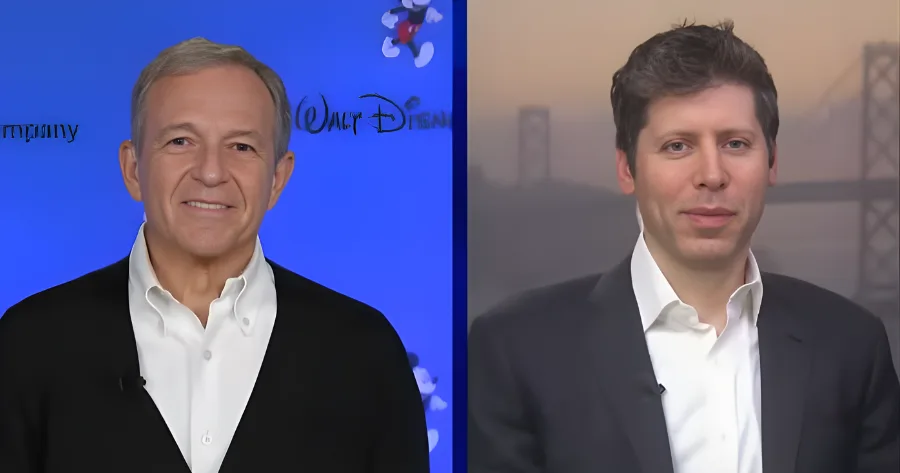
The Walt Disney Company is pushing deeper into artificial intelligence, announcing a major $1 billion equity investment in OpenAI alongside a sweeping three year licensing agreement that will let users generate videos featuring Disney owned characters through OpenAI’s Sora platform. It is one of the most significant AI partnerships ever struck by a major entertainment company, and it signals how Disney plans to use generative technology to reshape content creation, employee workflows, and fan engagement.
For investors, this move ties directly into Disney’s broader turnaround strategy under CEO Bob Iger, which is centered on cost efficiency, new content pipelines, and profitable streaming expansion. The deal also attempts to control the risks created by unauthorized AI use of Disney intellectual property, an issue that has exploded across the internet since generative video tools went mainstream.
Disney Aligns With Rapidly Advancing AI Technology
OpenAI launched Sora in September, debuting an app that lets consumers create short video clips simply by typing prompts. The app quickly shot to the top of the Apple App Store and sparked controversy as users began generating unlicensed videos featuring well known copyrighted characters from multiple studios.
Disney is now taking a different approach from the companies that have chosen to fight Sora outright. Under the new arrangement, starting next year Sora users will be able to generate content featuring more than 200 characters from Disney, Marvel, Pixar, and Star Wars. These include household names like Mickey Mouse, Ariel, Cinderella, Iron Man, and Darth Vader.
Bob Iger framed the partnership as a significant moment for the industry.
“The rapid advancement of artificial intelligence marks an important moment for our industry, and through this collaboration with OpenAI we will thoughtfully and responsibly extend the reach of our storytelling through generative AI, while respecting and protecting creators and their works,” Iger said.
Disney will also receive warrants to purchase more equity in OpenAI and confirmed it will become a major customer of OpenAI’s products. The company plans to deploy ChatGPT internally for employees and to co develop new productivity tools and creative applications that can speed up workflows in animation, scripting, CGI development, and consumer experiences.
Protecting Its Intellectual Property While Embracing AI
Disney’s pivot toward partnership does not mean it is easing enforcement. AI platforms have already triggered a wave of legal disputes across Hollywood as media companies move to protect content that is core to their business value.
Disney recently sent a cease and desist letter to Google alleging that the company infringed Disney copyrights on a “massive scale.” According to a letter reviewed by CNBC, Disney claims Google used protected material to train AI models and distributed copies of its content without permission. Google has not yet commented.
Universal and Disney are also jointly suing Midjourney, alleging that the AI image creator improperly generated and distributed characters based on their films. Disney sent a separate cease and desist letter to Character.AI in September demanding the startup stop using its characters without authorization.
The new deal with OpenAI stands out because it creates a structured environment in which generative video can flourish without trampling copyright law. OpenAI has agreed to implement stronger safeguards to prevent the generation of illegal or harmful content, and both companies emphasized their commitment to protecting creators.
OpenAI CEO Sam Altman said “Disney is the global gold standard for storytelling, and we’re excited to partner to allow Sora and ChatGPT Images to expand the way people create and experience great content.”
Expanding Into New Platforms and Viewer Experiences
The agreement also includes integration with ChatGPT Images, where users can prompt Disney related visual content using natural language. This will make Disney intellectual property one of the most requested datasets in consumer AI tools, amplifying brand reach and potentially driving new creative use cases.
Disney+ will also showcase curated selections of Sora generated videos. This is an unusual step for a major streaming platform, and the move suggests Disney sees generative AI not only as a tool for users but as a new frontier for content formats, short form storytelling, and interactive digital experiences.
Why Investors Should Pay Attention
This deal fits into several larger strategic trends:
1. A New Content Pipeline for Disney
AI tools like Sora can dramatically lower production costs for certain types of video assets. While AI will not replace major film production, it could accelerate the creation of promotional content, previews, shorts, character experiments, and marketing materials, all areas where Disney spends heavily.
2. Stronger Protection of Disney’s Most Valuable Assets
Intellectual property is the core of Disney’s valuation. By licensing to one platform while aggressively shutting down unauthorized uses, Disney is asserting control over how generative AI can legally interact with its brands. This reduces future legal risk and positions Disney to monetize AI driven creativity rather than fight it endlessly.
3. A Potential Revenue Channel Linked to User Generated Content
AI generated videos are growing exponentially, and Disney’s characters will play a major role in that ecosystem. The company can benefit from licensing fees, expanded brand engagement, and downstream opportunities in merchandising, streaming, and digital collectibles.
4. Accelerating Digital Transformation Inside Disney
Rolling ChatGPT out to employees is not a small step. Disney has thousands of workers across animation, engineering, marketing, and operations. Workflow AI could reduce development time for new storytelling concepts, improve pre visualization, and streamline production.
5. Strengthening Its Competitive Position Against Tech Giants
The battles between media companies and AI firms are far from over. Disney’s partnership signals a willingness to leverage AI proactively rather than defensively. This aligns the company with fast moving technology rather than leaving it behind.
The Bottom Line
Disney’s one billion dollar bet on OpenAI is about more than unlocking access to Mickey Mouse or Iron Man inside Sora. It is a strategic play to control how its iconic characters enter the AI era while modernizing its internal operations and strengthening intellectual property protections. The move brings risk, but it also brings opportunity, especially as generative video becomes a larger part of how consumers create and share content online.
For investors, this partnership is another sign that Disney is preparing for a future where AI sits at the center of entertainment creation, distribution, and monetization. If the rollout succeeds, it could support Disney’s long term margins, expand revenue streams, and give the company fresh relevance in a rapidly shifting media landscape.
About Author