

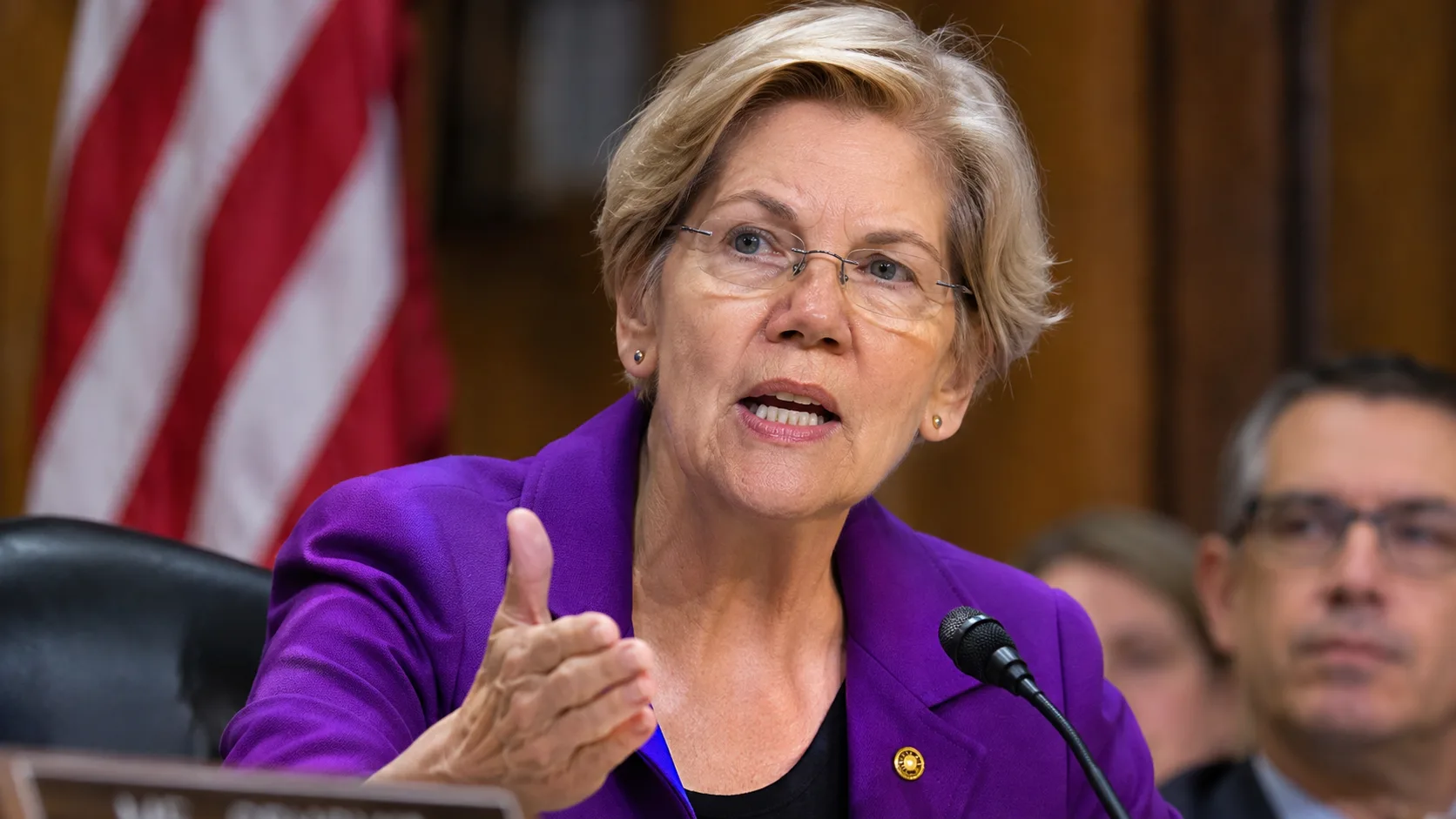
Wall Street could soon face one of its toughest critics in a position of unprecedented power. Senator Elizabeth Warren is expected to take control of the Senate Banking Committee in January, giving her sweeping authority to investigate the nation’s biggest banks, private equity firms, and cryptocurrency companies.
The Massachusetts Democrat has spent more than a decade challenging the financial industry. Now, following Democrats’ victory in the midterm elections, she is positioned to lead one of Washington’s most influential financial oversight committees, potentially setting the stage for years of investigations and regulatory battles.
For investors, the implications could extend across bank stocks, private equity, cryptocurrency, credit card companies, and the broader financial sector.
Warren Is About to Gain Significant Power Over Wall Street
Warren is widely expected to become chair of the Senate Banking, Housing, and Urban Affairs Committee when the new Congress convenes in January. The position would give her substantially greater influence over financial regulation and the ability to launch investigations into companies and executives she has criticized for years.
As the committee’s current ranking Democrat, Warren has already spent considerable time demanding answers from Wall Street executives. However, her authority has been limited while Republicans controlled the committee.
That is about to change.
As chair, Warren would gain access to additional investigative resources, greater control over the committee’s agenda, and subpoena authority to compel documents and testimony. Her committee would also play a central role in shaping legislation affecting the banking industry, financial markets, and consumer lending.
Although her appointment has not been finalized, congressional analysts widely expect her to secure the position.
For financial institutions accustomed to a more favorable regulatory environment under the Trump administration, the shift could be significant.
America’s Biggest Banks Could Be First in the Crosshairs
JPMorgan Chase, Bank of America, Goldman Sachs, Wells Fargo, and other major financial institutions could face a new round of congressional investigations under Warren’s leadership.
Throughout her political career, Warren has aggressively challenged bank executives over consumer fees, regulatory failures, executive compensation, and questionable business practices. She has repeatedly argued that the largest financial institutions have escaped sufficient accountability for misconduct.
Warren has also called for criminal investigations into banking executives following major financial failures and has pushed for tougher enforcement against institutions accused of harming consumers.
Her influence has sometimes produced results. Following years of scrutiny from Warren and other consumer advocates, major banks reduced certain overdraft fees, potentially sacrificing billions of dollars in annual fee revenue.
With greater authority, Warren could pursue investigations involving lending practices, financial disclosures, bank executives’ relationships with government officials, and potential conflicts of interest.
The immediate financial threat comes from the uncertainty these investigations could create. Banks may face additional compliance expenses, reputational risks, and pressure to change profitable business practices even if Congress ultimately fails to pass new legislation.
For shareholders, the concern is whether intensified oversight could eventually translate into lower earnings and weaker valuations.
Private Equity Could Face an Even Bigger Threat
While large banks are obvious targets, private equity could face some of the most consequential challenges under Warren’s anticipated leadership.
Warren has long accused private equity firms of acquiring businesses, loading them with debt, extracting profits, and leaving employees and creditors exposed when those companies experience financial trouble.
Her proposed Stop Wall Street Looting Act seeks to increase accountability for private equity firms and the executives responsible for leveraged acquisitions.
The legislation would make certain investment practices more expensive and potentially increase financial liabilities for private equity sponsors. Supporters argue that stronger protections are necessary to prevent investors from extracting profits while leaving struggling businesses unable to meet their obligations.
Private equity firms counter that their investments provide capital, improve business operations, and help companies expand. Industry representatives have warned that excessive restrictions could reduce investment and make financing more difficult for businesses.
Major publicly traded alternative asset managers, including Blackstone, KKR, Apollo Global Management, and Carlyle, could face increased political scrutiny as Warren pushes for changes to the industry.
For investors in these companies, the concern is straightforward. Restrictions on leveraged acquisitions, financial distributions, or investment structures could affect future profitability and the returns generated by private equity funds.
Whether those proposals become law will depend on congressional support, but Warren’s chairmanship would provide a much larger platform for advancing them.
Cryptocurrency Could Be Headed for a Regulatory Showdown
The cryptocurrency industry may be particularly concerned about Warren’s expected rise.
Warren has repeatedly warned that digital asset markets expose investors to fraud, financial manipulation, money laundering, and inadequate consumer protections. She has argued that cryptocurrency companies should face stronger oversight and financial safeguards.
As Banking Committee chair, she could investigate cryptocurrency exchanges, stablecoin issuers, trading platforms, and financial institutions involved in digital asset transactions.
Coinbase and other publicly traded companies with significant cryptocurrency exposure could face greater uncertainty as lawmakers debate new restrictions and compliance requirements.
Prediction markets are another potential target. Warren has expressed concerns about alleged insider trading and market manipulation on platforms that allow participants to speculate on election outcomes, economic developments, and other real-world events.
Her investigations could also examine connections between cryptocurrency businesses and political figures, including companies with ties to President Trump and his associates.
The consequences for investors would depend on whether congressional investigations lead to new legislation or regulatory action. However, renewed uncertainty could make it more difficult for cryptocurrency companies to attract institutional capital and pursue expansion plans.
At the same time, established companies with strong compliance programs could benefit if tougher rules create barriers for smaller competitors.
Wall Street Is Already Reeling From a Historic Selloff
Warren’s expected rise comes at an especially difficult moment for financial markets.
On Thursday, November 5, the S&P 500 plunged 4.4%, while the Nasdaq Composite lost approximately 5.5% and entered correction territory. The Dow Jones Industrial Average dropped more than 1,800 points as investors aggressively sold stocks across multiple sectors.
Technology companies led the decline amid concerns about artificial intelligence spending, data center construction, and the sustainability of elevated valuations. However, the selling quickly spread beyond Silicon Valley.
Financial stocks were also hit hard, with JPMorgan Chase declining more than 4% and Goldman Sachs suffering a similarly sharp loss.
The selloff reflected several concerns, including the potential impact of the incoming Democratic Congress on business regulation and economic policy. Warren’s anticipated chairmanship adds another potential source of uncertainty for companies already dealing with a volatile market environment.
Financial stocks are particularly sensitive to changes in regulation because profitability often depends on lending margins, transaction fees, trading activity, and compliance costs.
If investors believe future policies could reduce those revenue streams, they may assign lower valuations to financial companies long before any legislation is enacted.
Warren Could Find Unexpected Allies Among Republicans
One of the more surprising developments is that Warren could find support for certain financial policies among Republicans.
Despite her longstanding disagreements with President Trump and conservative lawmakers, Warren has identified areas where both parties share concerns about the financial industry.
These include reducing credit card costs, addressing alleged discriminatory banking practices, improving housing affordability, and expanding federal deposit insurance protections.
Warren has already worked with Republican Senator Tim Scott on housing legislation and has discussed the possibility of cooperating with Trump on credit card interest rates.
That bipartisan potential could be particularly concerning for banks and consumer lenders.
For example, legislation capping credit card interest rates could significantly affect the profitability of companies that rely on interest income from revolving balances. Banks might respond by tightening lending standards, reducing rewards, or limiting credit availability for riskier borrowers.
Similarly, restrictions on financial fees could reduce revenue for large institutions, even if those policies prove popular with consumers.
For Wall Street, proposals supported by both progressive Democrats and populist Republicans may represent the greatest possibility of lasting regulatory change.
What Warren’s New Power Means for Investors
Warren’s anticipated chairmanship does not automatically mean new financial regulations will become law. However, investors should recognize that increased congressional scrutiny can affect corporate behavior and market valuations well before legislation reaches the president’s desk.
Several industries deserve particular attention.
Banking Stocks
JPMorgan Chase, Bank of America, Wells Fargo, Citigroup, and Goldman Sachs could face investigations into lending practices, fees, executive accountability, and relationships with government officials.
Investors should monitor whether these investigations produce proposals that could materially affect bank revenue or operating expenses.
Private Equity and Asset Management
Blackstone, KKR, Apollo, and Carlyle could face renewed debate over leveraged acquisitions, corporate debt, and financial responsibility for portfolio companies.
Any legislation increasing liability for private equity sponsors could affect investment returns and the economics of future acquisitions.
Cryptocurrency Companies
Coinbase and other cryptocurrency-related businesses could experience greater volatility as congressional investigations raise questions about regulation, consumer protection, and market practices.
The implications could be especially significant for firms dependent on trading volume, new product approvals, or relationships with traditional financial institutions.
Credit Card Companies
Credit card issuers and consumer lenders could face pressure if lawmakers advance proposals limiting interest rates or restricting certain fees.
Investors should pay attention to the potential effects on lending margins, credit availability, and profitability.
There Are Limits to Warren’s Power
Despite her expected influence, Warren would face important restrictions on what she could accomplish.
Chairing the Senate Banking Committee would allow her to launch investigations, conduct hearings, advance legislation, and pressure financial institutions. However, major regulatory changes would still require congressional approval and, in most cases, the president’s signature.
Senate procedural rules could also make it difficult to advance controversial legislation without bipartisan support.
The Trump administration would continue to exercise significant authority over executive branch agencies responsible for enforcing financial regulations. That could create conflicts between congressional Democrats seeking tougher oversight and federal regulators pursuing a different policy agenda.
Warren also has incentives to prioritize issues with broader political appeal rather than pursue every confrontation available to her.
That distinction matters for investors. An aggressive congressional hearing may generate negative headlines, but legislation restricting a company’s ability to generate revenue would have much more significant long-term financial consequences.
The Biggest Risk May Be Bipartisan Regulation
Although Warren is widely viewed as an adversary of Wall Street, her most consequential victories could come from proposals that attract support across party lines.
Large banks and financial companies have traditionally benefited when disagreements between Democrats and Republicans prevent major regulatory changes.
However, growing populist sentiment in both parties has created unusual alliances on issues involving consumer fees, banking practices, and corporate accountability.
If Warren can secure Republican support for policies that restrict certain financial industry practices, companies could face a much more serious legislative challenge.
For example, a bipartisan agreement limiting credit card interest rates could have a direct impact on lender profitability. Similar agreements involving financial fees or deposit insurance could force institutions to reconsider established business models.
This is why investors should pay particularly close attention to the issues on which Warren and Republican lawmakers find common ground.
A congressional investigation can generate headlines and short-term volatility. A bipartisan law that permanently changes how financial institutions operate could have consequences lasting for years.
What Investors Should Watch in the Coming Months
The first several months of 2027 should provide important clues about how aggressively Warren intends to use her anticipated position.
Her initial committee hearings and investigations will reveal which industries face the greatest immediate scrutiny. Requests for executive testimony or internal financial documents could signal that major investigations are underway.
Private equity legislation will be another important indicator. If Warren quickly advances the Stop Wall Street Looting Act or similar proposals, investors could begin reassessing regulatory risks facing alternative asset managers.
Cryptocurrency oversight is also likely to become a central issue. Investigations involving trading platforms, stablecoins, and prediction markets could influence both regulatory expectations and investor sentiment.
Perhaps most importantly, investors should monitor whether Warren can secure bipartisan support for major financial reforms. Proposals involving credit card rates, consumer banking fees, and deposit insurance could provide early evidence of her ability to convert political influence into legislative victories.
Corporate earnings calls may also offer valuable information. Executives at major banks and asset management firms are likely to face questions about the changing political environment and how they plan to respond.
Wall Street Faces a Different Political Reality
Elizabeth Warren has spent much of her career confronting the financial industry. If she becomes Senate Banking Committee chair in January, she will have more power than ever to pursue that agenda.
Major banks, private equity firms, cryptocurrency companies, and consumer lenders could face a period of intensified investigations and pressure for regulatory reform.
There are significant obstacles to passing sweeping legislation, and many of Warren’s proposals may never become law. Still, the combination of expanded investigative authority and potential bipartisan support could make her influence difficult for Wall Street to ignore.
For investors, the critical question is how much of Warren’s agenda ultimately translates into changes that affect corporate profits.
With financial markets already shaken by Thursday’s historic selloff, Wall Street now faces the prospect of one of its fiercest political critics gaining control of a committee with the authority to investigate some of America’s most powerful financial institutions.
About Author