

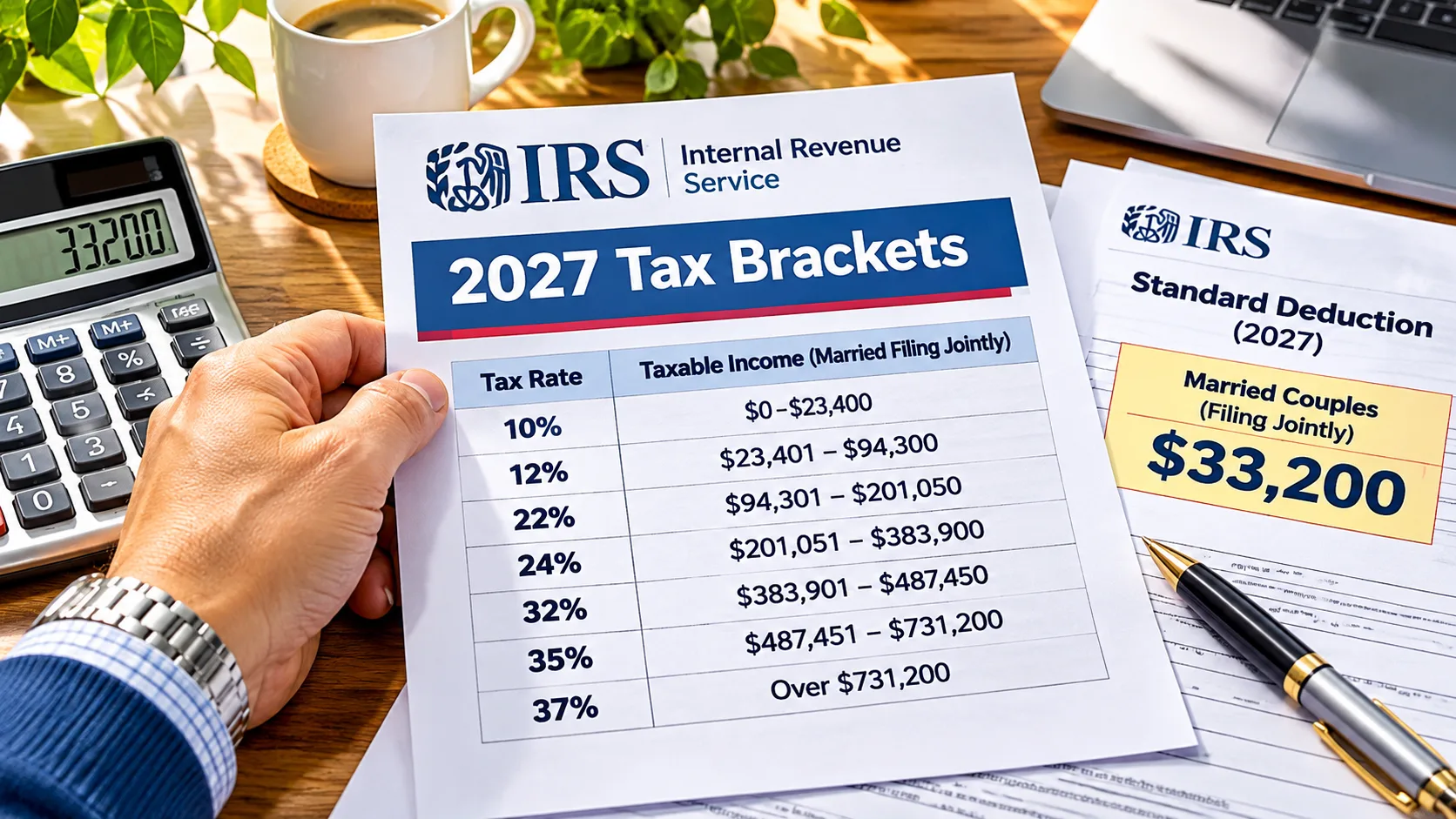
The IRS has announced new federal income tax brackets for 2027, raising income thresholds and standard deductions for millions of Americans. The changes could reduce federal income taxes for some households, including retirees, families and investors.
The new figures, released Thursday, November 5, reflect annual inflation adjustments intended to prevent Americans from moving into higher tax brackets simply because their wages or other income rise with the cost of living.
The changes arrive as households continue to struggle with higher prices for housing, groceries, energy and other necessities.
While the seven federal income tax rates will remain unchanged, the IRS is increasing the amount of income taxpayers can earn before moving into higher brackets.
The adjustments will apply to income earned during 2027, with tax returns filed in 2028. They will not affect 2026 income reported on returns filed in early 2027.
New Federal Income Tax Brackets for 2027
The federal income tax system has seven tax rates, ranging from 10% to 37%. Each rate applies to a different portion of taxable income, meaning taxpayers do not pay their highest marginal rate on everything they earn.
For 2027, the IRS has raised the income thresholds across all seven brackets.
2027 Federal Income Tax Brackets
| Tax Rate | Single Filers | Married Filing Jointly |
|---|---|---|
| 10% | $0–$12,800 | $0–$25,600 |
| 12% | $12,801–$52,025 | $25,601–$104,050 |
| 22% | $52,026–$109,125 | $104,051–$218,250 |
| 24% | $109,126–$208,325 | $218,251–$416,650 |
| 32% | $208,326–$264,550 | $416,651–$529,100 |
| 35% | $264,551–$661,375 | $529,101–$793,650 |
| 37% | Over $661,375 | Over $793,650 |
Source: Internal Revenue Service. Brackets reflect taxable income, after applicable deductions.
For example, a married couple filing jointly will remain in the 22% marginal bracket until their taxable income exceeds $218,250. In 2026, that threshold is $211,400.
That means the couple could have an additional $6,850 of taxable income before reaching the 24% bracket.
The adjustment is particularly relevant for workers receiving raises, retirees making withdrawals from traditional retirement accounts and households with investment income.
Standard Deduction Increases to $33,200 for Married Couples
One of the most significant changes for everyday taxpayers involves the standard deduction, which reduces the amount of income subject to federal income taxes.
For 2027, the IRS is increasing the standard deduction across all major filing categories.
| Filing Status | 2026 | 2027 | Increase |
|---|---|---|---|
| Married Filing Jointly | $32,200 | $33,200 | $1,000 |
| Single | $16,100 | $16,600 | $500 |
| Head of Household | $24,150 | $24,925 | $775 |
| Married Filing Separately | $16,100 | $16,600 | $500 |
For a married couple taking the standard deduction, the additional $1,000 deduction could save $220 in federal income taxes if that entire amount would otherwise have been taxed at 22%.
A single taxpayer in the same marginal bracket could save approximately $110 from the $500 increase alone.
Those savings could be larger when the higher income tax bracket thresholds are factored in. The actual benefit depends on income, deductions, credits and filing status.
Retirees Could Benefit From Higher Tax Thresholds
The new brackets are particularly important for Americans living on retirement income.
Withdrawals from traditional IRAs and 401(k) accounts are generally subject to ordinary federal income taxes. Pension payments, investment income and taxable Social Security benefits can also influence a retiree’s federal tax liability.
Because the IRS is increasing bracket thresholds, retirees may be able to withdraw somewhat more from tax-deferred accounts before reaching a higher marginal income tax rate.
For example, a married couple with $150,000 in ordinary income and no deductions beyond the standard deduction would have approximately $116,800 in taxable income under the 2027 rules.
That would place their highest taxable dollars within the 22% federal bracket.
The higher standard deduction and expanded brackets could reduce the couple’s federal income tax liability compared with applying the 2026 thresholds to the same income.
However, retirees should recognize an important distinction. The federal income tax brackets and the income thresholds used to determine how much Social Security is taxable follow different rules.
The Social Security taxation thresholds are not automatically increased each year for inflation. As a result, some retirees can experience higher taxes on their benefits even when ordinary income tax brackets are adjusted upward.
Higher retirement-account withdrawals can also affect Medicare premiums through income-related monthly adjustment amounts, making withdrawal timing an important planning consideration.
Additional Tax Breaks for Americans 65 and Older
Taxpayers age 65 or older may qualify for additional deductions beyond the regular standard deduction.
Under current law, an additional senior deduction of up to $6,000 per eligible individual is available through 2028, subject to income limitations and other requirements. A married couple in which both spouses qualify could potentially deduct up to $12,000.
This benefit is separate from the existing additional standard deduction available to older taxpayers.
For retirees approaching age 65 or already receiving Social Security, reviewing eligibility for these deductions could be especially valuable.
Child Tax Credit Rises to $2,300
Families with qualifying children will also see an increase in the maximum federal child tax credit.
The IRS announced that the maximum credit will rise from $2,200 in 2026 to $2,300 per qualifying child in 2027.
The maximum refundable portion will increase from $1,700 to $1,800.
Unlike a deduction, which reduces taxable income, a tax credit directly reduces the amount of federal income tax owed. Refundable credits may provide a benefit even when a taxpayer owes little or no federal income tax, subject to eligibility requirements.
For a family with three qualifying children, the maximum child tax credit could total $6,900 before applicable limitations.
Eligibility depends on several factors, including household income, a child’s age and identification requirements.
Investors and Wealthier Households Will See Important Changes
The IRS announcement also includes significant changes affecting investment planning, estate taxes and wealth transfers.
Estate Tax Exemption Climbs to $15.48 Million
The federal estate tax exemption will increase from $15 million in 2026 to $15.48 million in 2027.
That means an individual who dies during 2027 could generally leave up to $15.48 million without triggering federal estate taxes, assuming the full exemption remains available and other applicable rules are satisfied.
For married couples, estate planning techniques and portability rules may allow them to preserve substantially larger combined exemptions.
This adjustment is especially relevant for high-net-worth families holding appreciated stocks, real estate, private businesses and other assets they intend to pass to future generations.
Annual Gift Tax Exclusion Increases
The annual federal gift tax exclusion will rise from $19,000 to $20,000 per recipient in 2027.
A married couple could generally give $40,000 to each recipient without using their lifetime gift and estate tax exemption, provided the gifts qualify for the annual exclusion and applicable rules are followed.
For affluent households, annual gifting can be an effective way to transfer wealth over time while potentially reducing the size of a taxable estate.
Capital Gains Planning Remains Important
Long-term capital gains generally receive preferential federal tax treatment, with rates of 0%, 15% or 20%, depending on taxable income and filing status. Separate income thresholds and other rules determine whether the 3.8% net investment income tax applies.
The inflation-adjusted thresholds create additional planning considerations for investors deciding when to sell appreciated securities.
Investors approaching retirement may find opportunities to realize gains during lower-income years. Others may benefit from spreading asset sales across multiple tax years rather than realizing substantial gains in a single year.
The appropriate strategy depends on total taxable income, capital gains, available losses and other tax considerations.
Why Higher Tax Brackets Do Not Necessarily Mean Americans Are Better Off
Although the new thresholds could provide some tax relief, they reflect a continuing problem for household finances: inflation.
The annual adjustments are designed to prevent inflation from pushing taxpayers into higher marginal tax brackets even when their purchasing power has remained unchanged.
Consider a worker who receives a 3% raise while living expenses increase by approximately the same amount.
The worker may earn more dollars, but those dollars do not necessarily buy more goods and services. Without inflation adjustments, more of that income could eventually fall into higher tax brackets.
The IRS adjustments help limit that effect.
However, the increase in the standard deduction does little to directly offset higher housing costs, property taxes, insurance premiums or grocery bills.
There is also an important difference between tax provisions that adjust automatically and those that remain fixed by law. Certain income limits for credits, benefits and other tax provisions can become less favorable over time as wages rise.
For households approaching those thresholds, understanding the entire tax picture can be more important than focusing on marginal rates alone.
Three Tax Planning Moves Worth Reviewing Before 2027
Taxpayers who want to make the most of the new thresholds should consider several areas before the changes take effect.
1. Review retirement-account withdrawals. Retirees taking distributions from traditional IRAs and 401(k) plans may benefit from comparing projected taxable income with the new thresholds. Roth conversions, required minimum distributions and capital gains could affect the amount of income taxed at higher rates.
2. Reevaluate deductions and withholding. Workers should review whether the higher standard deduction changes the benefits of itemizing. A withholding review could also help households avoid significantly overpaying or underpaying federal taxes throughout the year.
3. Consider the timing of investment gains and losses. Investors expecting to sell appreciated securities, recognize capital losses or receive substantial investment income should examine how their projected tax situation changes under the 2027 rules.
These decisions can have consequences beyond income taxes, including Medicare premiums, state taxes and eligibility for certain tax credits.
What Happens Next?
The new inflation-adjusted figures generally take effect January 1, 2027.
Taxpayers will continue using the 2026 rules when preparing their federal returns in early 2027. The newly announced brackets will apply to the following filing season in 2028.
Additional tax guidance, including retirement-plan contribution limits, may also affect financial planning for the coming year.
For households expecting significant changes in earnings, retirement withdrawals or investment income, the months ahead provide an opportunity to evaluate which tax year may be more favorable for certain financial decisions.
The Takeaway for Taxpayers
The IRS’s latest adjustments will allow Americans to earn more income before entering higher federal tax brackets, while also increasing the amount of income protected by the standard deduction.
For many households, the immediate savings may be relatively modest. However, retirees managing retirement-account withdrawals, investors realizing capital gains and families qualifying for additional credits could see more meaningful opportunities.
With inflation continuing to strain household budgets, the changes offer some protection against rising tax burdens.
The biggest financial benefit may come from understanding the new thresholds early and using them to make better decisions about income, investments and retirement withdrawals.
About Author