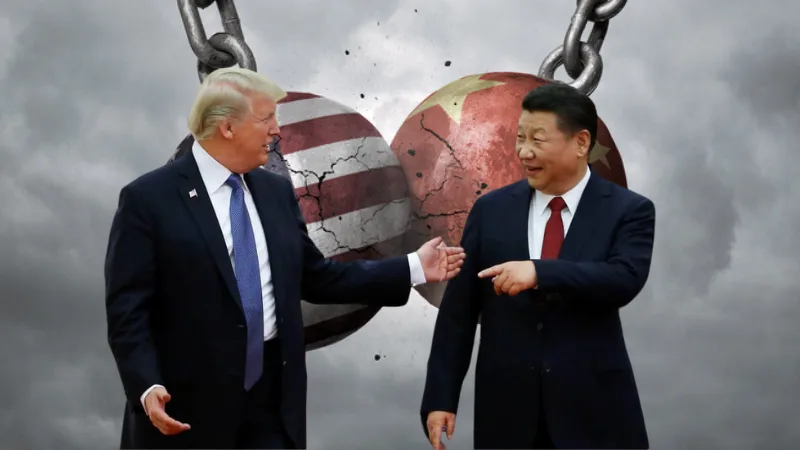
President Trump’s aggressive trade crackdown on Chinese imports into the United States is producing a clear and unintended consequence. The flood of low cost Chinese goods has not disappeared. It has simply changed direction. Increasingly, Europe is absorbing the surge.
From suburban backyards in England to former military air bases in Belgium, a parallel logistics ecosystem is emerging across the continent. Chinese exporters, squeezed out of the U.S. market by higher tariffs and the closure of key customs loopholes, are rapidly redirecting shipments into Europe where trade barriers remain lower and consumer demand remains strong.
Backyard Warehouses and a Shadow Logistics Network
In the English countryside, Xue Er, a stay at home mother who moved from Shanghai to the United Kingdom in 2021, recently built a 320 square foot storage shed behind her home. It sits near vegetable beds and a chicken coop. Inside, it is stacked with clothing, handbags, and small furniture sourced from Chinese merchants eager to reach European buyers.
When online orders arrive, Xue packages and ships the goods locally, cutting delivery times from weeks to days. In a strong month, she earns between £3,000 and £5,000.
Her operation is part of what logistics experts describe as an informal or shadow supply chain. Thousands of similar family run warehouses across Europe store inventory for Chinese sellers, many coordinated through social media platforms and messaging apps.
This system has become a critical release valve for China’s export economy. It has helped push the country’s trade surplus past $1 trillion for the first time, according to customs data.
Trump’s Trade Policy Rewires Global Commerce
The shift underscores how President Trump’s trade war is reshaping global trade patterns rather than eliminating them. While U.S. imports of Chinese goods have fallen sharply, China has compensated by expanding shipments to Europe and Southeast Asia.
Shipments to the United States dropped nearly 20 percent this year, but that decline was more than offset by gains elsewhere. Chinese exporters adapted quickly, redirecting inventory, adjusting product designs, and expanding logistics routes.
The European Union has now overtaken the United States as the largest destination for China’s low value package exports, particularly items sold through e commerce platforms like Shein and Temu.
“Europe is increasing, increasing, increasing,” said Bob Liu, a Chinese manufacturer who traveled to London to promote plush slippers produced in Fujian province.
“The U.S. used to be 80% of my business,” Liu said. “Now it is about 50%. Europe is 40%.”
He has redesigned products specifically for European tastes, including oversized slippers that can be customized to resemble luxury car brands.
“Europeans are more friendly to the Chinese now,” he added.
The De Minimis Shift
A key catalyst behind the redirection is the United States’ decision to close the de minimis loophole for Chinese shipments. Since May, packages valued under $800 are no longer exempt from U.S. tariffs.
As a result, exports of low value packages to the U.S. have fallen more than 40 percent.
Europe remains far more permissive. In the European Union, packages under €150 are exempt from customs duties. In the U.K., the threshold is £135. That gap has created a powerful incentive to reroute shipments.
Chinese e commerce exports have quadrupled to Hungary and Denmark and risen more than 50 percent to Germany, France, and the United Kingdom.
Europe Responds but Slowly
European policymakers are increasingly alarmed. Last week, the European Union agreed to impose a €3 fee on imported small packages beginning in July, with plans to fully eliminate the de minimis exemption by 2028. The U.K. plans similar measures, but not until 2029.
Retail trade groups argue the changes are overdue. The sector employs roughly 30 million people across Europe and has struggled with inflation, rising costs, and weak post pandemic growth.
They also cite environmental concerns and consumer safety risks tied to ultra cheap imports.
But demand remains strong. After years of economic stagnation, European consumers are embracing low prices and fast delivery.
“You’ve got to take the good with the bad,” said Zoe Giles, a 34 year old mother in Kent who orders 25 to 30 items a month from Shein or Temu. “It’s cheap and convenient. It has stuff that I can’t get elsewhere.”
A New Silk Road in the Air
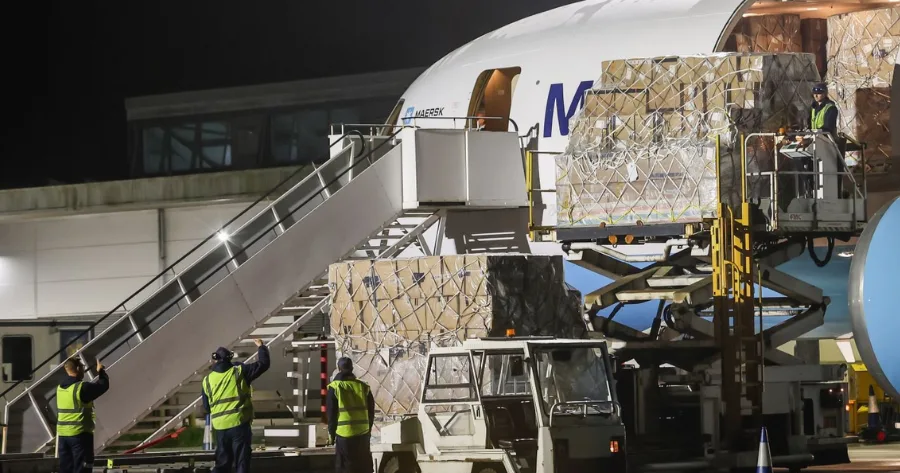
Fueling the surge is a rapidly expanding air cargo network connecting China to Europe through Central Asia. Industry insiders have dubbed it a modern Silk Road.
Abdulaziz Abdurakhmanov, founder of cargo airline My Freighter, launched his business in 2023. It now operates roughly 200 flights a month, transporting more than 8,000 tons of e commerce packages into Europe. Temu is among its largest customers.
“We are at our maximum capacity, Alhamdulillah,” Abdurakhmanov said.
Airport congestion is reshaping Europe’s logistics map. Secondary airports such as East Midlands in the U.K. and Liège in Belgium are emerging as key hubs due to fewer restrictions and available capacity.
“Temu, Shein, Alibaba, they are the biggest shippers in the world now,” said Peter Scholten, chief commercial officer of the aviation network One Air is part of.
“You realize, wow, these guys are really ahead of us.”
Family Warehouses Replace Drop Shipping
Chinese platforms are also changing how goods are stored and delivered. Rather than relying on drop shipping directly from factories, companies increasingly pre position inventory inside Europe to speed delivery.
JD.com, which operates Joybuy, leased roughly 530,000 square feet of warehouse space in Milton Keynes this year.
Smaller sellers rely on family warehouses, which can charge as little as 70 cents per package for lightweight goods and offer flexibility that commercial facilities do not.
Eva Lin, who runs a family warehouse outside Paris, packages clothing and home goods for Chinese sellers. She works four to five hours a day and faces penalties if shipments are delayed beyond 24 hours.
As volume grows, some operators are expanding into larger facilities. Cao Ying, who runs a 1,000 square meter warehouse near Düsseldorf, says competition is intensifying.
“Why is it always the shoddy, messy junk?” she said. “Europe is becoming a dumping ground.”
Safety and Regulatory Concerns Grow
European consumer groups have raised alarms about product safety. A joint investigation found that 70 percent of more than 100 items sold on Shein and Temu failed to meet EU safety standards.
Products included toys with choking hazards, USB chargers that overheated above boiling temperature, and jewelry containing cadmium levels thousands of times above legal limits.
Shein said it removed the items and tightened screening of third party vendors. Temu cited separate testing results and said it removes non compliant products.
Why This Matters for Investors
For investors, the redirection of Chinese exports carries several implications:
- European retailers face rising competitive pressure that could compress margins and accelerate consolidation.
- Logistics firms, cargo airlines, and secondary airports are emerging beneficiaries of shifting trade flows.
- E commerce platforms with global logistics flexibility are proving resilient to tariff shocks.
- Policymakers may accelerate regulatory responses that reshape pricing and demand.
Perhaps most importantly, the trend highlights a broader reality. Tariffs rarely eliminate trade. They redirect it.
President Trump’s strategy has forced China to adapt quickly. Europe is now grappling with the economic, political, and consumer consequences of becoming the new endpoint for the world’s cheapest supply chain.
Whether European regulators can stem the tide without triggering higher prices or political backlash remains an open question. For now, the packages keep coming.
About Author