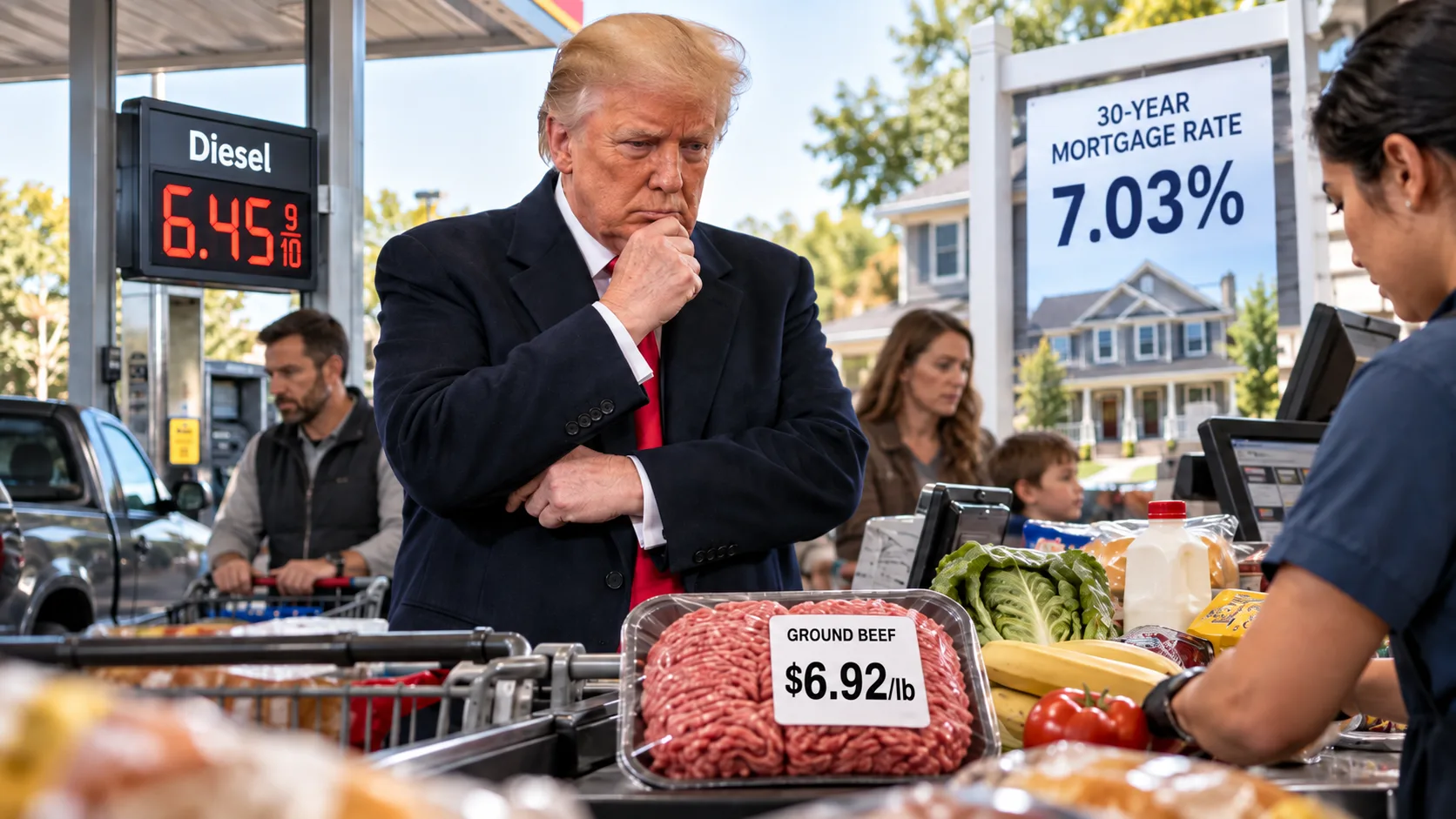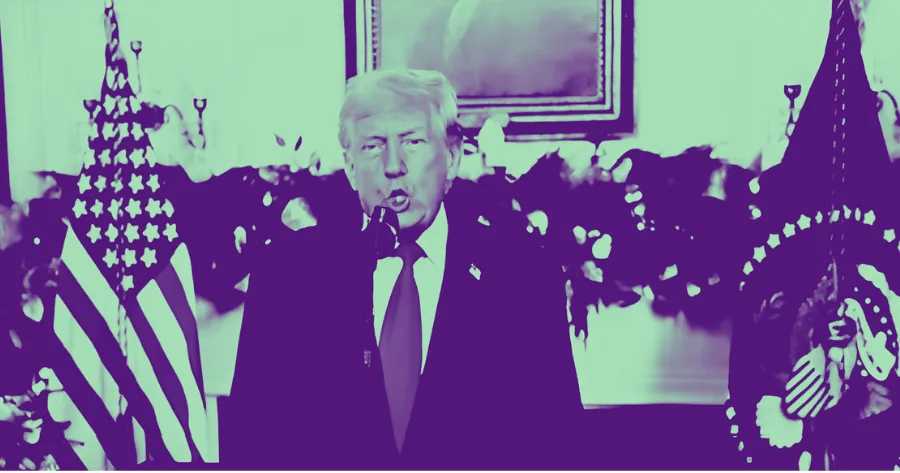
President Donald Trump delivered a rare prime-time address Wednesday night, using national television to argue that the U.S. economy is stronger than many Americans believe and to place responsibility for ongoing economic strain squarely on Democrats. The speech, broadcast during the holiday season, underscored the widening gap between White House messaging and voter sentiment on inflation, jobs, and household affordability.
In a headline-grabbing announcement, Trump said he is sending a $1,776 bonus check to roughly 1.45 million active-duty U.S. military members ahead of Christmas. The payout, which would cost an estimated $2.6 billion, was framed as a “warrior dividend” and symbolically tied to the upcoming 250th anniversary of the Declaration of Independence.
“The checks are already on the way,” Trump said.
A Political Address in a Traditionally Nonpolitical Setting
Standing in the White House Diplomatic Reception Room, flanked by two Christmas trees with a portrait of George Washington behind him, Trump pointed to his predecessor as the source of current economic challenges.
“Eleven months ago, I inherited a mess, and I’m fixing it,” Trump said. “We’re poised for an economic boom, the likes of which the world has never seen.”
The remarks came as Americans prepare for the holidays while still grappling with elevated prices for groceries, housing, utilities, and insurance. Despite Trump’s repeated promises of a booming economy, public anxiety over cost-of-living pressures has proven stubborn.
Tariffs, Inflation, and the Political Bet Behind the Bonus
Trump argued that his import tariffs, which economists widely acknowledge have contributed to higher consumer prices, will ultimately fund benefits for Americans, including the military bonus. While the payment may provide short-term relief for service members, the broader economic trade-offs remain central to investor and voter debates.
Inflation, which had been trending lower after peaking in 2022, has picked up again following Trump’s tariff announcements earlier this year. The consumer price index is now rising at an annual rate of about 3 percent, up from roughly 2.3 percent earlier in the spring.
At the same time, the labor market has softened. Since April, monthly job growth has averaged around 17,000, a sharp slowdown compared with earlier years. The unemployment rate has risen from 4 percent in January to 4.6 percent.
Slipping Approval Ratings and Midterm Stakes
The speech also came at a delicate political moment for the president. Public polling shows broad dissatisfaction with Trump’s handling of the economy, even among some voters who otherwise approve of his positions on border security and trade enforcement.
With the 2026 midterm elections approaching, control of both the House and Senate is on the line. Recent Republican losses have raised questions about the durability of Trump’s coalition, particularly among suburban and independent voters sensitive to economic conditions.
The White House appearance offered Trump an opportunity to reset the narrative and regain momentum. He leaned into the politics despite past network reluctance to broadcast overtly partisan presidential addresses. In 2022, several networks declined to air a prime-time speech from President Joe Biden that was viewed as overly political.
Charts, Claims, and Familiar Economic Messaging
Trump spoke rapidly and at times with visible frustration, responding to public skepticism by making increasingly bold promises for 2025. He said mortgage rates would fall and pledged that he “would announce some of the most aggressive housing reform plans in American history.”
To reinforce his case, Trump brought charts that he said showed rising incomes, easing inflation, and accelerating investment. He claimed foreign leaders have told him that the United States is “the hottest country anywhere in the world,” a line he has repeated frequently in public appearances.
The argument mirrors a challenge faced by his predecessor. Biden also pointed to strong headline growth and international comparisons during periods of elevated inflation, with limited success in shifting public opinion.
Why Voters Remain Unconvinced
Despite some positive indicators, including rising stock markets, lower gasoline prices, and heavy investment in artificial intelligence, many Americans continue to feel squeezed.
Housing affordability remains strained by higher interest rates. Wage growth has not fully offset price increases for essentials. Hiring has slowed noticeably, particularly in interest-rate-sensitive sectors.
Trump has said that new factory investments will boost manufacturing employment and that consumer spending will improve as tax refunds increase next year. Investors will be watching closely to see whether announced commitments translate into sustained job growth and productivity gains.
Other Policy Headwinds Persist
Economic messaging is not Trump’s only challenge. His mass deportation efforts have drawn public resistance, even as border crossings have declined. His foreign policy initiatives and actions against suspected drug trafficking vessels near Venezuela have generated limited domestic enthusiasm.
Trump also addressed health care costs, blaming Democrats for expected increases in insurance premiums as Affordable Care Act subsidies expire. While lawmakers from both parties have discussed extending the subsidies, Trump has argued that payments should go directly to consumers rather than insurers. He has not yet endorsed a specific legislative proposal.
A Tightly Timed Speech and a Private Review
After the cameras stopped rolling, Trump reportedly turned to his aides to ask how the address had been received. He specifically referenced White House chief of staff Susie Wiles, who had encouraged him to speak to the nation.
“I told you 20 minutes and you were 20 minutes on the dot,” Wiles said.
What Investors Should Watch Next
For investors, the address underscored a key reality. Markets may respond positively to headline growth, tax incentives, and industrial investment promises, but voter confidence often hinges on everyday affordability and job security.
Whether Trump’s economic narrative gains traction will depend less on charts and speeches and more on tangible improvements in inflation, employment, and housing costs. With midterm elections looming, the gap between economic data and public perception is becoming a central political and market risk to monitor.
As history has shown, sustained investor confidence and political stability tend to move together. For now, that alignment remains uncertain.
About Author