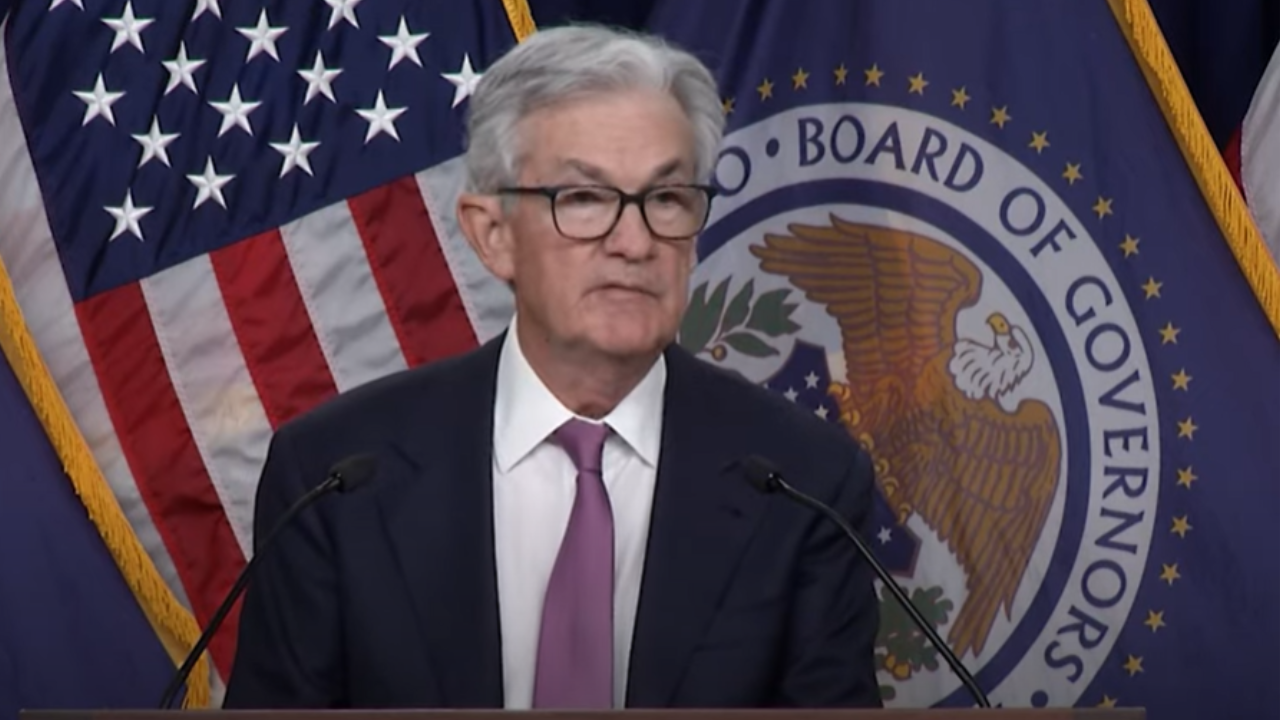
The Federal Reserve announced Wednesday that it would maintain its benchmark interest rate, citing continued economic uncertainty and lingering inflation concerns. This marks the second consecutive policy meeting at which the central bank has opted to hold rates steady, keeping the federal funds rate between 4.25% and 4.5%.
Previously, the Fed had paused rate adjustments in January following three consecutive rate cuts—50 basis points in September and two reductions of 25 basis points each in November and December.
In its latest announcement, the Federal Open Market Committee (FOMC), responsible for steering monetary policy, emphasized increased uncertainty about the economy. It highlighted its commitment to balancing its dual mandate of achieving maximum employment and maintaining inflation at a 2% long-term goal.
Updated Economic Projections and Forecasts
Alongside the decision on interest rates, the FOMC shared revised economic forecasts indicating two additional 25-basis-point rate cuts anticipated later this year. Further projections suggest similar reductions—two in 2026 and one in 2027.
Significantly, policymakers now foresee slower economic growth and a slightly higher unemployment rate compared to earlier predictions from December. The revised outlook anticipates real GDP growth of 1.7% by the end of 2025, down from the earlier estimate of 2.1%. Additionally, unemployment is expected to rise slightly, with a projected rate of 4.4% by December 2025, up marginally from 4.3% in prior forecasts. The current unemployment rate, as of February, stood at 4.1%.
Inflation Remains Elevated
Policymakers’ preferred inflation measure, the personal consumption expenditures (PCE) index, is now forecasted to reach 2.7% by year’s end—higher than the 2.5% previously anticipated. This revision reflects ongoing price pressures despite some easing over the past two years.
Addressing inflation expectations at a press conference, Federal Reserve Chair Jerome Powell stated, “Some near-term measures of inflation expectations have recently moved up. We see this in both market- and survey-based measures. And survey respondents, both consumers and businesses, are mentioning tariffs as a driving factor.”
Powell clarified that while the labor market currently does not significantly fuel inflation, price pressures remain above the Fed’s long-term target. When specifically questioned about tariffs’ contribution to higher inflation, Powell acknowledged the complexity involved in accurately assessing their impact. He remarked, “So some of it—the answer is clearly some of it, a good part of it—is coming from tariffs. But we will be working, and so will other forecasters, to try to find the best possible way to separate non-tariff inflation from tariff inflation.”
Recession Risk and Market Expectations
When asked about recession risks, Powell emphasized the inherent uncertainty in forecasting economic downturns. He noted that historically there’s about a 25% probability of recession within any given year. However, current forecasts show a modest rise in recession probabilities, though still not significantly high.
“If you look at outside forecasts, a number of forecasters have generally raised their possibility of a recession somewhat, but still at relatively moderate levels,” Powell explained.
Regarding potential interest rate cuts, Powell maintained that the Fed is “well positioned to wait for further clarity and not in any hurry.” Despite this cautious stance, markets are betting on a near-term rate cut. According to the CME FedWatch tool, there’s a nearly 55% probability of a rate cut as early as the Fed’s May meeting, and the likelihood remains evenly split for two or three rate reductions by the end of 2025.
Analysis from Financial Experts
Charlie Ripley, senior investment strategist for Allianz Investment Management, commented on the Fed’s cautious approach, saying, “While the outcome of this meeting was broadly in line with market participant expectations, it clearly shows the conundrum the Fed has in balancing growth and inflation expectations.” Ripley further noted the substantial uncertainty surrounding inflation and suggested the Fed’s current stance might represent a prudent “wait-and-see” strategy.
The Fed’s next meeting is set for May 6-7, where markets and policymakers alike will seek further clarity on economic conditions and inflation trends.
About Author