Gold has quietly crossed from defensive hedge into full-scale momentum trade.
Just months after breaking through $4,000 an ounce, gold futures are now hovering near the psychologically critical $5,000 level as investors seek protection from geopolitical risk, aggressive trade policy, falling interest rates, and elevated equity valuations. The metal recently surged more than 2 percent in a single session and logged the largest one-day dollar gain on record, underscoring how fast capital is rotating into hard assets.
The catalyst is not one single event. It is a convergence of monetary policy uncertainty, currency debasement fears, central bank accumulation, richly priced stocks, and technical momentum that is feeding on itself.
For investors, the gold move is not just about fear. It is about positioning ahead of structural shifts in how capital is allocated globally.
Here are the five forces powering gold’s historic rally and why they matter for portfolios.
1. Currency Debasement Fears Are Accelerating
One of the most powerful drivers behind gold’s advance is growing concern about the long-term integrity of fiat currencies, particularly the U.S. dollar.
Investors increasingly view gold as an insurance policy against governments that are running persistent deficits, expanding balance sheets, and using monetary policy aggressively to support growth or political objectives. When confidence in currency stability erodes, gold becomes the default store of value.
President Trump’s current policy posture has added fuel to those concerns. In recent months, the administration has escalated tariff threats against Europe tied to negotiations over Greenland, authorized military actions abroad, and increased pressure on the Federal Reserve to accelerate rate cuts. These moves inject uncertainty into trade flows, capital markets, and currency stability.
Earlier in 2025, a wave of tariffs contributed to one of the weakest dollar starts to a year in decades. When the Federal Reserve later signaled its willingness to ease policy even as inflation remained elevated, the dollar weakened further, reinforcing gold’s appeal.
Global debt levels are also compounding the issue. Japan continues to struggle with rising bond yields amid massive sovereign debt. Several European governments face fiscal strain from energy subsidies, defense spending, and slowing growth. These conditions reinforce investor skepticism about long-term currency purchasing power.
As TD Securities strategist Daniel Ghali told clients:
“Gold’s rally is about trust. For now, trust has bent, but hasn’t broken. If it breaks, momentum will persist for longer.”
That trust dynamic is central. When investors begin to doubt the stability of institutions that support currencies, capital migrates rapidly into tangible assets.
2. Falling Interest Rates Are Making Gold More Attractive
Gold does not pay interest or dividends. That normally makes it less attractive when yields on cash and government bonds are high.
That equation has flipped.
After several years of elevated interest rates, the Federal Reserve has begun easing policy. Bond yields have fallen, and returns on money market funds and short-term Treasurys are compressing. As yields decline, the opportunity cost of holding gold disappears.
At the peak of rate hikes, money market fund assets ballooned to nearly $8 trillion as investors chased risk-free yield. Now that those yields are falling, even a modest reallocation of that capital toward gold can materially move prices.
Goldman Sachs estimates that gold ETFs represent only a fraction of U.S. household financial assets. Even a small percentage shift into gold could create disproportionate upside pressure due to the limited physical supply and constrained mining growth.
Lower rates also support gold by weakening the dollar and stimulating speculative positioning. As liquidity increases, investors tend to rotate into real assets that historically perform well during easing cycles.
If political pressure accelerates additional rate cuts later this year, gold’s tailwind strengthens further.
3. Central Banks Are Buying Aggressively
Private investors are not the only buyers driving this rally.
Central banks have quietly become one of the largest and most consistent sources of gold demand globally. After decades of net selling, central banks reversed course following the 2008 financial crisis and accelerated purchases after Western sanctions froze Russia’s foreign reserves in 2022.
That event reshaped how sovereign nations think about reserve security. Countries with strained relations with the U.S. and Europe increasingly prefer assets that cannot be frozen, sanctioned, or controlled by foreign governments.
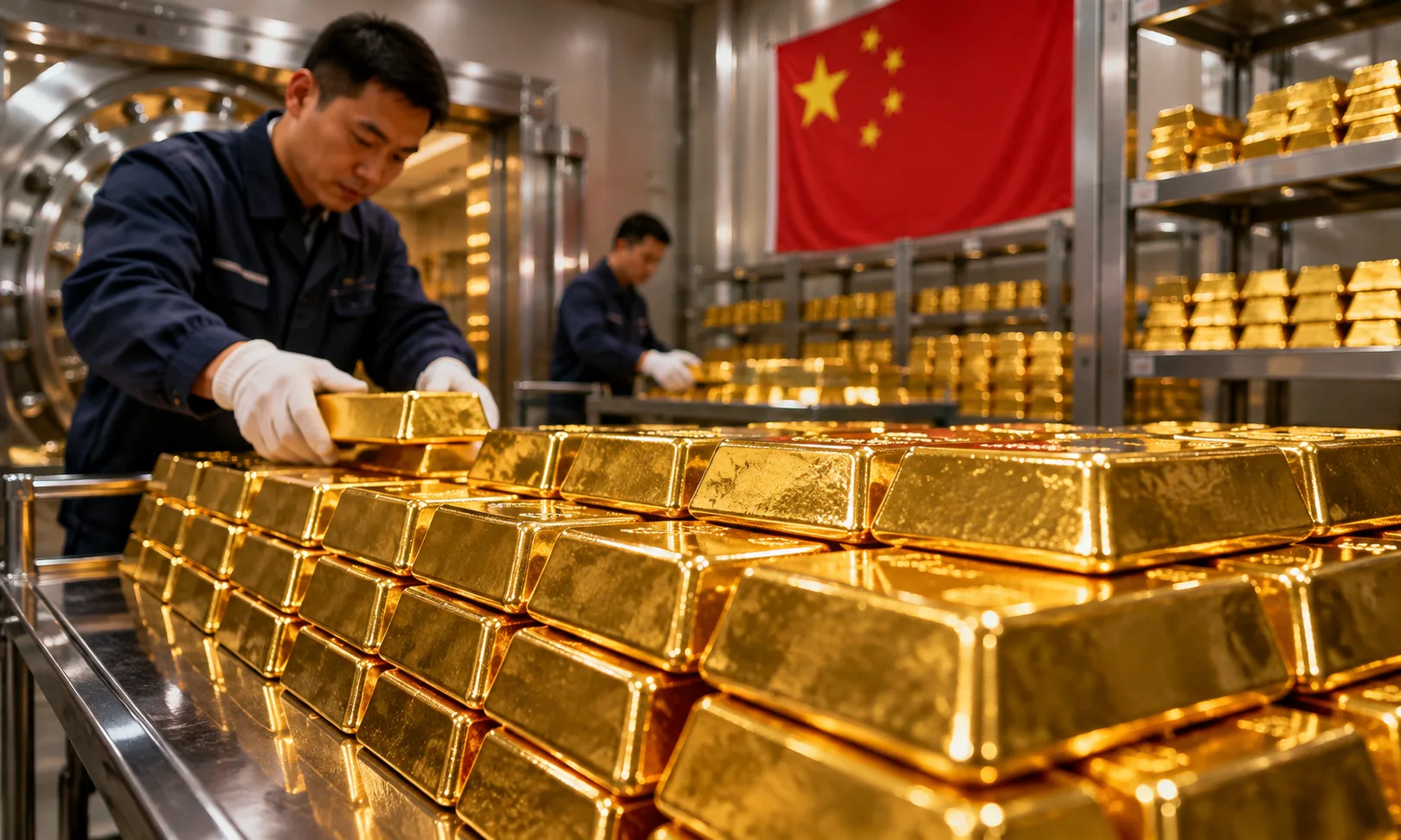
China continues to accumulate gold as part of a broader effort to diversify away from dollar-denominated assets. Emerging markets are doing the same. Even allied nations such as Poland have increased gold reserves as a hedge against sovereign debt risks and currency volatility.
Juan Carlos Artigas, head of research at the World Gold Council, explained the rationale clearly:
“Central banks are buying gold not just purely for its price performance, but the role that it can play in foreign reserves. Gold is very useful to hedge or diversify the reserves.”
Unlike retail investors, central banks are not price sensitive. Their buying is strategic and long term. That creates a persistent structural demand floor under the gold market that did not exist a decade ago.
This shift matters because it reduces downside volatility and reinforces bullish momentum during periods of uncertainty.
4. Stock Valuations Are Making Investors Nervous
Equity markets remain near record highs, but valuations are stretched.
One commonly referenced valuation measure suggests stocks are more expensive today than at almost any point in the last century, with the exception of the late-1990s tech bubble. Earnings growth has struggled to keep pace with price appreciation, particularly among mega-cap technology stocks that dominate major indexes.
A small group of companies now drives most index performance. When those stocks wobble, the entire market feels the impact. Recent selloffs in large technology names have erased hundreds of billions in market value in single sessions, highlighting concentration risk.
Meanwhile, smaller stocks and defensive assets have quietly begun outperforming large caps, suggesting institutional investors are diversifying away from crowded trades.
Gold benefits directly from this dynamic. When investors perceive equity risk rising while returns become more uncertain, capital flows into alternative stores of value.
The combination of elevated valuations, geopolitical tension, and policy uncertainty creates fertile ground for defensive reallocations.
5. Momentum Is Reinforcing the Rally
Markets often move in trends, and gold’s trend has become self-reinforcing.
Historically, when gold posts strong annual gains, momentum tends to persist into the following year. In several prior cycles where gold rose more than 20 percent, subsequent gains averaged double-digit percentages.
The current cycle has exceeded those historical patterns. After a strong advance last year, gold surged dramatically again in 2025, drawing in trend-following funds, commodity traders, and institutional allocators.
As prices break through psychological thresholds like $4,000 and now approach $5,000, technical buying accelerates. Headlines attract new participants. Risk managers adjust allocations. Algorithms amplify flows.
Momentum does not create fundamentals, but it magnifies them.
As long as macro uncertainty remains elevated and liquidity conditions stay supportive, the trend favors higher prices.
What This Means for Investors
Gold’s rally is not just a short-term trade. It reflects a deeper recalibration of how investors think about risk, currency stability, and portfolio protection.
Several implications stand out:
Diversification matters more than ever. Concentration in equities and dollar-denominated assets carries higher systemic risk in an environment of geopolitical fragmentation and fiscal expansion.
Liquidity cycles favor real assets. As central banks ease and fiscal spending remains elevated, assets with limited supply such as gold historically outperform.
Central bank behavior has changed structurally. Sovereign accumulation provides long-term support that did not exist in prior cycles.
Volatility is likely to persist. Trade disputes, political pressure on monetary policy, and global debt levels suggest continued uncertainty ahead.
Investors do not need to speculate aggressively to benefit from these trends. Exposure through physical gold, ETFs, royalty companies, or select miners can serve as portfolio ballast while preserving upside potential.
That said, gold is not immune to corrections. Sharp rallies often experience pullbacks. Position sizing and discipline still matter.
But the macro backdrop strongly favors continued demand.
If trust in currencies and institutions continues to erode, gold’s move toward $5,000 may not be the end of the cycle. It could simply be the next milestone.
About Author