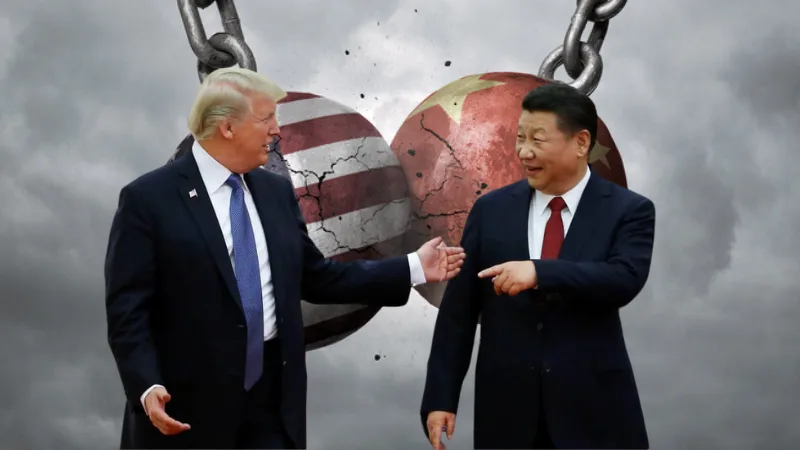
President Donald Trump and Chinese President Xi Jinping put on an elaborate display of cooperation in Washington Thursday, but investors looking past the ceremony found a much more complicated picture.
The two countries extended their trade truce, discussed artificial intelligence and kept diplomatic channels open. Yet some of the biggest risks hanging over the U.S.-China relationship, including Taiwan, technology restrictions and the broader trade fight, remain unresolved.
For markets, that may be the most important takeaway from the summit. The immediate threat of another sharp escalation appears to have been pushed back, but the underlying competition between the world’s two largest economies is still very much alive.
1. The Trade War Just Got Another Extension
The most concrete economic result was relatively modest. Washington and Beijing agreed to extend their existing trade arrangement for another two months, moving the expiration date to January 10, according to Treasury Secretary Scott Bessent.
That buys both governments additional negotiating time and reduces the immediate risk of another round of tariff escalation. China has also committed to large purchases of American agricultural products, including soybeans, while Washington continues pressing Beijing to fulfill broader farm commitments.
Those purchases matter for American farmers, who have repeatedly found themselves caught in the middle of U.S.-China trade disputes. But investors should view the two-month extension for what it is: more negotiating runway, rather than a final settlement.
The deeper disputes over technology, industrial policy, market access, investment restrictions and economic security remain unresolved. That makes January 10 an important date to watch, particularly for companies with meaningful exposure to China, agriculture, manufacturing and global supply chains.
2. Taiwan May Be the Bigger Story
One of the most consequential moments of the summit came behind closed doors.
According to China’s state-run Xinhua News Agency, Xi urged the United States to oppose Taiwanese independence and to handle the Taiwan issue with greater caution. That matters because Taiwan sits at the center of one of the most important geopolitical and economic fault lines in the world.
The island is home to a critical portion of the global semiconductor industry, and any serious deterioration in security around Taiwan could ripple rapidly through technology supply chains, electronics production and financial markets.
Washington has traditionally maintained a deliberately ambiguous position toward Taiwan while providing the island with military equipment and maintaining unofficial relations. Xi’s pressure therefore carries significance beyond diplomatic language. Beijing continues to signal that Taiwan remains near the center of its relationship with Washington.
Markets have largely learned to live with routine U.S.-China tension. A Taiwan crisis would be a very different category of risk.
3. AI Is Becoming a U.S.-China National Security Issue
Artificial intelligence also moved closer to the center of the relationship.
Xi said both countries have a responsibility to develop AI in a way that keeps the technology under human control. Trump, meanwhile, has continued to emphasize American leadership in AI and has resisted international rules that he believes could slow U.S. development.
That creates an unusual dynamic. The United States and China are competing aggressively for technological dominance while simultaneously discussing ways to prevent increasingly powerful AI systems from creating security problems neither country wants.
Treasury Secretary Scott Bessent has floated the idea of a notification mechanism that could allow the two governments to alert each other when an AI incident reaches national-security significance. Even if such a system remains preliminary, the fact that Washington and Beijing are discussing AI risk at this level tells investors how quickly the issue is moving from Silicon Valley into foreign policy.
That matters for semiconductor exports, cloud infrastructure, cybersecurity rules and the massive capital spending programs driving companies such as Nvidia, Microsoft, Meta and Alphabet. AI is becoming inseparable from national security, and U.S.-China policy will increasingly shape the economics around it.
4. Semiconductor Investors Still Have a China Problem
The summit did little to eliminate the structural problem facing the semiconductor industry.
Washington wants American companies to dominate advanced AI while simultaneously limiting China’s access to technologies that could strengthen Beijing economically or militarily. China, meanwhile, wants greater technological independence while maintaining access to global markets and advanced equipment.
Those goals naturally collide. Semiconductor export controls, advanced manufacturing equipment and AI chips are likely to remain bargaining tools regardless of how cordial Trump and Xi appear publicly.
For investors watching Nvidia and the broader semiconductor complex, the key is to separate diplomatic tone from actual policy. A friendlier summit does not automatically mean Washington will loosen restrictions on advanced technology exports, just as continued export restrictions do not necessarily mean another full-scale trade war is imminent.
Both countries increasingly appear willing to compete aggressively while trying to prevent that competition from spilling into a broader economic rupture. That may become the operating environment investors need to get used to.
5. The Ceremony Wasn’t the Economic Story
Trump gave Xi an unusually elaborate welcome, including military pageantry, a formal White House ceremony and a state dinner. The symbolism was clear: both governments wanted to demonstrate that the relationship remains manageable despite intense competition.
There is real economic value in that. Markets generally dislike uncertainty more than disagreement, and a functioning diplomatic relationship between Washington and Beijing reduces the odds that tariffs, export controls or geopolitical disputes suddenly spiral without communication.
But the ceremony should not be mistaken for evidence that the fundamental relationship has changed. The two countries remain competitors across trade, technology, manufacturing, military power and global influence.
The more useful conclusion for investors is that the summit may have made that competition slightly more predictable. Predictability matters because it lowers the immediate risk of a sudden policy shock, even if the deeper disagreements remain in place.
What Investors Should Watch Next
Several developments now matter more than the ceremony itself.
January 10 is the clearest near-term date. If the trade arrangement is extended again or broadened into a larger deal, that could affect agriculture, industrial stocks, retailers and companies with significant China exposure.
Semiconductor restrictions remain another major issue. Any change involving advanced AI chips or manufacturing equipment could have immediate implications for Nvidia and the broader chip sector.
Taiwan policy also deserves close attention. Beijing’s renewed pressure makes future U.S. arms decisions and any shift in Washington’s rhetoric more important.
Chinese agricultural purchases will provide a measurable way to judge whether the economic détente is translating into actual commerce.
And U.S.-China AI talks may become increasingly important if both sides move toward a formal communication system around high-risk AI incidents or national-security concerns.
The Bigger Picture
The easiest interpretation of the summit is that U.S.-China relations are improving. The more useful interpretation for investors is narrower: both governments currently have strong incentives to keep their rivalry from becoming economically destructive.
China needs access to global markets and continued economic growth. The United States wants to preserve its technological advantage without creating unnecessary disruption for American companies, consumers and farmers. That creates room for temporary agreements even while the strategic competition continues.
Markets may therefore be entering a new phase of the U.S.-China relationship: intense competition accompanied by more deliberate attempts to keep that competition contained.
If that holds, it could reduce one major source of market uncertainty. If negotiations break down, the same unresolved issues highlighted during this summit, particularly technology and Taiwan, could quickly bring that uncertainty back.
For now, Trump and Xi have bought themselves something valuable: time.
Whether they use it to build a more durable economic arrangement is the question investors should be watching next.
About Author