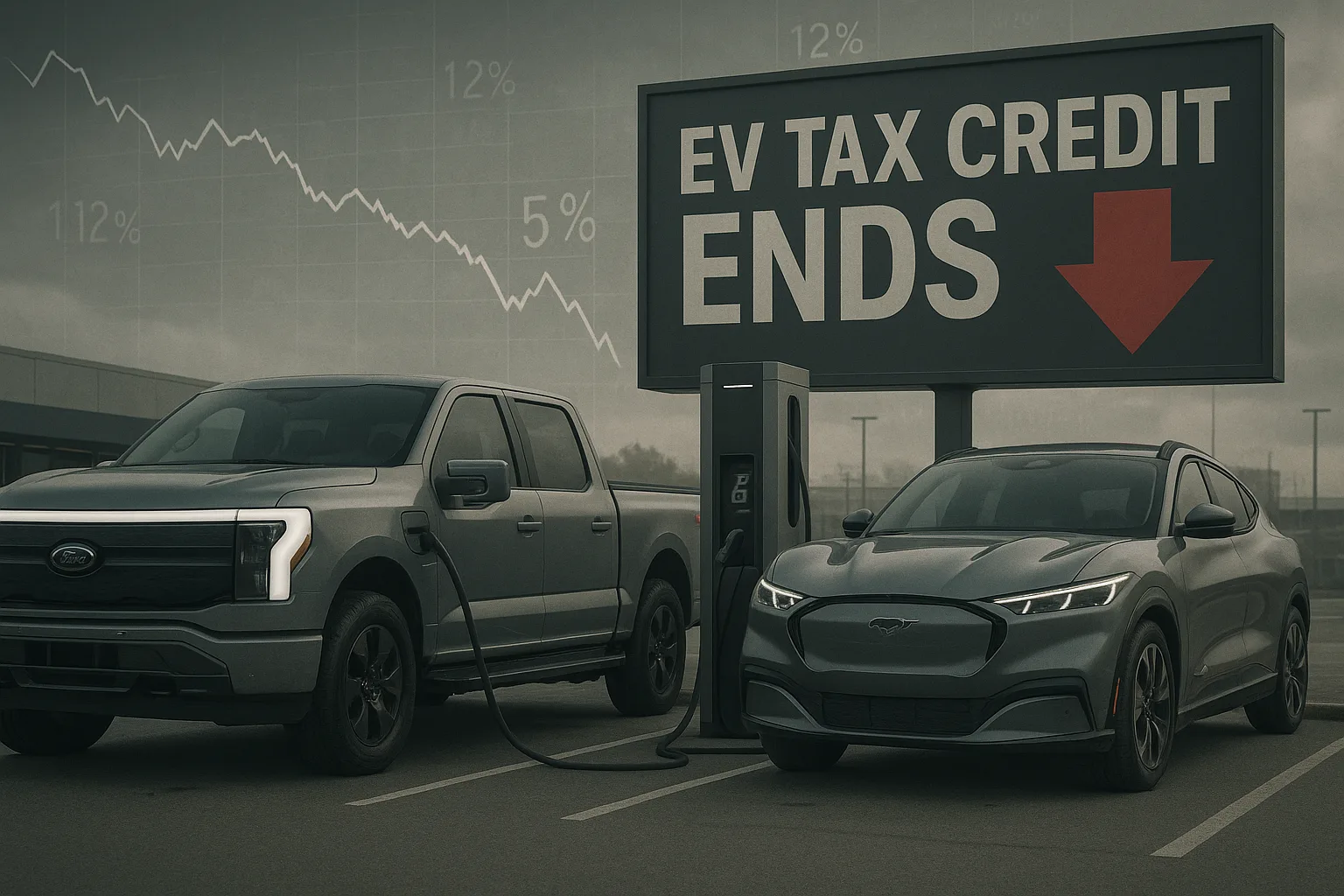
Ford Motor Company CEO Jim Farley is sounding the alarm: U.S. electric vehicle (EV) sales could fall sharply next month as federal tax incentives come to an end. The change could slash demand for EVs by nearly 50% and force automakers to rethink their strategies in the clean-energy race.
EV Demand Faces Sharp Decline
Farley, speaking at Ford’s Pro Accelerate event in Detroit, said he expects EV sales to drop from a record market share of 10–12% this month to just 5% after the $7,500 federal credit expires.
“It’s going to be a vibrant industry, but it’s going to be smaller — way smaller than we thought, especially with the policy change,” Farley said.
The tax credit removal comes as part of the Trump administration’s “One Big Beautiful Bill Act,” which eliminated EV incentives but added perks for purchasing U.S.-assembled vehicles, regardless of whether they are electric.
Why Hybrids May Win in the Short Term
Farley admitted that consumer appetite for all-electric vehicles remains limited due to high costs, charging concerns, and limited infrastructure. Instead, hybrid vehicles appear to be the sweet spot for many Americans.
“Customers are not interested in the $75,000 electric vehicle,” Farley said. “They find them interesting — they’re fast, efficient, and you don’t go to the gas station — but they’re expensive.”
Ford currently offers several all-electric models, including the F-150 Lightning pickup, which can cost over $90,000, and the Mustang Mach-E crossover. But hybrids may end up driving sales growth in the near future, offering affordability and practicality while still reducing emissions.
EV Sales Surge Before the Deadline
The looming incentive expiration has already led to a rush of EV purchases. Cox Automotive estimates U.S. EV sales reached 410,000 in the third quarter of 2025, a 21% jump from last year and the strongest quarter ever. EVs likely made up 10% of all vehicles sold, a record high.
Analysts believe many buyers accelerated their plans to buy EVs before the tax credit expired — suggesting the next few quarters could show a steep pullback.
Pressure on Ford and the Auto Industry
Without incentives, Ford and its rivals face hard choices. Billions of dollars have already been invested in EV battery plants and production lines. Farley admitted this creates a challenge:
“We’ll fill them, but it will be more stress, because we had a four-year predictable policy. Now the policy changed. We all have to make adjustments.”
The CEO emphasized that Ford will continue building EV capacity, but the company may have to scale back expectations and rely more heavily on hybrids in the short run.
What It Means for Investors
For investors, Farley’s warning is significant. Automakers have been betting heavily on EV adoption, but policy changes and consumer hesitation could slow returns. Hybrids may emerge as the more profitable bridge strategy, particularly for companies like Ford and Toyota that already have strong hybrid portfolios.
Meanwhile, the removal of EV tax credits could also benefit used-EV markets and automakers with lower-cost models that qualify for alternative incentives tied to U.S. manufacturing.
Key Takeaways for Investors
- Ford EV sales outlook: CEO expects sales could fall 50% once tax credits end.
- Shift toward hybrids: Consumers may prefer hybrids over high-priced EVs.
- Policy risk is real: Automakers must adapt quickly to changing federal rules.
- Near-term headwinds: EV sales may decline after record highs in Q3 2025.
- Investment angle: Companies with strong hybrid offerings or affordable EVs may be better positioned in the next 12–24 months.
About Author