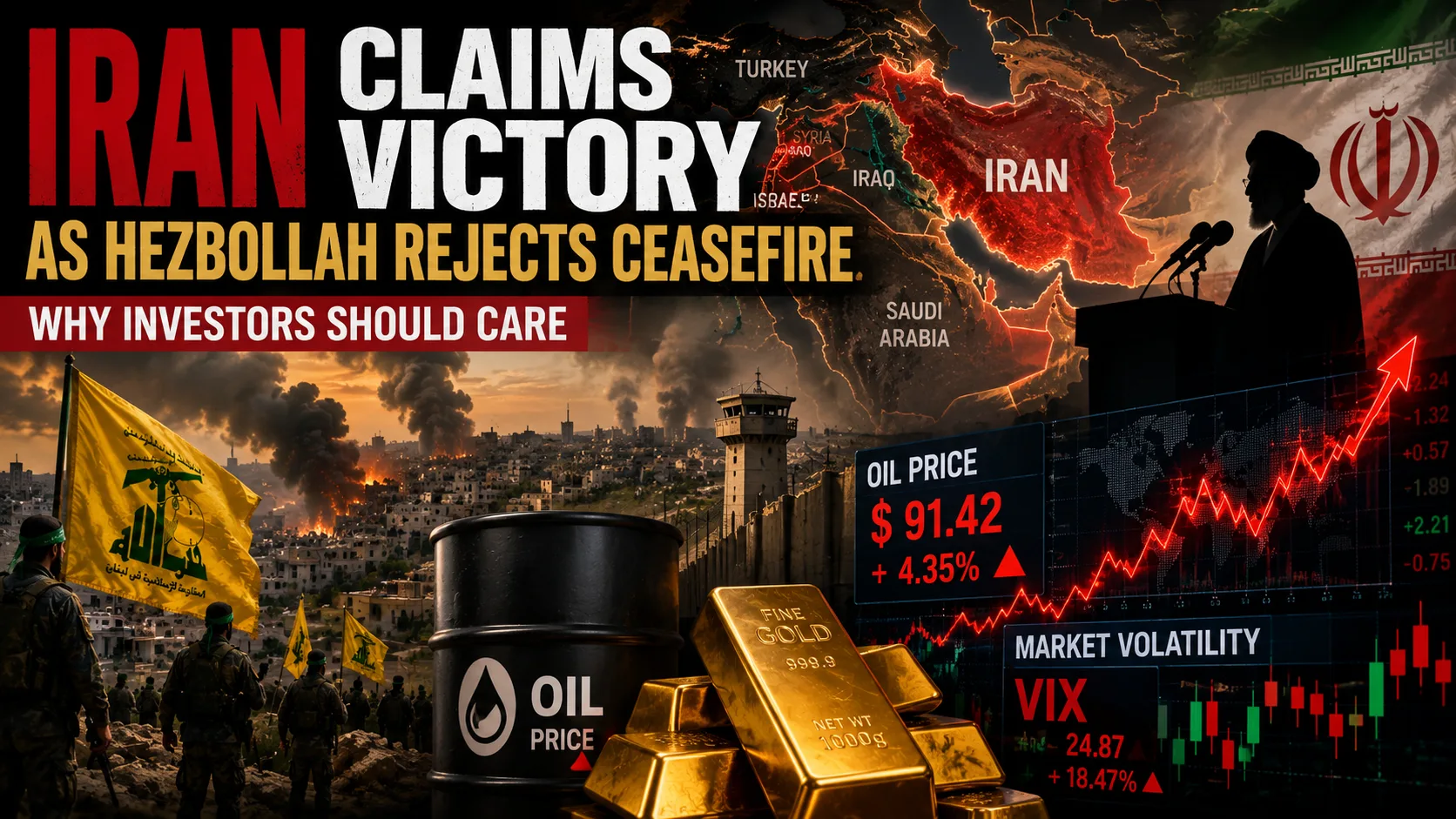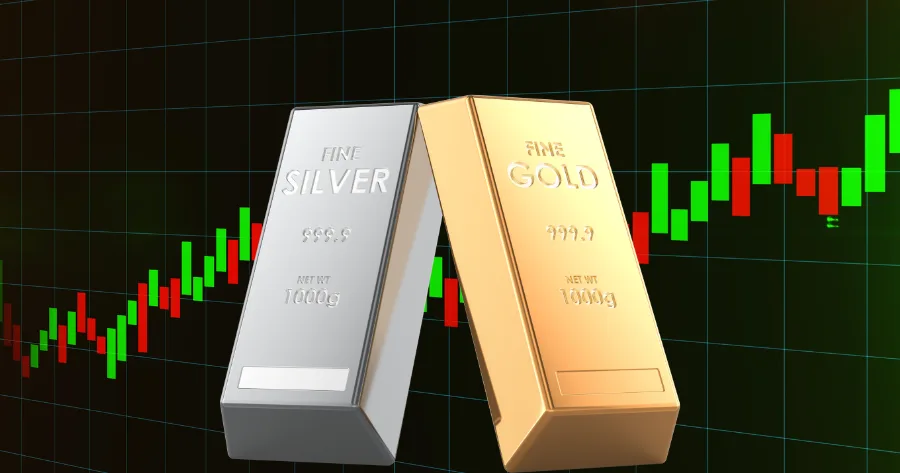
Gold and silver investors spent months hearing that peace in the Middle East would crush precious metals. Instead, the market may be setting up for the opposite outcome. As hopes rise for a potential U.S.-Iran deal after nearly 70 days of conflict, institutional money is quietly repositioning around a bigger idea: the next phase of the precious metals rally may be driven less by fear and more by structural distrust in the global financial system, sticky inflation, central bank behavior, and industrial shortages. For investors, this changes the playbook entirely.
Wall Street’s Old Gold Narrative Is Breaking Down
For years, the mainstream narrative around gold has been simplistic. Crisis erupts, gold rises. Tensions fade, gold falls. The metal has been treated like a geopolitical panic button rather than a long-duration macro asset.
That framework is becoming increasingly outdated.
Gold surged to roughly $4,750 an ounce this week while silver pushed toward $80 after reports emerged suggesting the U.S. and Iran may be nearing a peace agreement. On paper, that should have weakened safe-haven demand. Instead, buyers stepped back in aggressively.
This matters because it reveals what may actually be powering the current bull market.
The move is no longer purely about war headlines.
It is about confidence erosion.
Confidence in fiat currencies. Confidence in sovereign debt. Confidence that central banks can control inflation without breaking economic growth. Confidence that governments can continue borrowing endlessly without consequences.
That is a far more durable force than a single geopolitical conflict.
According to CNBC reporting, analysts from BNP Paribas Fortis, Indosuez Wealth Management, Metals Daily, and Solomon Global all argued that the recent pullback in precious metals resembled a consolidation phase rather than the end of the cycle. Several specifically pointed toward structural drivers that remain intact even if Middle East tensions cool.
The market appears to be coming to the same conclusion.
The Real Trade Is Happening Underneath the Headlines
The hidden story here has little to do with Iran.
The deeper issue is that global investors are slowly repricing the credibility of the monetary system itself.
Central banks around the world continue accumulating gold at historically aggressive levels. They are doing this while public debt explodes, fiscal deficits widen, and inflation remains structurally elevated despite periodic slowdowns.
That behavior sends a signal.
Governments themselves are increasingly diversifying away from traditional sovereign paper.
Philippe Gijsels of BNP Paribas Fortis told CNBC:
“Central banks and governments will continue to diversify away from U.S. government paper into gold.”
That statement deserves far more attention than another daily price target.
For decades, U.S. Treasuries represented the unquestioned global reserve asset. Today, many nations are behaving as though concentration risk inside the dollar system has become too large to ignore.
Investors should pay attention whenever central banks begin acting defensively.
Especially when retail investors are still debating whether gold is “dead money.”
Why Silver May End Up Outrunning Gold
Gold gets the headlines. Silver may deliver the shock.
Silver’s rally over the past two years has increasingly detached from the traditional precious metals narrative because industrial demand is becoming impossible to ignore. The metal now sits at the intersection of three major secular themes:
- Artificial intelligence infrastructure
- Electrification and renewable energy
- Supply chain fragmentation
This combination creates a very different setup from previous commodity cycles.
Paul Williams of Solomon Global told CNBC:
“Supply of physical silver remains tight, while strong demand from green technologies continues.”
That imbalance matters enormously.
Most investors still think of silver primarily as a smaller, more volatile version of gold. That misses the modern reality of the market. Silver is now partially functioning as a strategic industrial material tied directly to energy infrastructure, semiconductors, EV manufacturing, solar expansion, and AI-related hardware demand.
The AI angle is particularly underappreciated.
Massive AI data center expansion requires substantial electrical infrastructure, power management systems, and advanced electronics. Silver remains deeply embedded throughout those systems because of its unmatched conductivity.
At the same time, mine supply growth has struggled to keep pace.
That creates a dangerous setup for short sellers.
Silver’s market is dramatically smaller and tighter than gold’s. Once momentum builds, price moves can become violent very quickly.
Investors saw a preview of that dynamic during silver’s explosive 2025 rally.
The “Peace Deal Crash” Theory May Completely Backfire
Wall Street has largely framed the potential U.S.-Iran resolution as bearish for gold.
That conclusion may prove too shallow.
Ross Norman of Metals Daily told CNBC:
“It’s as if the handbrake has been released from gold and silver.”
That observation gets closer to what may really be happening.
During the conflict, oil prices surged while traders feared higher inflation and tighter monetary policy. Rising rate expectations acted as gravity across nearly every asset class, including precious metals.
Gold struggled because traders worried central banks would need to stay hawkish longer.
If tensions ease and energy prices stabilize, the market suddenly regains room to price future monetary easing again.
That creates a very different environment for metals.
Lower real yields historically benefit gold tremendously.
A cooling war combined with slowing growth, rising debt concerns, and eventual rate cuts could become an ideal backdrop for the next phase higher.
In other words, peace itself may remove the macro pressure that temporarily interrupted the metals rally.
That is the opposite of what most investors expected.
Precious Metals Are Moving From “Fear Trade” to Core Allocation
Most commodity bull markets move through recognizable psychological stages.
The current gold and silver cycle appears to be transitioning from “fear ownership” into “strategic ownership.”
That distinction matters.
Fear ownership happens during acute crises. Investors buy metals because they expect immediate chaos.
Strategic ownership happens when institutions begin treating metals as permanent portfolio infrastructure.
This is the phase where rallies become more durable.
Investors should watch for several signals that this transition is already underway:
Institutional money is getting more comfortable
Large wealth managers increasingly discuss gold allocations as standard diversification rather than fringe protection.
That shift normalizes ownership.
Central banks are buying consistently
Global reserve managers continue accumulating gold regardless of short-term price volatility.
This creates a powerful floor underneath the market.
Retail investors still look under-positioned
Unlike previous speculative peaks, broad retail euphoria around metals remains surprisingly muted.
That suggests positioning may still have room to expand.
Physical silver markets remain extremely tight
Industrial demand continues rising while major new supply projects remain limited.
Commodity markets with constrained supply rarely stay calm for long.
The “Real Asset Rotation” Investors Need to Understand
Investors need a better framework for understanding what may happen next.
Call it the “Real Asset Rotation.”
The process unfolds in four stages:
Phase 1: Inflation Pressure Builds
Energy prices rise. Supply chains tighten. Governments spend aggressively.
Traditional portfolios begin struggling.
Phase 2: Faith in Monetary Policy Weakens
Markets lose confidence that central banks can fully contain inflation without damaging growth.
Real yields become unstable.
Phase 3: Capital Starts Hunting Hard Assets
Investors rotate toward gold, silver, energy, infrastructure, and select commodities.
This is where markets appear to be now.
Phase 4: Institutions Fully Commit
Real assets become core portfolio holdings rather than tactical trades.
Price volatility remains high, but long-term ownership expands significantly.
Understanding this framework helps explain why gold and silver may continue rising even during periods where geopolitical fear declines.
The underlying driver is broader than war.
The Contrarian View Most Investors Still Ignore
Many analysts still argue that stronger economic growth or easing geopolitical tensions would weaken gold.
That assumption deserves scrutiny.
If global growth stabilizes while governments continue running enormous deficits and central banks eventually pivot back toward easier monetary policy, investors could face an environment where inflation remains structurally elevated without an immediate recession scare.
That may actually be one of the strongest possible environments for precious metals.
Especially silver.
Why?
Because silver benefits from both monetary demand and industrial growth simultaneously.
A soft landing combined with falling rates and persistent fiscal expansion could create a near-perfect storm for silver demand.
Investors focusing only on “fear trades” may completely miss that possibility.
Where Smart Money Could Flow Next
The next phase of this trend likely will not impact all metals investments equally.
Physical gold remains the monetary hedge
Gold still serves as the clearest protection against sovereign debt expansion and currency debasement.
Silver miners could become momentum leaders
These companies potentially offer the highest upside if industrial demand continues accelerating alongside monetary demand.
Volatility will remain extreme.
Royalty companies may quietly outperform
Royalty and streaming firms often provide cleaner exposure with lower operational risk.
Margins can expand dramatically during commodity bull cycles.
Mining infrastructure names deserve attention
If the metals rally continues, capital spending across mining operations could rise substantially.
That secondary wave often gets overlooked early in commodity cycles.
Five Signals That Could Ignite the Next Leg Higher
Several developments could determine whether this bull market accelerates further.
Federal Reserve signaling
Any renewed discussion around future rate cuts could reignite momentum quickly.
Oil market stability
If crude prices cool following a peace agreement, inflation fears tied specifically to energy could ease.
That may support metals through lower rate expectations.
Central bank buying data
Continued aggressive gold accumulation by sovereign buyers would reinforce the structural bull case.
Silver supply deficits
Any evidence that industrial demand is outpacing physical supply could trigger another violent move higher.
Dollar weakness
A sustained decline in the U.S. dollar would likely add fuel across the entire precious metals complex.
The Bigger Shift Investors Cannot Afford to Miss
The most important takeaway here is that gold and silver are increasingly behaving like strategic macro assets rather than temporary crisis trades.
That distinction changes how investors should approach them.
This is becoming less about timing individual geopolitical headlines and more about recognizing the long-term direction of global monetary systems, debt markets, and industrial demand.
The market may still experience violent corrections.
That is normal.
Silver in particular will remain highly volatile because its market structure is inherently thin relative to demand surges.
But volatility alone does not invalidate the broader thesis.
In fact, some of the strongest secular bull markets in history were filled with brutal corrections that convinced investors the trend had ended prematurely.
Final Takeaway for Investors
The potential end of the U.S.-Iran conflict may not kill the gold and silver rally.
It may strengthen it.
If energy pressures ease while long-term inflation concerns, fiscal deficits, central bank diversification, and industrial demand remain intact, precious metals could enter an entirely new phase of institutional adoption.
Gold increasingly looks like a referendum on monetary credibility.
Silver increasingly looks like a strategic resource hiding inside a precious metals trade.
That combination could become one of the defining investment stories of the decade.
About Author