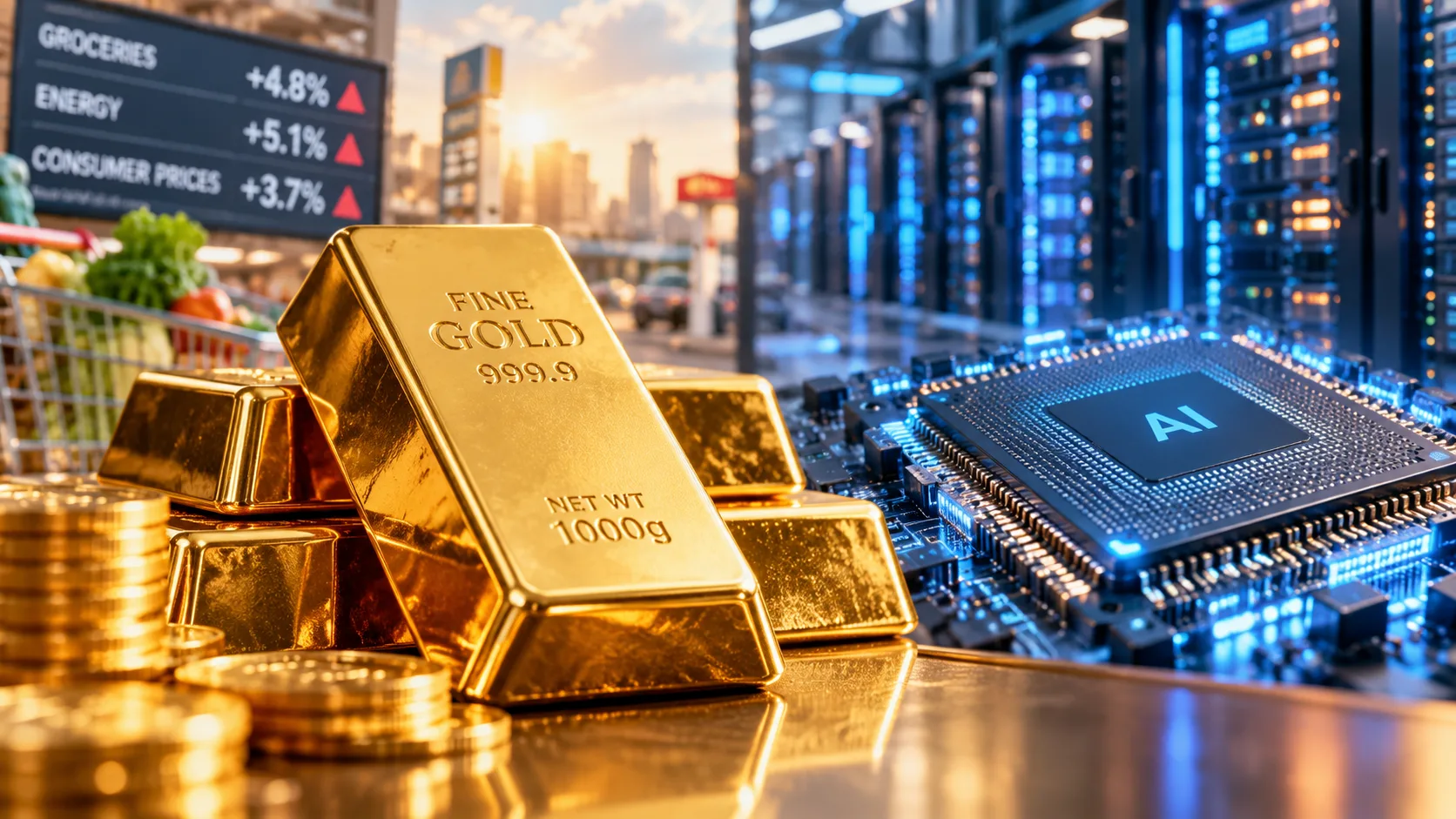
Rising inflation would normally be bullish for gold. Instead, the precious metal is suffering its worst week in months as investors brace for a major shift from the Federal Reserve.
Gold prices plunged to their lowest level of 2026 on Thursday, extending a sharp selloff that has caught many investors off guard.
August gold futures briefly touched $4,046.20 per ounce, marking a six-month low. The metal is now down 6.3% this week alone, putting it on track for its worst weekly performance since March.
The decline is particularly surprising because it comes as inflation is accelerating again. Consumer prices rose 4.2% annually in May, the highest level in three years, while energy costs continue to surge amid ongoing conflict in the Middle East.
Under normal circumstances, those developments would be expected to drive investors toward gold. Instead, traders are heading for the exits.
Why Gold Is Falling When Inflation Is Rising
For decades, gold has been viewed as a hedge against inflation and economic uncertainty. However, gold has one major disadvantage compared to other investments: it generates no income.
When investors believe interest rates will remain elevated, or potentially move higher, assets such as Treasury bonds become more attractive because they offer guaranteed yields.
That dynamic appears to be driving the current selloff.
A stronger-than-expected labor market and persistent inflation pressures have dramatically changed expectations for Federal Reserve policy.
Earlier this year, many investors anticipated multiple interest rate cuts throughout 2026. Those expectations have largely disappeared.
Now, traders are increasingly betting the Fed could eventually move in the opposite direction.
According to CME FedWatch data, markets are pricing in a significant possibility that policymakers may raise rates before year-end if inflation remains stubbornly high.
Higher rates generally strengthen the U.S. dollar and increase the appeal of income-producing assets, both of which tend to weigh on gold prices.
The Market’s New Fear: Higher for Longer
The Federal Reserve is widely expected to leave rates unchanged at next week’s meeting, the first chaired by Kevin Warsh.
However, what matters most to markets is not next week’s decision but what happens over the next six months.
The combination of:
- Rising inflation
- Elevated energy prices
- Strong employment data
- Ongoing geopolitical tensions
has created growing concern that policymakers may need to maintain restrictive monetary policy far longer than previously expected.
For gold investors, that creates a difficult environment.
The metal performs best when real interest rates are falling and investors expect central banks to loosen monetary policy. The current backdrop suggests the opposite may be developing.
Technical Breakdown Sends Warning Signal
Beyond the macroeconomic story, chart analysts are becoming increasingly cautious.
Gold recently fell below its 200-day moving average for the first time since September 2023.
Many technical traders view that level as one of the most important long-term indicators of market strength.
The breakdown has triggered additional selling pressure as momentum investors and algorithmic trading systems respond to deteriorating price action.
Analysts at Citigroup described the move as a significant negative signal for near-term performance.
The bank has maintained a cautious stance on gold since tensions in the Middle East escalated earlier this year and energy prices began climbing.
For now, technical traders see little evidence that the selloff has reached exhaustion.
Investors Are Abandoning the “Debasement Trade”
Another factor hurting gold is a broader shift in investor psychology.
For several years, many investors embraced what Wall Street referred to as the “debasement trade.”
The theory was simple: massive government deficits, growing national debt, inflation concerns, and expansive monetary policy would gradually weaken the U.S. dollar, making assets like gold and bitcoin increasingly attractive.
According to JPMorgan, that narrative is losing momentum.
The bank reports that both retail and institutional investors have been reducing exposure to gold-related investments, including exchange-traded funds and futures contracts.
Fund flows suggest many investors are no longer positioning for a prolonged decline in the dollar.
Instead, money has been moving toward higher-yielding assets that can benefit from elevated interest rates.
That shift has removed an important source of support for gold prices.
Could Gold’s Weakness Create an Opportunity?
Despite the current downturn, not all analysts have turned bearish.
Citigroup believes the long-term outlook for gold remains constructive once geopolitical tensions begin to ease and energy markets stabilize.
The bank argues that a resolution to disruptions surrounding the Strait of Hormuz could eventually reduce inflation fears and improve the environment for precious metals.
Some investors may also view the recent selloff as a potential reset after gold’s powerful rally over the past two years.
However, timing remains the challenge.
If inflation continues climbing and the Federal Reserve maintains a hawkish stance, gold could remain under pressure in the near term regardless of its longer-term fundamentals.
What Investors Should Watch Next
Gold’s next major catalyst may arrive over the coming weeks.
Investors will be closely monitoring:
- The Federal Reserve’s policy statement and economic projections
- Upcoming inflation reports
- Energy prices linked to Middle East tensions
- Treasury yields and bond market expectations
- Flows into gold ETFs and futures markets
For now, the market’s message is clear.
Despite rising inflation, growing geopolitical uncertainty, and ongoing concerns about government debt, investors are increasingly focused on one risk above all others: the possibility that interest rates stay higher for much longer than expected.
And in that environment, gold is suddenly losing some of its shine.
About Author