Prominent investor and former BitMEX CEO Arthur Hayes argues the AI industry is building computing capacity faster than companies may be able to profitably use it. If he is right, the result could be a familiar cycle: massive overinvestment, falling prices, financial stress and eventually a policy response that creates an entirely different opportunity for investors.
His warning does not depend on AI failing. In fact, the strange part of his thesis is that AI could become enormously successful while many of the companies financing today’s infrastructure boom still lose money.
The AI Spending Boom Is Getting Enormous
Speaking at the Gamma Prime Investing Conference in Singapore, Hayes said humanity is “wasting multi-trillion dollars” building AI data centers.
The numbers help explain why he is concerned.
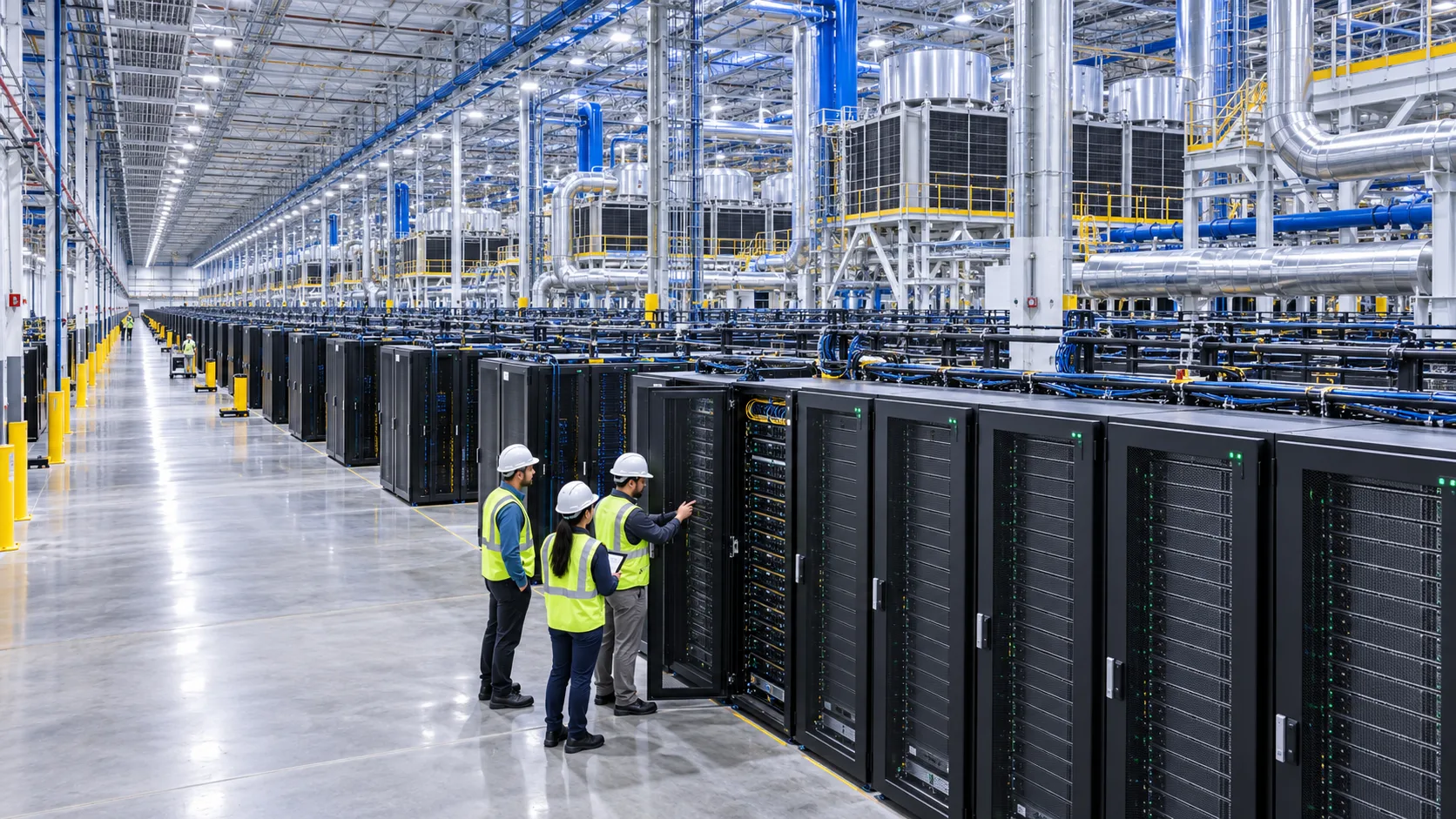
BloombergNEF estimates that capital spending among 14 of the world’s largest publicly traded data center operators could approach $750 billion in 2026, up from less than $450 billion last year. It also estimates that more than 23 gigawatts of data center capacity was under construction globally, with roughly three-quarters of that construction in the United States.
Big Tech is driving much of the spending. Bloomberg reported earlier this year that Amazon, Microsoft, Alphabet and Meta were collectively preparing to spend enormous sums on capital expenditures, much of it tied to AI data centers and computing equipment.
The logic behind that spending is easy to understand. Companies believe artificial intelligence could become embedded across software, healthcare, finance, advertising, robotics and countless other industries. Nobody wants to discover five years from now that they failed to build enough infrastructure for the next major technological revolution.
Hayes believes the opposite problem may be developing.
Companies may be building too much, too quickly.
What Happens When All Those Data Centers Come Online?
Hayes’ argument follows a pattern that has played out repeatedly during major technological shifts.
A breakthrough attracts capital. Investors rush to finance new infrastructure. Competitors fear being left behind, so they spend even more. Eventually, supply grows faster than economically viable demand.
“If you study financial history and you study every single major technological rollout, it always is overbuilt,” Hayes said.
That does not necessarily mean the technology itself fails.
The internet did not disappear after the dot-com crash. Telecommunications networks built during the late-1990s boom eventually became critical infrastructure. Railroads transformed the economy even though many railroad investors lost enormous amounts of money along the way.
The winners frequently came later.
Infrastructure financed during periods of excessive optimism can become much cheaper once competition intensifies and weaker operators fail. The next generation of businesses then gets access to infrastructure that previous investors paid dearly to construct.
Hayes believes AI computing could follow that path.
Today’s companies are pouring money into GPUs, cooling systems, power generation and massive data centers. When that capacity comes online, its owners will need customers willing to pay enough for compute to generate acceptable returns.
If supply begins growing faster than demand, pricing could fall quickly.
That would be great news for companies buying computing power. It could be painful for the companies that spent billions of dollars building it.
AI Can Succeed and Investors Can Still Lose
This may be the most important part of Hayes’ argument.
Much of the current AI debate asks whether artificial intelligence is real, useful or transformational. Those questions matter, but they do not determine whether every AI investment being made today will generate an attractive return.
AI could transform the global economy and still produce huge investment losses along the way.
The dot-com era provides an obvious example. The internet ultimately changed almost every major industry, yet many companies and investors that participated in the original boom were wiped out.
That distinction matters today because markets are effectively making two bets at the same time.
The first is that AI becomes extraordinarily valuable.
The second is that the companies spending enormous amounts of money to support that growth can earn enough on their investments.
Those two outcomes do not automatically go together.
Nvidia and several memory-chip manufacturers are already generating substantial profits from the AI infrastructure boom. Hayes acknowledges that suppliers selling into today’s enormous demand can make very good businesses.
The harder question is valuation and durability.
Are investors paying a reasonable price for those future earnings? And will today’s extraordinary demand for chips and infrastructure persist once the current construction wave is complete?
The 2027 Compute Test
Hayes believes an important test could arrive around late 2027 or 2028, when much of the data center capacity currently being planned or constructed is operating.
Investors can think about that moment through three simple questions.
How Much Capacity Exists?
The first question is supply.
BloombergNEF estimates that roughly 22.8 gigawatts of new data center capacity was recently under construction globally, equal to more than one-third of the size of the existing market. Much of that capacity is expected to arrive over the next several years.
If construction continues accelerating, the hurdle for AI demand gets progressively higher.
How Much of It Is Actually Being Used?
The next question is utilization.
Data centers cost enormous amounts of money to build and operate. Their economics look very different when GPUs are constantly running at high utilization compared with sitting underused.
If compute availability starts rising sharply while pricing weakens, that could become an early warning that infrastructure supply is beginning to outpace demand.
Is AI Generating Enough Money to Pay for It?
This is the most important question.
Companies ultimately need to generate enough incremental revenue from AI to cover computing costs, employees, research, electricity, financing and continued investment in increasingly powerful models.
Popular AI products alone do not solve that problem.
The economic test is whether those products can produce enough profit to support the infrastructure being built around them.
Hayes Is Betting on What Happens After a Crash
This is where his argument takes an unexpected turn.
Hayes is not positioning himself primarily to short AI companies. He has said betting on falling prices is not especially attractive because technological booms can last much longer than skeptics expect.
Instead, he is focused on what could happen if the boom eventually breaks.
His historical framework is simple: technological infrastructure becomes overbuilt, weaker investments fail, financial markets come under pressure and policymakers eventually respond.
“There always is a crash, and there always is a bailout,” Hayes said.
That is where Bitcoin enters the story.
Hayes believes Bitcoin and other cryptocurrencies could ultimately benefit if a major financial disruption forces governments and central banks to inject liquidity into markets.
His thesis resembles what investors have seen during previous financial crises. When economic stress becomes severe enough, central banks may lower interest rates, provide emergency funding or expand their balance sheets while governments introduce fiscal support.
Those policies can push liquidity back into financial markets and reduce the relative attractiveness of holding cash.
Scarce assets such as Bitcoin and gold can potentially benefit in that environment.
But investors should pay close attention to the sequence.
A crash itself would not automatically be bullish for crypto. Risk assets can fall sharply when liquidity disappears and investors rush toward cash.
The potential crypto opportunity would come later, if policymakers respond with substantial monetary or fiscal support.
That distinction is critical to Hayes’ thesis.
The Strange Winner From an AI Bust Could Be AI Itself
There is another potentially important consequence of overbuilding.
Compute could become dramatically cheaper.
Hayes believes the enormous data center buildout underway today could eventually make computing power “extremely cheap and extremely plentiful.”
That sounds disastrous for infrastructure providers trying to generate returns on expensive facilities. It could be enormously beneficial for the next generation of AI businesses.
Lower compute costs would make it cheaper to train models, run inference and operate autonomous AI agents.
That could create an ironic outcome.
The companies financing today’s AI infrastructure boom could struggle while the infrastructure they leave behind accelerates the AI revolution itself.
Something similar happened after previous technology bubbles. Capital was destroyed, but the infrastructure survived.
Later businesses benefited from networks, fiber, servers and other assets that had become dramatically cheaper.
AI entrepreneurs could eventually inherit today’s data center boom under much better economic terms.
Hayes Is Already Betting on Cheap Compute
Hayes’ newest crypto venture reflects that view.
Flop is an AI-agent payments project designed around the idea that autonomous software will eventually need a way to purchase computing power directly.
The proposed network aims to create a spot market where participants provide GPUs and perform AI inference in exchange for FLOP tokens. Hayes argues that if AI agents eventually operate independently, compute will effectively become one of the resources they need to “consume.”
The concept is highly speculative and still faces major questions around technology, adoption and token economics. But it illustrates the broader investment thesis behind Hayes’ AI warning.
He is effectively betting that today’s excessive investment could create tomorrow’s cheap computing infrastructure.
The Biggest Threat to Hayes’ Argument
There is an obvious way his prediction could fail.
AI demand could simply grow fast enough to absorb all this new capacity.
Hayes acknowledges that possibility.
If artificial intelligence becomes significantly more useful over the next year or two, businesses may rapidly increase their consumption of computing power. AI agents could intensify that demand even further.
Instead of humans occasionally asking chatbots questions, businesses could eventually deploy enormous numbers of autonomous AI systems operating continuously.
Those systems could analyze markets, write software, manage logistics, negotiate transactions, monitor equipment and communicate with other machines around the clock.
That would require huge amounts of computing power.
Under that scenario, today’s seemingly extraordinary infrastructure spending could eventually look much more reasonable.
What Investors Should Watch
Investors do not need to decide today whether Hayes is right.
Several indicators should begin revealing the answer.
Watch capital expenditures from Amazon, Microsoft, Alphabet, Meta and other hyperscalers. Continued increases would show that major technology companies still see strong demand ahead. Bloomberg reported earlier this year that the largest U.S. technology companies were planning as much as $725 billion in capital spending during 2026, primarily connected to AI infrastructure.
Next, watch AI revenue. Companies need to demonstrate that AI is generating real revenue at a pace capable of supporting massive investment.
Compute pricing and utilization may be even more revealing. Falling compute prices combined with large amounts of newly available capacity would strengthen the case that supply is beginning to exceed demand.
Credit markets also deserve attention. Data centers require huge amounts of financing. Any meaningful stress in loans, bonds or project financing tied to AI infrastructure could indicate that lenders are becoming more skeptical of expected returns.
Finally, watch the Federal Reserve and global liquidity if an AI downturn eventually develops.
That is where Hayes’ prediction shifts from an AI warning to an investment thesis.
The Takeaway
The real risk may not be that artificial intelligence disappoints. AI could transform the economy and still leave behind billions of dollars in bad investments.
History is filled with revolutionary technologies that attracted too much capital before eventually fulfilling their promise. Early investors financed infrastructure, competition drove prices lower and later businesses inherited the benefits.
AI may eventually follow the same pattern.
With enormous sums pouring into chips, power plants and data centers, investors should be watching one question above all:
Will AI generate profits fast enough to justify the trillions being spent to build it?
Hayes thinks the answer will eventually be no.
And if he is right, some of the most interesting investment opportunities could emerge after the spending boom breaks.
About Author