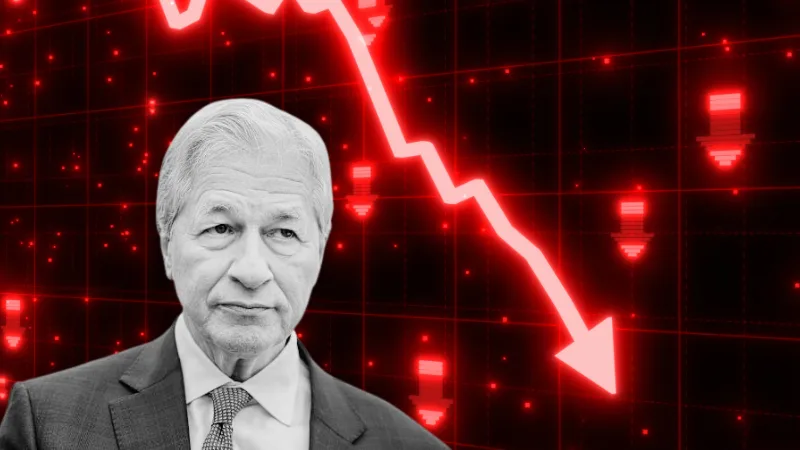
Jamie Dimon, chairman and chief executive of JPMorgan Chase, is warning that the probability of a serious American stock market correction is being underestimated. In remarks to the BBC, he said the market appears to be pricing in a roughly 10 % downside, but he personally assigns a much higher chance: “more like 30 %.” The Guardian
Dimon cautioned that a broad mix of risks is swirling — geopolitical tensions, fiscal overreach, uncertainty about future policy, and the re-militarization of global hotspots — and that these uncertainties aren’t being fully valued by markets. He also acknowledged that much of the froth in equity valuations is tied to AI-related bets, some of which “will probably be lost,” even as he believes AI overall remains transformational. The Guardian
These comments come amid a chorus of warnings in recent weeks: International Monetary Fund head Kristalina Georgieva has declared “uncertainty is the new normal,” while the Bank of England flagged “a growing risk of a sudden correction,” especially in overvalued AI and tech names. The Guardian
Why Dimon’s Warning Matters (Even If He’s Not Always Right)
Dimon is no alarmist, his track record is mixed, but he’s often taken a more cautious tone than markets. That said, a few reasons make his warning hard to shrug off:
- Market complacency: The belief that corrections will be shallow (10 % or less) is baked into many models and portfolios. Dimon’s 30 % call forces investors to reconsider stress scenarios.
- Interconnected risks: It’s not just one fault line — it’s many: high public debt, aggressive fiscal stimulus (elsewhere and at home), potential central bank missteps, simmering geopolitical tensions (e.g. in Asia, the Middle East, or Eastern Europe), and the unpredictability of AI hype. Dimon’s point is that these don’t combine cleanly — they can amplify one another.
- Limited downside cushioning: After years of expansion and gains, many companies’ valuations are premised on optimism in future growth (especially tech). That leaves less margin of safety if expectations are disappointed.
- Self-fulfilling panic: When a heavyweight voice like Dimon raises the possibility of a crash, it can force risk reappraisals — pushing more cautious behavior, forced selling, margin calls, and volatility cascades.
So even if Dimon’s 30 % feels aggressive, his warning is a reminder that tails are fatter now than they may appear in tranquil markets.
What to Watch — Triggers, Catalysts & Red Lines
If we accept that a serious correction is plausible, what might catalyze it? Here are some key risk flashpoints:
| Trigger | Why It Matters | Warning Signs |
|---|---|---|
| Monetary policy shock | Central banks may have less room to maneuver if inflation reignites; tightening faster than expected could rattle markets | Sharp yield spikes, tightening credit spreads, hawkish surprises |
| Fiscal imbalance / debt shock | High levels of debt in the U.S. and abroad raise vulnerability to interest rate moves or refinancing stresses | Rising yields, downgrade rumors, bond market volatility |
| Geopolitical shock | Escalations — war, sanctions, trade conflict — can upend supply chains, commodity prices, and investor confidence | Spikes in geopolitical risk indices, commodity volatility, capital flight |
| AI / Tech revaluation blowup | Recent valuations rest heavily on future growth; disappointing earnings or regulatory backlash could drive a repricing | Mass selloffs in AI / tech sectors, downward revisions, regulatory clampdowns |
| Liquidity stress / credit event | A default or sudden withdrawal could freeze parts of the financial plumbing | Widening credit spreads, cumulative margin calls, cracks in money markets |
Pessimistic or Prudent
Jamie Dimon’s warning strikes as intentionally provocative. He’s pushing markets to price serious risk, not pretend everything’s smooth. He may be too pessimistic or he may be prudent in a moment of bubble psychology.
Either way, it’s a useful dose of humility for investors who’ve grown comfortable with calm. If nothing else, Dimon’s 30 % figure should be a floor on our stress case, not an outlier to dismiss.
If you like, I can produce a version of this article tailored for your newsletter audience — more colorful, more provocative, more “clickable.” Do you want me to do that?
About Author