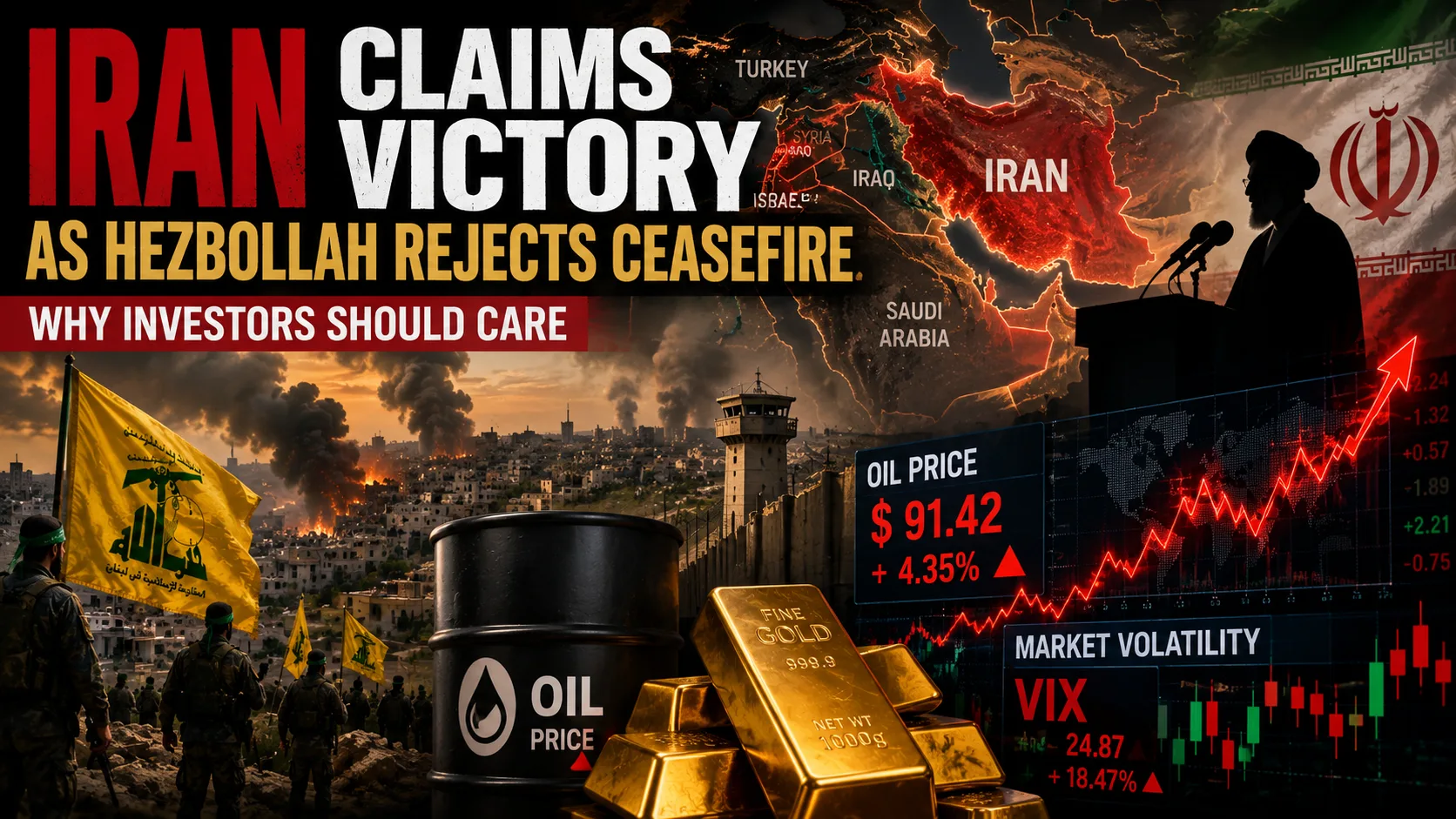
As Hezbollah rejects a proposed Israel-Lebanon ceasefire and Iran’s Supreme Leader declares a “decisive blow” against his country’s enemies, investors are once again being forced to confront a growing reality: the Middle East crisis may be entering a dangerous new phase. Adding another layer of uncertainty, the U.S. House of Representatives has voted to curb President Donald Trump’s war powers, potentially complicating Washington’s response to future escalations. The combination of military tension, political division, and energy market uncertainty could have major implications for stocks, oil prices, gold, and global markets.
A Ceasefire Rejected as Regional Tensions Remain High
Hopes for a broader de-escalation in the Middle East suffered a setback after Hezbollah reportedly rejected efforts aimed at securing an Israel-Lebanon ceasefire.
The development comes after weeks of heightened military activity across the region, including Israeli operations in Lebanon, ongoing tensions involving Iran-backed groups, and increasing concerns about a wider regional conflict.
While diplomatic efforts continue behind the scenes, Hezbollah’s rejection signals that major obstacles remain before any lasting peace agreement can be reached.
For investors, the immediate concern is simple: geopolitical uncertainty tends to increase market volatility.
History shows that prolonged instability in the Middle East often affects:
- Global oil prices
- Defense stocks
- Safe-haven assets such as gold
- Airline and travel stocks
- Emerging market investments
The longer tensions persist, the greater the potential impact on global markets.
Congress Moves to Limit Trump’s War Powers
At the same time, the U.S. House voted to curb President Donald Trump’s authority to engage in military action without congressional approval.
The vote reflects growing debate in Washington over America’s role in ongoing Middle East conflicts and whether additional military involvement should require broader legislative authorization.
While the measure faces an uncertain path forward, it highlights a growing political divide over foreign policy at a time when geopolitical risks are rising.
For markets, this creates a complicated dynamic.
On one hand, restrictions on military action may reduce the likelihood of rapid U.S. escalation.
On the other hand, adversaries may interpret political constraints as reducing America’s ability to respond quickly to future threats.
Investors generally dislike uncertainty more than almost anything else. When governments send mixed signals about future policy, markets often react cautiously.
Iran’s Supreme Leader Claims Enemies Have Suffered a “Decisive Blow”
In a rare public statement, Iran’s Supreme Leader Ayatollah Mojtaba Khamenei attempted to project confidence amid growing questions about his health and whereabouts.
Speaking on the anniversary of the death of Ayatollah Ruhollah Khomeini, Khamenei claimed Iran’s enemies had suffered a major defeat.
“The malicious enemy has been defeated in its confrontation with the Armed Forces,” Khamenei stated.
He further argued that Iran’s adversaries had suffered humiliation both militarily and domestically.
The remarks appear aimed at strengthening internal morale while signaling resistance to external pressure.
Khamenei also repeated longstanding accusations against the United States and Israel.
According to the Iranian leader:
- The U.S. and Israel are attempting to prevent Iran’s rise
- Foreign powers are conducting “hybrid warfare” against Iran
- Psychological operations are being used to create division inside the country
- National unity remains critical to resisting external pressure
The messaging suggests Tehran remains focused on maintaining domestic stability while continuing its confrontation with Western powers.
Why Iran’s Messaging Matters to Global Markets
Investors often focus on military movements, but rhetoric from political leaders can be equally important.
Statements from Iran’s leadership offer clues about:
- Potential future military responses
- Internal political stability
- Economic pressures facing the regime
- Diplomatic willingness to negotiate
Khamenei’s comments contained little indication of compromise.
Instead, the speech emphasized resistance, national unity, and distrust of foreign influence.
That may reduce hopes for near-term diplomatic breakthroughs.
Markets typically respond favorably when geopolitical disputes move toward negotiation.
Conversely, rhetoric emphasizing confrontation tends to increase risk premiums across multiple asset classes.
Oil Markets Are Watching Every Headline
One of the most immediate areas affected by Middle East tensions is energy.
The region remains responsible for a significant portion of global oil production and transportation.
Any threat to supply routes can quickly push prices higher.
Investors continue monitoring several key risks:
Potential Disruptions to Shipping Routes
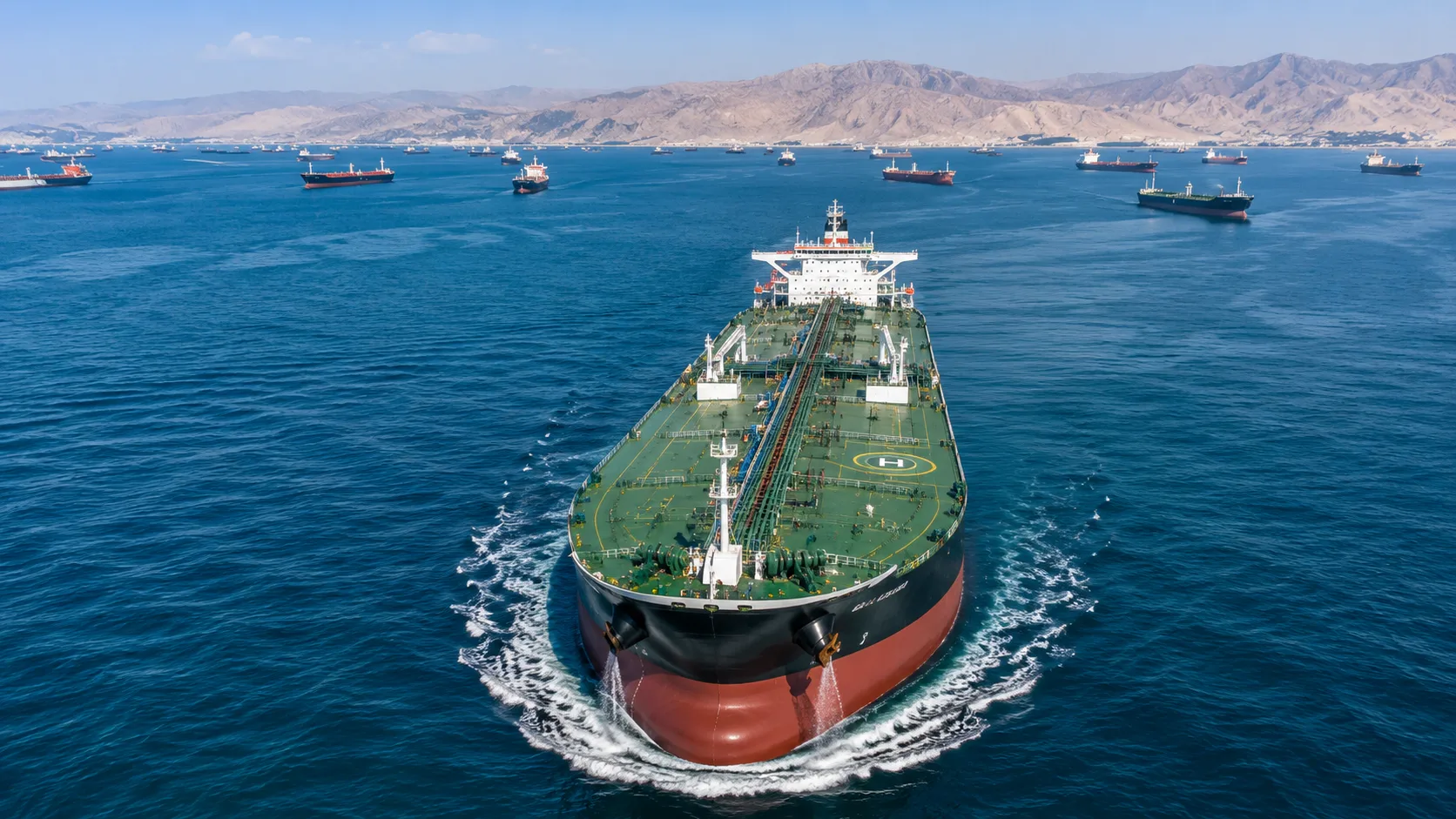
The Strait of Hormuz remains one of the world’s most important energy chokepoints.
A significant percentage of global oil exports travel through the narrow waterway.
Any threat to shipping could trigger sharp increases in oil prices.
Expanded Regional Conflict
If fighting were to spread beyond current hotspots, energy infrastructure could become increasingly vulnerable.
Markets tend to price in these risks well before any actual supply disruption occurs.
Sanctions and Economic Pressure
Additional sanctions on Iran or retaliatory measures by Tehran could further complicate global energy markets.
Higher oil prices would likely affect everything from transportation costs to inflation expectations.
Gold Continues to Benefit From Global Uncertainty
Whenever geopolitical risks rise, investors frequently turn toward traditional safe-haven assets.
Gold has historically been one of the biggest beneficiaries of international uncertainty.
Several factors currently support the metal:
- Geopolitical instability
- Central bank buying
- Concerns over sovereign debt
- Persistent inflation risks
- Currency uncertainty
If Middle East tensions continue escalating, many analysts believe gold could remain well-supported.
Investors seeking portfolio protection often view precious metals as insurance against unexpected geopolitical shocks.
Defense Stocks Remain a Key Beneficiary
While many sectors struggle during periods of geopolitical instability, defense contractors often experience increased investor interest.
Companies involved in:
- Missile systems
- Air defense technologies
- Intelligence systems
- Aerospace manufacturing
- Military communications
have generally outperformed during periods of elevated global tensions.
Investors have increasingly looked toward defense stocks as governments around the world expand military spending.
The latest developments involving Israel, Lebanon, Iran, and the United States are likely to keep defense spending discussions at the forefront.
About Author