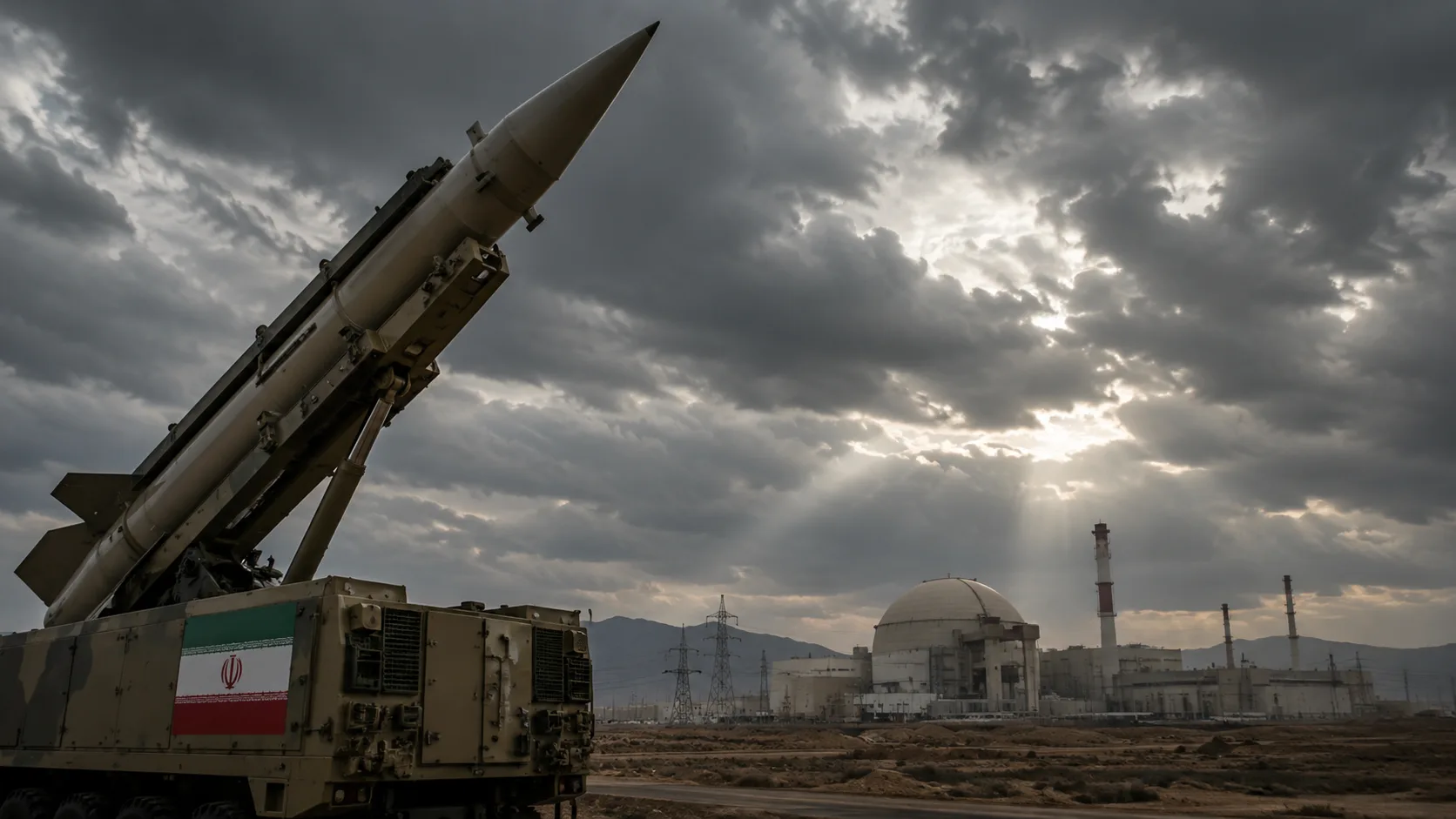
Iran says it will continue pursuing nuclear weapons as long as the U.S. and Israel have them, raising fresh doubts about whether upcoming negotiations will actually curb Tehran’s nuclear ambitions.
Ahmad Vahidi, commander-in-chief of Iran’s Islamic Revolutionary Guard Corps (IRGC), made the remarks Wednesday, while discussing Iran’s national security strategy.
“As long as the United States and Israel possess nuclear weapons, we will continue working on them for our national security,” Vahidi said. “If they disarm, we will disarm.”
The statement is among the clearest public indications yet that senior Iranian leadership intends to continue pursuing nuclear capabilities despite ongoing diplomatic efforts.
The remarks are likely to further complicate negotiations between Washington and Tehran, which have recently focused on reopening the Strait of Hormuz before turning to Iran’s nuclear program.
Netanyahu Issues Immediate Response
Israeli Prime Minister Benjamin Netanyahu wasted little time responding.
Speaking at a public ceremony Wednesday, Netanyahu said Iran had openly admitted its intentions and vowed that Israel would prevent Tehran from obtaining a nuclear weapon regardless of whether a diplomatic agreement is reached.
“Today, we heard the commander of the Revolutionary Guards, Vahidi, explicitly declare Iran’s intention to continue developing nuclear weapons,” Netanyahu said.
He added:
“With an agreement or without an agreement, I am determined… to do whatever is necessary to ensure our security and our future.”
Netanyahu also praised President Donald Trump for supporting Israel’s efforts to counter Iran’s nuclear ambitions.
Trump Keeps Military Option on the Table
President Trump struck a mixed tone during an interview Tuesday night with Fox News at Night, saying negotiations had been productive while warning that military action remains an option if talks collapse.
“If they back out again, they’re going to get hit really hard,” Trump said.
He reiterated his longstanding position that Iran cannot be allowed to obtain a nuclear weapon.
“They can’t have a nuclear weapon. It’s very simple.”
Trump also said negotiators held an “all-day negotiation” Tuesday and described the discussions as “very good.”
Why Experts Are Growing Concerned
Several nonproliferation experts say the current structure of negotiations could ultimately favor Tehran.
The talks have initially centered on reopening the Strait of Hormuz, one of the world’s most strategically important shipping lanes, before addressing Iran’s nuclear program.
Critics argue that sequence could allow Iran to secure valuable concessions before facing pressure to dismantle its nuclear infrastructure.
Andrea Stricker of the Foundation for Defense of Democracies warned that Iran’s priorities likely include:
- Securing sanctions relief.
- Regaining economic breathing room.
- Preserving leverage over the Strait of Hormuz.
- Delaying major nuclear concessions until later.
If those objectives are achieved first, she warned, the United States may have significantly less leverage during later nuclear negotiations.
Iran May Be Seeking More Than Sanctions Relief
Reports have suggested Iran is seeking an agreement that would grant it greater influence over traffic through the Strait of Hormuz.
According to Reuters, discussions have included proposals involving Iranian oversight of ships entering the Persian Gulf as well as fees for vessels using the waterway.
Washington has reportedly opposed both ideas.
Analysts say control of the Strait remains one of Tehran’s strongest bargaining chips following months of regional conflict.
The Nuclear Threat Hasn’t Disappeared
Even if military strikes have damaged portions of Iran’s nuclear infrastructure, experts caution that the country’s scientific expertise remains intact.
Kelsey Davenport of the Arms Control Association warned that Iran still possesses much of the knowledge, technology and materials needed to eventually build a nuclear weapon.
She also noted that international inspectors from the International Atomic Energy Agency have not visited key Iranian nuclear facilities in more than a year, leaving significant uncertainty about the current state of Tehran’s program.
Without renewed inspections, negotiators may lack a complete picture of Iran’s remaining capabilities.
Markets Could Be Watching Closely
While Wednesday’s headlines centered on geopolitics, investors have a great deal at stake.
Any breakdown in negotiations could reignite concerns over:
- Oil prices and global energy supplies.
- Shipping disruptions through the Strait of Hormuz.
- Inflation driven by higher energy costs.
- Increased defense spending.
- Renewed volatility across global financial markets.
For now, negotiations continue, but Iran’s latest declaration is likely to make reaching a comprehensive nuclear agreement significantly more difficult.
The Bigger Picture
Iran’s public commitment to continue pursuing nuclear weapons while the United States and Israel retain theirs marks a significant escalation in rhetoric at a critical point in negotiations.
Whether the talks ultimately produce a lasting agreement may depend on whether Washington can keep Iran’s nuclear program at the center of the negotiations rather than allowing broader regional issues to dominate the agenda.
If diplomacy falters, both Trump and Netanyahu have made clear they are prepared to consider far more aggressive options.
About Author