
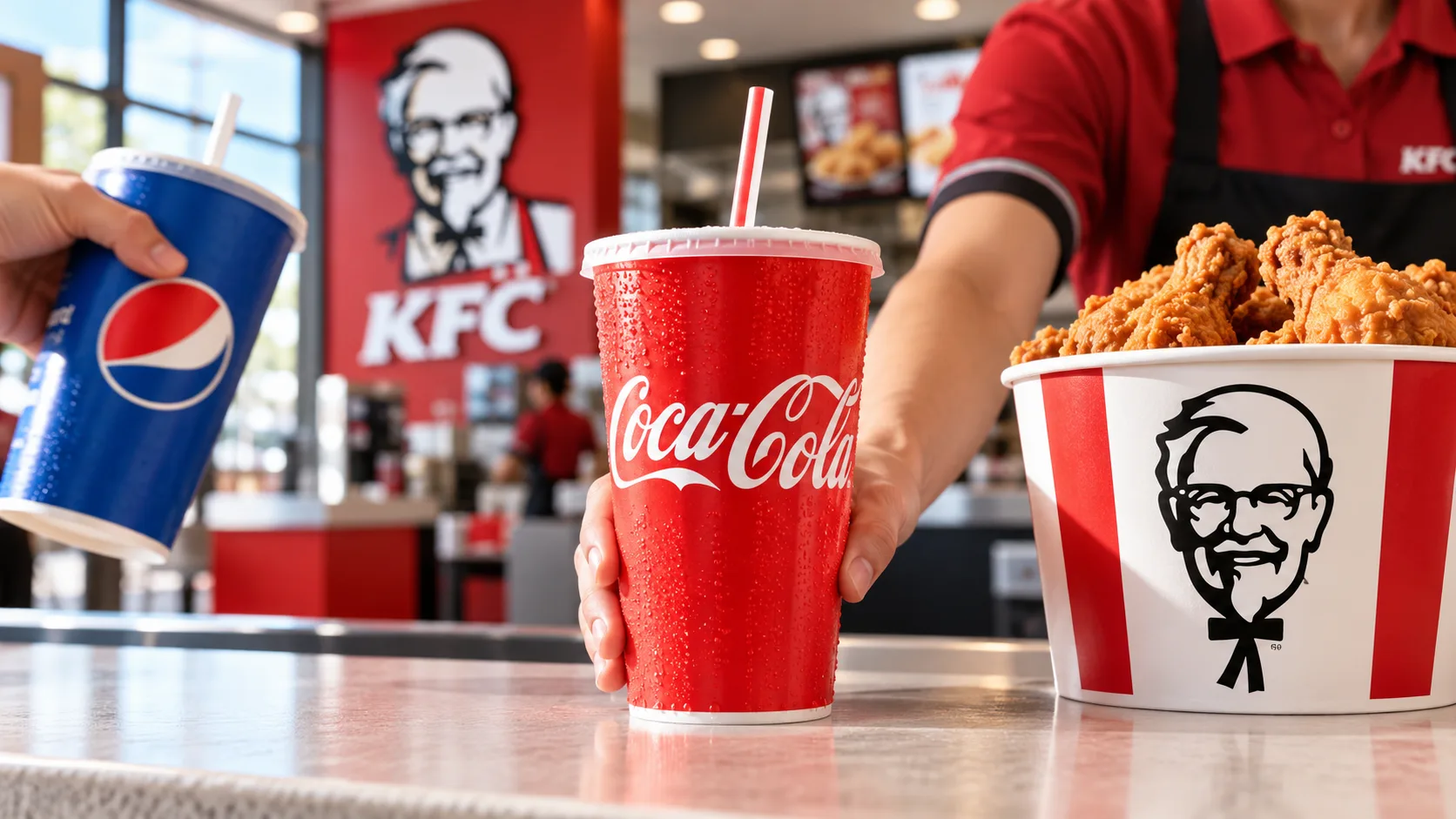
KFC is replacing Pepsi with Coca-Cola at its U.S. restaurants, ending a roughly 40-year partnership and handing Coke another prominent win in the soda wars.
The change, announced Thursday, October 15, begins in January 2027. Coca-Cola products are expected to reach all U.S. KFC restaurants by spring, according to the companies. Coca-Cola puts the rollout at approximately 3,600 locations.
The decision breaks a connection that survived long after PepsiCo stopped owning the chicken chain. It also gives KFC a new beverage partner as it works to refresh its menu and attract more customers.
A Break With KFC’s Former Owner
The relationship between KFC and Pepsi goes beyond a typical supplier agreement. PepsiCo acquired KFC in 1986, then spun off its restaurant operations in 1997. Pepsi beverages stayed on the menu through the decades that followed.
KFC is now owned by Yum! Brands, which trades under the ticker YUM. Financial terms of the new Coca-Cola agreement were not disclosed, leaving investors without the information needed to estimate its earnings contribution or compare the economics with KFC’s previous arrangement.
The change also has clear limits. A PepsiCo spokesperson told Reuters the company renewed agreements covering Taco Bell and KFC International, including a 10-year agreement with Taco Bell. The U.S. KFC switch does not represent a departure across all of Yum’s restaurant operations.
KFC Wants Drinks to Bring People Through the Door
KFC is presenting the agreement as part of its broader effort to refresh the brand and give customers more reasons to visit. That includes expanding beverage choices and developing food-and-drink combinations.
“This partnership is about more than what’s in the cup,” KFC U.S. President Catherine Tan-Gillespie said in the announcement.
The company pointed to its Open House innovation restaurant in McKinney, Texas, where offerings include iced coffees, boba and shakes. Those products illustrate KFC’s interest in beverages beyond the traditional fountain soda served with a meal. They do not establish the final nationwide Coca-Cola lineup.
The financial logic is straightforward: A beverage that attracts an additional visit or increases spending on an existing order can help a restaurant grow. Whether this partnership delivers those results will depend on pricing, customer demand and execution.
What the Deal Means for Investors
Coca-Cola Gains Thousands of Locations
For Coca-Cola, the agreement adds thousands of U.S. restaurants where customers will encounter its beverage portfolio. That creates opportunities for recurring sales and joint promotions.
The unanswered question is profitability. Winning a large account can involve commercial commitments and support costs, so the number of locations alone cannot establish how much shareholders will benefit.
PepsiCo Loses an Account With Deep Historical Ties
Losing KFC’s U.S. business is a setback for PepsiCo, particularly given the companies’ history. Reuters reported that the departure comes as PepsiCo works to improve its North American performance.
However, the renewed Taco Bell and international KFC agreements matter. They preserve important restaurant relationships and show why investors should assess the retained business alongside the lost account.
Yum’s Test Is Customer Response
For Yum, the most useful measure will be what happens inside KFC restaurants after the rollout. A change in beverage supplier can support a menu refresh, but sustained improvement requires customers to visit and spend.
Investors should look for evidence that new drinks and promotions increase transactions, average checks or restaurant profitability. The announcement itself cannot answer those questions.
A Familiar Brand Win Still Needs Financial Proof
Coca-Cola gains distribution, PepsiCo retains other major contracts, and KFC gets a new partner for its turnaround effort. Each company’s financial outcome depends on the economics behind those arrangements.
That makes the rollout more informative than the initial announcement. A prominent logo on a fountain machine creates visibility; repeat purchases and attractive margins determine the lasting value.
For KFC, the opportunity extends beyond replacing one cola with another. Its stated interest in a wider beverage menu suggests drinks could play a larger role in attracting customers between traditional meal occasions. Whether customers respond will determine how much that ambition is worth.
January Starts the Next Test
The first milestone is January’s rollout, followed by the planned completion in spring 2027. Details about the drink selection, pricing and promotions should help clarify how ambitious KFC’s beverage refresh will be.
Subsequent earnings reports may provide a clearer picture of customer response and restaurant performance. Investors should also watch whether either beverage company discloses more about the agreement’s financial impact.
KFC’s switch closes a long chapter with Pepsi and gives Coca-Cola a recognizable new account. The next chapter will be measured in customer visits, beverage sales and profits.
About Author