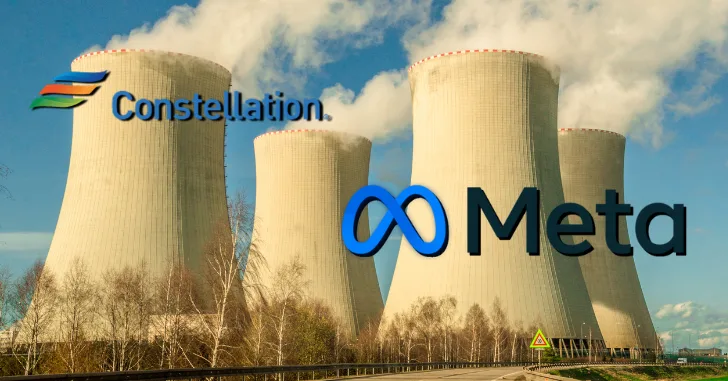
In a major development reshaping both the tech and energy sectors, Meta Platforms (NASDAQ: META) has announced a 20-year nuclear power purchase agreement (PPA) with Constellation Energy (NASDAQ: CEG), marking one of the most consequential corporate energy deals in recent memory. This historic contract — the first of its kind involving an operational U.S. nuclear plant — ensures that Meta will receive zero-carbon electricity from Constellation’s Clinton Clean Energy Center in Illinois starting in mid-2027.
For investors closely watching Constellation Energy stock, this deal is more than just a headline — it’s a strategic milestone with real implications for valuation, future earnings stability, and the clean energy transition narrative that is rapidly gaining momentum across Wall Street.
The Deal in Detail
Meta’s agreement with Constellation will cover the purchase of clean energy attributes (CEAs) — essentially the credits attached to zero-carbon power — from the Clinton nuclear facility. While the power generated will continue to feed into the broader grid, the CEAs allow Meta to count this output against its own operational energy usage, enabling the company to credibly claim it’s running on clean power.
This move is particularly relevant as Meta — and many other hyperscalers — race to deploy massive AI models and build increasingly energy-hungry data centers. As demand for electricity surges, access to reliable, round-the-clock, emissions-free power becomes a competitive advantage.
While financial terms were not publicly disclosed, what is known is that this contract helps secure the long-term economic viability of the Clinton plant, while also laying the foundation for potential output expansions and licensing extensions.
Why Nuclear? Why Now?
The timing of this announcement is no accident. Over the past two years, large tech companies like Meta, Google, and Microsoft have all faced rising pressure from regulators, shareholders, and the public to reduce their carbon footprints — not just in marketing materials, but in real infrastructure terms.
Unlike solar and wind — which are intermittent and require backup power or storage — nuclear offers steady, base-load electricity with zero direct emissions. It’s precisely the kind of reliability and scalability that AI data centers require. With this PPA, Meta is not only getting access to clean power; it’s getting guaranteed uptime and carbon accounting benefits over two decades.
The deal also signals a turning point in the long-maligned narrative around nuclear power. Where once nuclear was viewed through the lens of risk and cost overruns, it’s increasingly being reframed as a critical solution for deep decarbonization and grid stability.
What This Means for Constellation Energy Stock
For Constellation Energy, the largest operator of nuclear power plants in the United States, this deal is a strategic win. It shows that legacy nuclear plants, often thought of as regulatory liabilities, are now prized assets in the emerging clean energy economy.
Investors in Constellation Energy stock should take note of several key implications:
1. Revenue Predictability
A 20-year deal with a AAA-rated customer like Meta ensures a stable revenue stream. This reduces earnings volatility and adds predictability to Constellation’s cash flows — a key factor institutional investors favor.
2. Upside Potential from Plant Upgrades
The Clinton plant is now expected to receive performance upgrades to boost capacity by 30 megawatts. These upgrades, partially funded and justified by the Meta deal, could further improve margins and output efficiency.
3. Regulatory Leverage
A long-term, high-profile corporate partner helps Constellation argue its case for relicensing and possibly additional federal or state-level support. As clean energy mandates increase, nuclear energy’s role is poised to expand — and Constellation is well-positioned to benefit.
4. Brand and ESG Appeal
Constellation can now position itself as a critical partner in the AI revolution, not just a traditional utility. ESG-conscious funds and tech-aligned growth investors may take a closer look at Constellation Energy stock as a growth + sustainability play.
Broader Market Context
This deal also shines a light on the underappreciated power crisis looming in the United States. According to the Electric Power Research Institute (EPRI), demand from AI and data centers is expected to double by 2030. The U.S. grid, much of which still relies on aging fossil fuel infrastructure, is ill-equipped to meet this surge sustainably.
As utilities scramble to adapt, nuclear power is enjoying a renaissance. The Department of Energy has launched several programs to support advanced nuclear reactors, including small modular reactors (SMRs) and next-gen fusion concepts. But in the near term, existing reactors like those operated by Constellation are the workhorses bridging the gap.
In this environment, PPAs with tech giants are not just smart business — they may be existentially necessary for traditional utilities to remain competitive in a decarbonized future.
Meta’s Strategic Play: A Glimpse into AI’s Energy Appetite
From Meta’s perspective, this deal is about future-proofing. CEO Mark Zuckerberg has been aggressively pivoting toward artificial intelligence, with Meta investing tens of billions of dollars into its Llama large language models and custom AI chips.
These tools require vast compute power — and by extension, electricity. Rather than rely on the volatile spot energy market or dirty power that would tarnish its green credentials, Meta is locking in its power supply long-term.
This strategy is already being mirrored across Silicon Valley. Microsoft recently inked a similar 20-year deal with Constellation Energy to help restart the dormant Three Mile Island reactor. Amazon, meanwhile, has been scooping up wind and solar projects across North America and Europe.
But unlike wind and solar, nuclear power isn’t subject to the whims of weather. For AI infrastructure that needs guaranteed uptime 24/7, this is a major advantage.
Risks and Caveats for Investors
While this news is bullish for Constellation Energy stock, investors should also consider the broader landscape:
- Regulatory Risk: Despite shifting sentiment, nuclear power still faces opposition from some environmental groups and regulators. Any delays in relicensing or permitting could introduce downside risk.
- Execution Risk: Upgrading older nuclear facilities is no easy feat. Costs can overrun, and engineering setbacks are not uncommon.
- Rate Environment: Rising interest rates could impact utility financing and infrastructure investment returns.
That said, the Meta deal significantly de-risks these concerns by providing a clear demand signal and helping justify capital expenditures.
A Turning Point for Clean Energy and Constellation Energy Stock
Meta’s 20-year nuclear PPA with Constellation Energy marks a major inflection point for both industries. For Meta, it’s a signal to investors that the company is serious about meeting its climate goals while scaling AI. For Constellation, it validates nuclear’s economic and strategic value in a tech-driven, electrified future.
As more companies look to secure zero-carbon, reliable energy, expect other tech giants to follow suit — and for nuclear operators like Constellation to be front and center.
For investors looking for exposure to the clean energy transition — with the added benefit of stable cash flow, high ESG ratings, and AI-linked demand tailwinds — Constellation Energy stock may be one of the most compelling opportunities in the market right now.
About Author