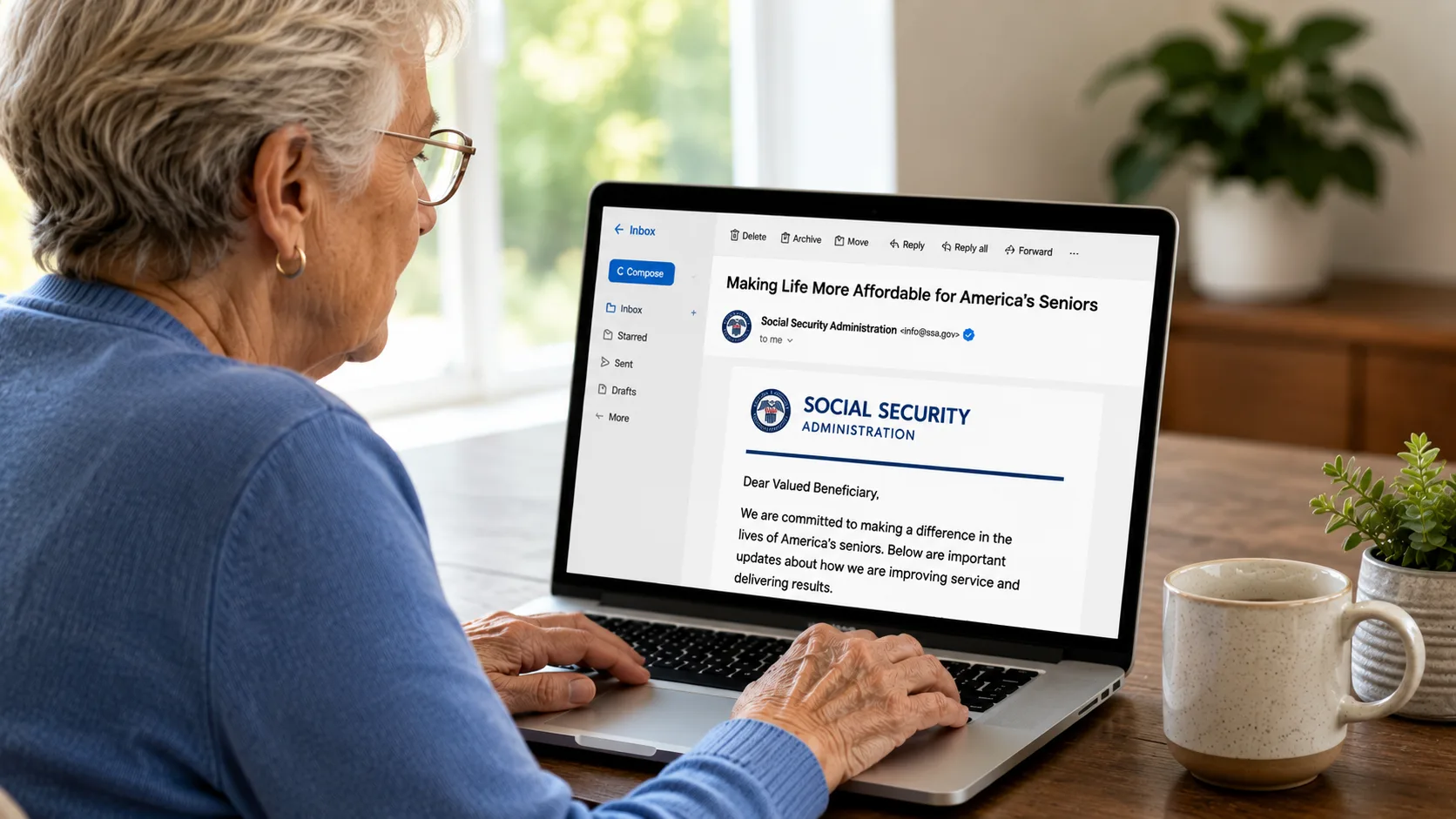
A July email sent by Social Security Commissioner Frank Bisignano to millions of retirees is drawing sharp criticism from Democratic senators, who argue the message overstated the tax benefits of last year’s Republican tax legislation and crossed the line into political messaging.
The controversy surrounding the Frank Bisignano Social Security email comes as lawmakers intensify scrutiny of the Social Security Administration’s communications with beneficiaries and how the agency presents changes affecting retirees.
Why the Frank Bisignano Social Security Email Is Facing Criticism
On July 2, Bisignano sent an email titled “Making Life More Affordable for America’s Seniors” to Social Security beneficiaries.
The message highlighted operational improvements at the Social Security Administration, including:
- Faster customer service response times
- Reduced wait times at field offices
- Quicker handling of beneficiary phone calls
However, the email also praised the tax impact of the Republican-backed One Big Beautiful Bill Act (OBBBA).
According to the message:
“Thanks to President Trump, over 35 million American seniors received an average of $7,500 in relief this tax season.”
The email concluded with the statement:
“Put simply, America’s seniors are winning!”
It is these claims that have become the focus of criticism.
Democratic Senators Say the Email Was Misleading
In a July 21 letter to Bisignano, five Democratic senators accused the commissioner of distributing misleading information through official government channels.
The senators include:
- Elizabeth Warren (Massachusetts)
- Ron Wyden (Oregon)
- Tammy Baldwin (Wisconsin)
- Sheldon Whitehouse (Rhode Island)
- Ben Ray Luján (New Mexico)
The lawmakers argue the email violated Bisignano’s earlier commitment to operate the Social Security Administration in an independent and nonpartisan manner.
The senators wrote that he had:
“disregarded your promise to run the SSA in an independent and nonpartisan manner.”
They also argued the agency should not be using taxpayer-funded communications to promote political messaging.
The group has requested responses from Bisignano by August 11.
Did the Tax Law Actually Eliminate Taxes on Social Security?
One of the biggest disputes centers on how the administration described the tax law’s impact.
When the legislation passed, the Social Security Administration stated it would eliminate federal income taxes on Social Security benefits for most beneficiaries.
Critics say that is not what the law actually does.
Instead, the legislation created a new $6,000 tax deduction for taxpayers age 65 and older.
That distinction matters.
A deduction reduces taxable income. It does not provide a dollar-for-dollar tax credit or refund, and it does not automatically eliminate taxes on Social Security benefits.
Experts Say the $7,500 Figure Overstates Typical Savings
Several retirement policy experts challenged the commissioner’s claim that seniors received an average of $7,500 in relief.
Shannon Benton, executive director of The Senior Citizens League, said the figure may reflect the size of deductions claimed by some households rather than actual tax savings.
She noted that:
- A deduction lowers taxable income.
- The actual tax benefit depends on a person’s income and tax bracket.
- It is not equivalent to receiving a $7,500 refund or direct tax reduction.
Other analysts reached similar conclusions.
The Tax Policy Center previously estimated the average senior tax reduction from the new deduction would be roughly $1,100.
Meanwhile, the Center on Budget and Policy Priorities reported that nearly half of seniors already owe no federal income tax, meaning the additional deduction provides little or no benefit for many retirees.
Treasury Data Shows Benefits Varied Widely
Treasury Department data cited by lawmakers paints a more nuanced picture of who benefited from the legislation.
According to the data:
- 68% of taxpayers claiming the enhanced senior deduction earned under $100,000
- 94% earned under $200,000
Average tax reductions also varied significantly:
- Taxpayers earning $50,000 to $100,000 saw average tax cuts of more than $815
- Those earning $100,000 to $200,000 received average reductions exceeding $1,250
Those figures are substantially lower than the $7,500 relief cited in the commissioner’s email.
Advocacy Groups Question Political Use of SSA Communications
The controversy has also sparked criticism from organizations focused on protecting Social Security.
Max Richtman, president of the National Committee to Preserve Social Security and Medicare, said the legislation did not eliminate taxes on Social Security benefits and argued the public is being misled.
Nancy Altman, president of Social Security Works, called the use of the agency’s beneficiary email list for what she described as political messaging “unprecedented.”
She argued official Social Security communications should focus on benefit information rather than promoting political achievements.
What Happens Next?
The Senate inquiry does not immediately affect Social Security benefits or tax rules.
However, it raises broader questions about how federal agencies communicate with beneficiaries and whether official government messaging should include political claims about legislation.
Commissioner Frank Bisignano has until August 11 to respond to lawmakers’ questions regarding the email and the basis for the tax claims it contained.
About Author