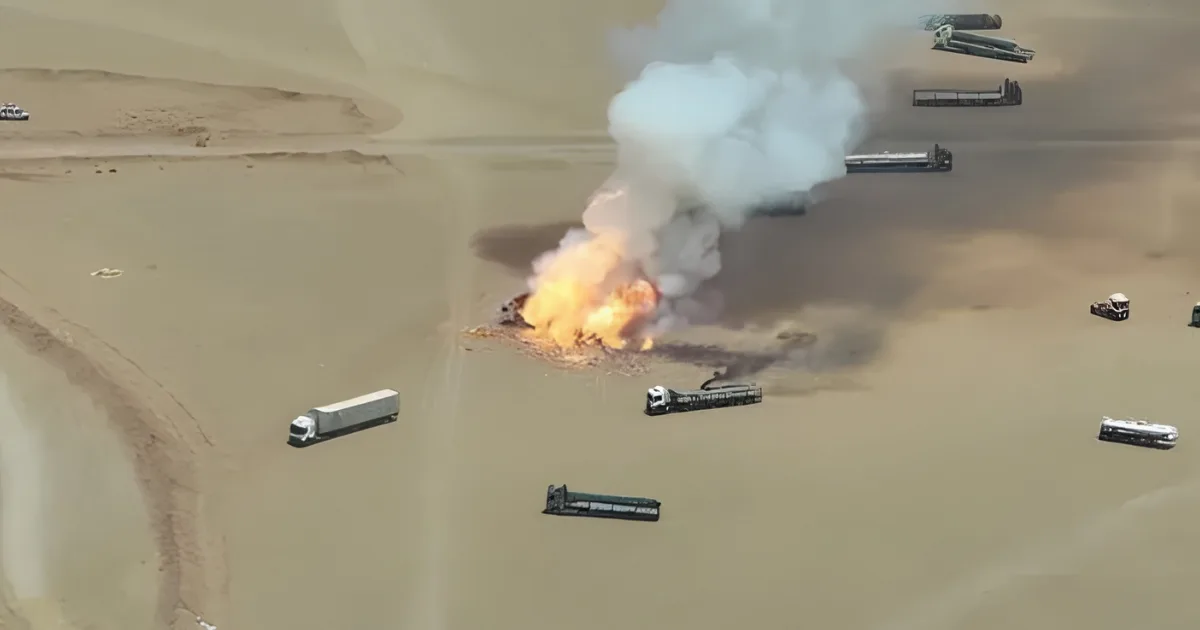
Oil moved closer to $100 a barrel Tuesday after Houthi missiles and drones struck Saudi energy facilities, opening a dangerous new front in a regional conflict already restricting supplies through the Strait of Hormuz.
Saudi Energy Sites Come Under Fire
Iran-backed Houthi militants launched a coordinated wave of attacks against targets across southern Saudi Arabia, including facilities in Abha, Najran, Jazan and Khamis Mushait.
Saudi authorities said the strikes ignited fires at several oil and utility sites, forced temporary operational shutdowns and wounded 73 people. Emergency crews were working to contain the fires, secure the affected facilities and assess the damage.
The Saudi Energy Ministry did not identify every site involved or disclose how much oil production, refining capacity or export volume had been disrupted.
The most significant reported damage occurred in Jazan, where witnesses saw a major fire near Saudi Aramco’s sprawling refinery complex. The facility is designed to process as much as 400,000 barrels of crude per day into gasoline, ultralow-sulfur diesel and other petroleum products.
The Houthis also claimed to have targeted Aramco facilities in Abha and Najran, along with the King Khalid Air Base in Khamis Mushait. Saudi officials said an attack against Jazan’s airport failed.
Saudi Aramco had not provided a detailed public damage assessment as of Tuesday morning.
The market response was immediate. Brent crude futures climbed above $99 during the session before trading around $98.60 a barrel, while West Texas Intermediate crude rose above $93.
The Middle East’s Oil Escape Route Is Under Attack
The deeper threat comes from the location of the attacks.
The U.S.-Iran war has already sharply restricted energy shipments through the Strait of Hormuz, the narrow waterway connecting the Persian Gulf with global markets. Roughly 20 million barrels of petroleum products passed through Hormuz each day in 2024, equal to approximately one-fifth of global consumption.
Saudi Arabia has spent years developing alternatives that allow some crude to bypass the strait. Its East-West pipeline can transport oil across the kingdom to Red Sea export terminals, giving Riyadh a crucial release valve when Persian Gulf shipping is threatened.
That strategy depends on the Red Sea remaining usable.
The Houthis are now putting pressure on that route as well. The group declared a blockade against Saudi shipping in July and has attacked oil tankers moving through the Red Sea. Fighting near Yemen also threatens the Bab al-Mandeb strait, the gateway connecting the Red Sea with the Arabian Sea.
This creates a two-chokepoint problem:
- Hormuz is constrained by the U.S.-Iran conflict.
- Red Sea shipping is threatened by Houthi attacks.
- Saudi facilities near Yemen are increasingly exposed to direct missile and drone strikes.
Saudi Arabia can reroute some oil around Hormuz, but those barrels still require secure pipelines, refineries, ports and shipping lanes. Each new attack reduces the reliability of the alternatives that previously limited the market’s exposure to a Hormuz disruption.
That is why the strikes matter even before Saudi Arabia reports a major loss of crude production.
About Author