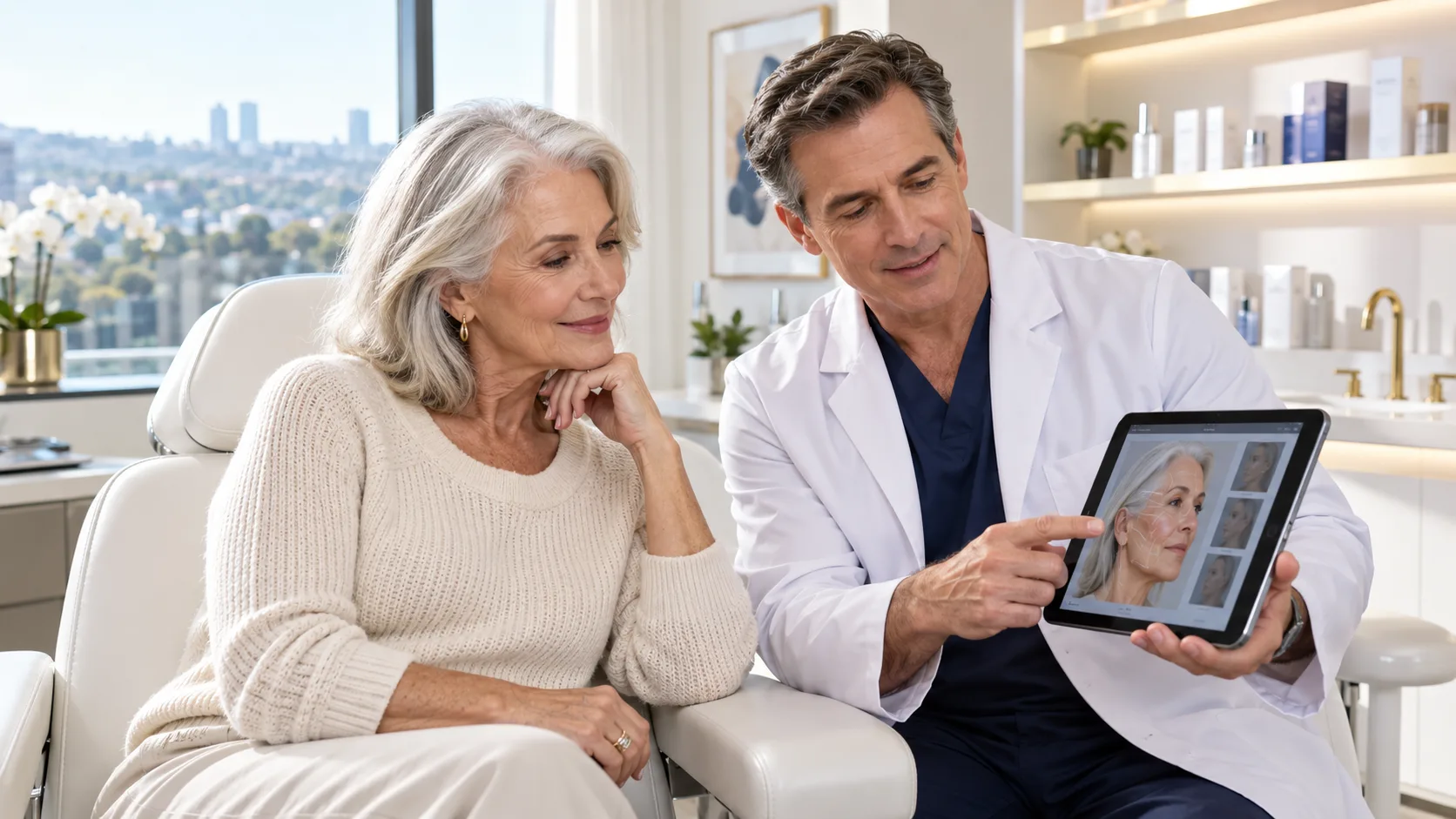
Older Americans are spending more to fight the visible effects of aging, creating a powerful new growth market for the companies selling cosmetic injectables, implants and medical devices.
The American Society of Plastic Surgeons reported that cosmetic surgical procedures increased 7% in 2025. Among patients age 66 and older, procedures surged 24%, making seniors the industry’s fastest-growing customer group by a wide margin.
That increase is more than a passing beauty trend. It reflects the collision of three forces: America’s aging population, the enormous wealth controlled by baby boomers and the physical effects of rapid weight loss from GLP-1 drugs.
For investors, the strongest opportunity may sit with the companies supplying thousands of clinics rather than with the clinics performing the procedures.
Older Americans Are Redefining Cosmetic Surgery
Cosmetic procedures have traditionally been associated with younger and middle-aged adults. The latest data shows that older Americans are rapidly closing the gap.
Patients age 66 and older increased their use of cosmetic procedures by 24% during 2025. That exceeded the 15% increase among patients ages 56 to 65 and the 8% growth among those ages 46 to 55.
Demand among the oldest group extended far beyond wrinkle treatments. Eyelid surgery was the group’s most popular surgical procedure, followed by facelifts and liposuction. Breast augmentation, arm lifts and other body-lifting procedures also recorded substantial growth.
Facial rejuvenation was another major theme. Facial fat grafting, which restores volume using a patient’s own fat, increased 39% across the industry.
The pattern suggests that older consumers are increasingly willing to use surgery and minimally invasive procedures to make their appearance reflect how active they still feel.
The customer base is also expanding. The United States has more than 60 million residents age 65 and older, and the youngest baby boomers are only now entering their early 60s. That gives the aesthetic industry a long runway as millions of additional consumers move into the age groups reporting the fastest procedure growth.
The Wealth Behind the Antiaging Boom
The demographic story becomes much more compelling when wealth is added to the equation.
Baby boomers control close to $90 trillion in household wealth, according to Federal Reserve data. That represents more than half of total household wealth in the United States.
This money is unevenly distributed, and much of it is held in homes, retirement accounts and other assets. Even so, boomers collectively possess greater spending power than any previous generation entering retirement.
Cosmetic surgery is usually paid for directly by the patient. Medicare generally excludes procedures performed solely to improve appearance, although reconstructive or medically necessary procedures may qualify for coverage.
That makes the industry sensitive to consumer confidence, stock prices and home values. It also gives providers greater pricing flexibility because reimbursement rates are not generally dictated by government insurance programs.
Affluent patients seeking visible results can spend thousands of dollars on injectables and considerably more on surgical procedures. They may also return for maintenance treatments, revisions or additional work.
Recurring demand is especially valuable for companies selling neuromodulators and fillers. Products such as Botox, Dysport, Restylane and Sculptra typically require repeat treatment, converting an initial cosmetic decision into a potentially long-term customer relationship.
GLP-1 Drugs Are Creating a Second Wave of Patients
The rise of Ozempic, Wegovy, Zepbound and similar weight-loss drugs adds another growth engine.
These medications can produce substantial weight loss, but the skin does not always contract at the same pace. Patients may be left with loose skin around the abdomen, arms, thighs, breasts, neck and face.
During 2025, 82% of plastic surgeons surveyed by the American Society of Plastic Surgeons reported receiving consultation requests connected to GLP-1 use.
The strongest procedure trends support that connection. Arm lifts, thigh lifts, body lifts, breast procedures and facial-volume treatments all address changes commonly associated with major weight loss.
This creates an unusual relationship between pharmaceutical innovation and aesthetic medicine. Every additional patient who achieves significant weight loss could become a potential customer for skin-tightening procedures, body contouring, implants, fillers or collagen-stimulating products.
GLP-1 adoption therefore expands the market beyond traditional antiaging demand. It introduces younger patients who have experienced rapid physical changes while also increasing treatment options for older adults using the drugs.
Why the Suppliers May Offer the Better Opportunity
Plastic-surgery clinics can collect substantial revenue from individual procedures, but their business model is labor-intensive.
Clinics must recruit skilled surgeons and nurses, purchase equipment, lease expensive facilities, comply with medical regulations and continuously attract new patients. Growth often requires opening additional locations or acquiring existing practices.
Medical-product suppliers operate with a different economic model. Once a device, implant or injectable earns regulatory approval and physician acceptance, the manufacturer can sell the same product across thousands of practices.
That structure can produce stronger operating leverage, recurring sales and valuable relationships with physicians. It can also create barriers to entry through patents, clinical evidence, regulatory approvals and surgeon training.
Three companies offer distinctly different ways to invest in this trend.
AbbVie: The Defensive Aesthetics Play
AbbVie owns Botox Cosmetic and the Juvéderm collection of dermal fillers through its acquisition of Allergan.
Botox gives AbbVie exposure to one of the best-known brands in medical aesthetics. The treatment is widely used to temporarily reduce facial lines, while Juvéderm products restore volume and reshape facial contours.
The key advantage is diversification.
AbbVie is a global pharmaceutical company with major businesses outside aesthetics. Investors also receive exposure to immunology, oncology, neuroscience and other therapeutic categories.
That reduces dependence on discretionary cosmetic spending. If a recession causes patients to delay procedures, AbbVie still has revenue from medically necessary treatments.
The tradeoff is that even strong growth in aesthetics may have a limited effect on the company’s overall financial results. AbbVie provides the lowest-purity exposure of the three names, along with the strongest defensive characteristics.
Investors should monitor Botox Cosmetic and Juvéderm sales separately from therapeutic Botox, which is used for conditions such as migraines and muscle disorders. The two businesses are driven by different customer behavior and reimbursement dynamics.
Galderma: The Purest Large-Scale Play
Galderma offers more direct exposure to dermatology and medical aesthetics.
Its portfolio includes Dysport, Restylane and Sculptra. Dysport competes in the neuromodulator market, Restylane addresses facial volume and contouring, and Sculptra stimulates the body’s collagen production.
Sculptra may be particularly well positioned for the current demographic shift. Aging and rapid weight loss can both reduce facial volume, making collagen stimulation increasingly relevant to patients seeking gradual, natural-looking restoration.
Galderma’s results show that the opportunity is already translating into growth. Injectable-aesthetics sales increased 12.1% at constant currency during the first half of 2026, reaching $1.44 billion. Neuromodulator sales grew 13.4%, while fillers and biostimulators increased 10.5%.
The company also reported continued double-digit Sculptra growth in both the United States and international markets.
Galderma generated $3.13 billion in total first-half sales and raised its full-year growth outlook. Its broader dermatology portfolio provides some diversification, but aesthetics remains important enough to meaningfully influence its performance.
Risks include competition, changes in consumer spending, product launches and regulatory setbacks. Galderma disclosed in July that the Food and Drug Administration issued a Complete Response Letter related to manufacturing and analytical matters for its next-generation neuromodulator candidate in the United States.
For investors seeking a large, established company closely tied to the aesthetics industry, Galderma may offer the clearest exposure.
Establishment Labs: The Higher-Risk Growth Play
Establishment Labs is the smallest and most aggressive option of the three.
The company makes Motiva breast implants, which received FDA approval for the U.S. market in 2024. It also offers technologies focused on breast aesthetics and reconstruction.
The U.S. rollout is gaining traction. Establishment Labs reported second-quarter 2026 revenue of $67.5 million, up 31.7% from the previous year. Motiva revenue in the United States increased to $24.7 million from $10.3 million, a gain of roughly 140%.
Gross margin reached 70.6%, and adjusted earnings before interest, taxes, depreciation and amortization turned positive. The company still recorded a quarterly net loss of $11.7 million, which highlights the financial risk that remains.
Establishment Labs offers more upside if Motiva continues taking U.S. market share. It also faces greater execution, balance-sheet and valuation risk than AbbVie or Galderma.
Investors will need to watch whether rapid revenue growth translates into sustained profitability and positive free cash flow. Continued adoption by American surgeons will be essential.
The Investment Case
America’s cosmetic-procedure boom is being powered by a rare combination of demographics, wealth and medical innovation.
Older Americans are entering the aesthetic market faster than any other age group. Baby boomers have the financial resources to pay for treatments, while GLP-1 drugs are creating an additional population of patients seeking skin tightening, body contouring and facial-volume restoration.
AbbVie offers the most defensive approach. Galderma provides the cleanest large-scale exposure to injectables and dermatology. Establishment Labs delivers the strongest growth profile and the greatest execution risk.
Father Time remains undefeated. The companies supplying the products people use to fight back could have years of demand ahead.
About Author