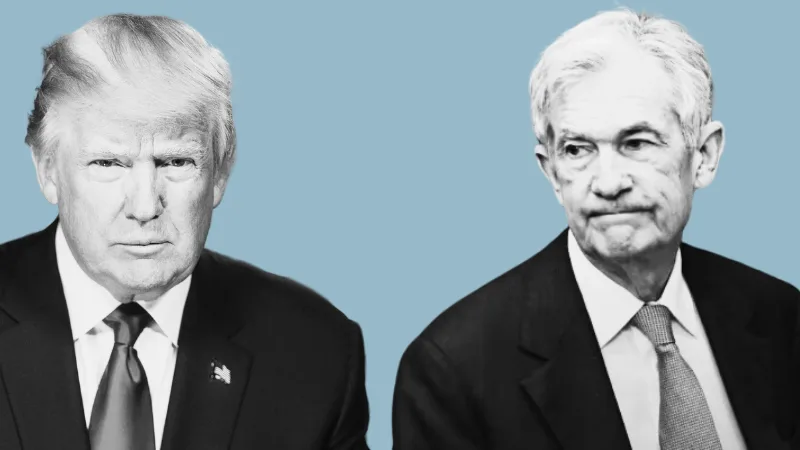
Jerome Powell has been cleared of criminal wrongdoing and administrative misconduct in the Federal Reserve’s controversial headquarters renovation. President Donald Trump still wants him gone.
After the Federal Reserve’s inspector general released its final report into the multibillion-dollar project, Trump called for Powell to resign from the Fed’s Board of Governors and asked Attorney General Todd Blanche to review the findings.
That creates an unusual conclusion to one of Washington’s most closely watched battles over the central bank. The investigation did not substantiate accusations of criminal behavior by Powell, yet the watchdog still delivered a harsh assessment of how the Federal Reserve managed a construction project whose costs more than doubled from early estimates.
For investors, the renovation itself is only part of the story. The larger issue is the escalating fight over the Federal Reserve, Powell’s continued presence on its Board, and the independence of the institution that sets U.S. interest rates.
The Watchdog Cleared Powell
The Federal Reserve’s Office of Inspector General opened its evaluation after controversy erupted over renovations to the Marriner S. Eccles Building and the adjacent 1951 Constitution Avenue building in Washington. Powell himself had requested that the inspector general review the project in July 2025.
Scrutiny intensified when the Justice Department later opened a criminal investigation related to Powell’s congressional testimony about the renovation. That investigation was closed in April 2026 without charges.
Now the Fed inspector general has reached its own conclusion. Investigators said they did not find reasonable grounds to believe a federal criminal law had been violated, and the report said it identified no administrative misconduct.
For Powell personally, that is a significant finding because it removes the most serious allegation hanging over the former Fed chairman. The watchdog’s assessment of the project itself, however, was considerably more critical.
The Fed’s Management Took a Beating
According to the inspector general, construction costs more than doubled from approximately $921 million in the Fed’s February 2020 renovation budget to roughly $2.018 billion in its 2024 renovation budget. The broader approved project budget had reached about $2.381 billion by December 2024.
The watchdog concluded that the Board had not effectively managed and executed its construction contract and had repeatedly deviated from provisions designed to control costs. It also found that the Fed’s internal project governance was insufficient for a construction effort of that size and complexity.
Perhaps most damaging, the report said the Board failed to take several actions available to it that could have helped control costs and reduce some of the increases. The inspector general issued seven recommendations, all of which the Federal Reserve Board accepted.
So while Powell was cleared of misconduct, the institution he led received plenty of criticism.
Trump: Powell Should Still Go
Trump seized on those management findings almost immediately. The president argued that the cost overruns demonstrated that Powell should no longer remain on the Federal Reserve Board and called for him to resign.
Trump also said he had asked Attorney General Todd Blanche to examine the inspector general’s findings. He tied the construction controversy to his long-running criticism of Powell’s interest-rate policies, keeping the political pressure alive even after the investigation cleared Powell personally.
That matters because Powell is no longer chairman of the Federal Reserve. Kevin Warsh succeeded him as Fed chair in May 2026, but Powell remained a member of the seven-person Board of Governors.
As a result, the political battle surrounding Powell did not end when his term as chairman did. His continued presence on the Board leaves him involved in monetary policy at a time when Trump has repeatedly pushed for a different approach to interest rates.
How Did a Renovation Get This Expensive?
Some of the most politically explosive criticism of the project focused on features such as marble, landscaped terraces and water features. The inspector general found that those particular items did not materially contribute to the later construction cost increases.
The bigger drivers were less dramatic. The Fed cited higher construction material, equipment and labor costs, along with design changes and unexpected conditions discovered during construction.
Those conditions included more asbestos than anticipated, contaminated soil and a higher-than-expected water table. The inspector general acknowledged those challenges but also concluded that decisions involving contracting, bidding, governance and project oversight contributed to the problem.
One major criticism involved the failure to establish a guaranteed maximum price arrangement that could have shifted more responsibility for overruns to the construction manager. The inspector general also found problems with the competitive bidding process for several major pricing packages.
The result is a more complicated picture than simply blaming expensive architectural choices. Unexpected construction problems played a role, while management decisions also appear to have contributed to rising costs.
Why Investors Should Care
A Federal Reserve construction project probably will not determine the next move in the S&P 500. The political battle surrounding it could matter considerably more.
The Federal Reserve controls short-term interest rates, influences borrowing costs throughout the economy and plays an enormous role in Treasury yields, mortgage rates, bank lending and stock valuations. Questions surrounding the president’s ability to pressure or remove Federal Reserve officials therefore carry much larger consequences than the renovation itself.
Trump has repeatedly criticized Fed officials over interest-rate policy, while defenders of central-bank independence argue that monetary policy should remain insulated from direct political pressure. Those competing views have turned what began as a construction controversy into another chapter of the broader debate over presidential authority and Federal Reserve independence.
The Real Divide in the Report
The easiest way to understand the inspector general’s findings is to separate three different questions.
Did investigators find evidence of a federal crime? No.
Did investigators find administrative misconduct? No.
Did investigators find serious problems in the way the project was managed? Yes.
The report concluded that the Board failed to effectively manage parts of the construction contract, did not adequately control costs and lacked sufficient internal governance for a project of this scale.
That distinction explains why Powell can claim vindication from the investigation while Trump can point to the same document as evidence of poor management. Both arguments draw from different portions of the same report.
Powell’s Status Could Now Become the Bigger Story
Powell had previously indicated that he planned to remain on the Federal Reserve Board even after Kevin Warsh succeeded him as chairman. Trump’s latest demand raises the stakes around that decision.
The next question is whether the White House takes additional action following Attorney General Blanche’s review or whether the confrontation remains primarily political. The construction project itself is also unfinished, with the inspector general saying the construction phase is expected to continue through December 2027.
Investors should watch for any action by the Justice Department, any change in Powell’s plans to remain on the Board, and signs that the confrontation over Federal Reserve independence is escalating. Those developments could matter far more to markets than the final cost of the buildings themselves.
The Bigger Fight Isn’t About a Building
The inspector general delivered a nuanced verdict. Jerome Powell was cleared of criminal wrongdoing and administrative misconduct, while the Federal Reserve was sharply criticized for failures in project management, contracting and cost control.
Trump has chosen to focus on the second conclusion and is using it to renew his demand that Powell leave the Federal Reserve entirely.
That may ultimately make the renovation controversy much bigger than the billions being spent in Washington. For markets, the more consequential question is how far the political fight over the institution responsible for setting the price of money in the United States will go.
And that fight appears far from over.
About Author