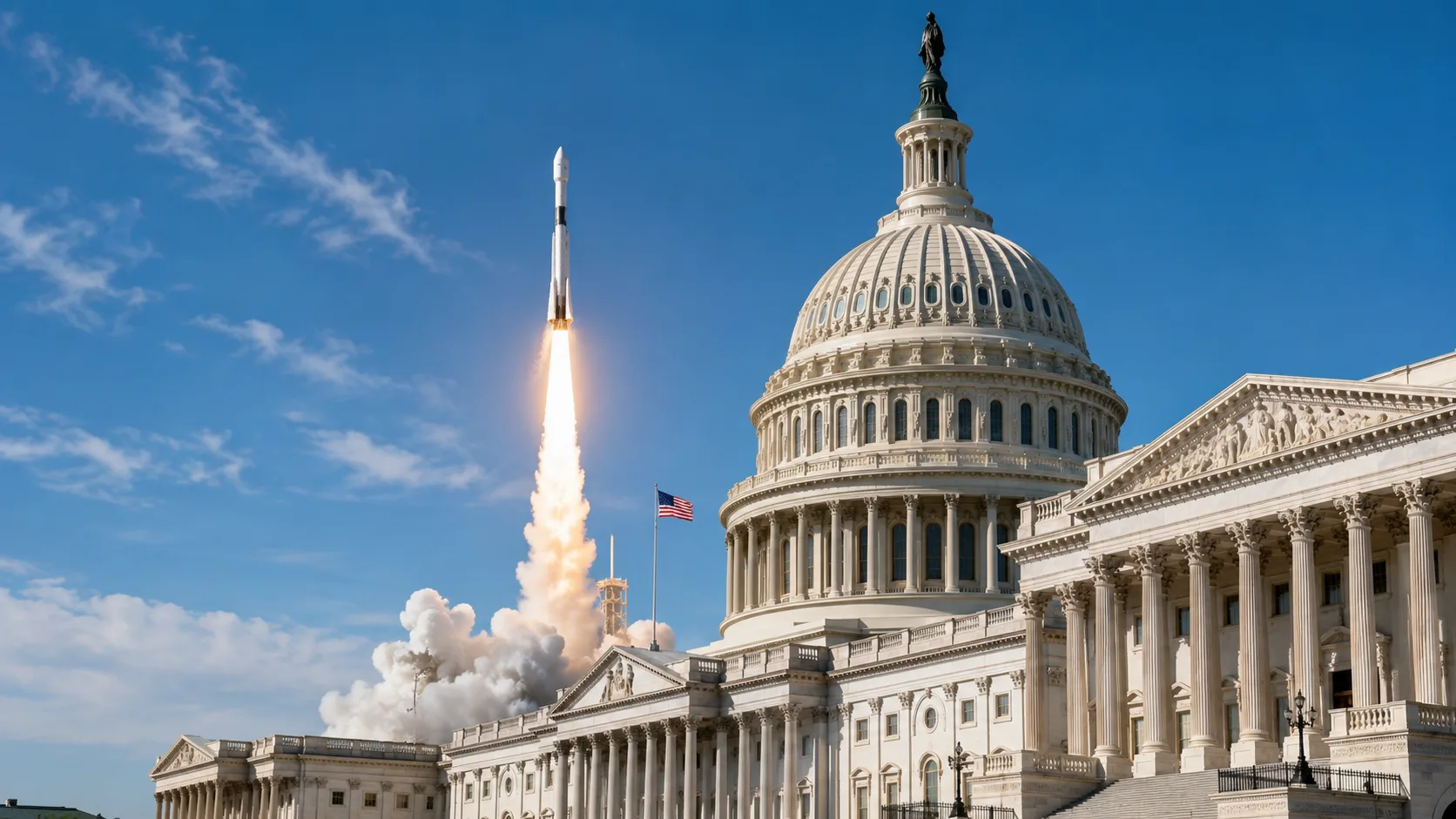
Several members of Congress and their families purchased shares of SpaceX within days of the company’s blockbuster IPO, raising fresh questions about whether lawmakers should be allowed to own stocks in companies directly affected by the legislation and oversight they help shape.
While the purchases were legal and there is no evidence of insider trading or other wrongdoing, ethics experts say the transactions highlight the growing debate over conflicts of interest in Congress as SpaceX expands its influence across defense, artificial intelligence, satellite communications, and federal contracting.
Congressional SpaceX Stock Purchases Draw New Scrutiny
According to congressional financial disclosures, at least six House members or their immediate family members purchased between approximately $83,000 and $245,000 worth of SpaceX shares within six days of the company’s June 12 initial public offering.
Those lawmakers include:
- Rep. William Timmons (R-S.C.)
- Rep. John McGuire (R-Va.)
- Rep. Dan Meuser (R-Pa.)
- Rep. Gil Cisneros (D-Calif.)
- Rep. Jared Moskowitz (D-Fla.)
- Rep. John James (R-Mich.)
Because House financial disclosures report investments in dollar ranges rather than exact amounts, the precise value of each purchase remains unknown.
Reporting deadlines also mean additional congressional purchases could still emerge in the coming days.
Why SpaceX Raises Unique Conflict Questions
Unlike many publicly traded companies, SpaceX depends heavily on federal contracts, government approvals, and regulatory oversight.
According to the company’s IPO filings, roughly 20% of its 2025 revenue came from federal agencies, including contracts with NASA, the Department of Defense, and U.S. intelligence agencies.
Several lawmakers who purchased SpaceX stock also serve on committees overseeing areas closely tied to the company’s business, including:
- Defense spending
- Military affairs
- Artificial intelligence
- Financial markets
- Securities regulation
- Government oversight
Because Congress influences federal budgets, defense appropriations, and regulations affecting aerospace and technology companies, ethics watchdogs argue lawmakers’ financial interests can create the appearance of conflicting incentives.
Ethics Experts Say Appearance Matters
There is no evidence that any of the lawmakers used nonpublic information or violated congressional trading laws.
However, ethics experts argue that public confidence can still be affected when lawmakers own shares in companies that rely heavily on government funding.
Campaign Legal Center ethics director Kedric Payne said the concern extends beyond insider trading.
According to Payne, conflicts can arise whenever lawmakers oversee industries or companies in which they hold financial interests, regardless of whether any misconduct occurs.
The issue becomes even more complex when purchases are made by spouses or dependent children.
Current congressional disclosure rules require lawmakers to report investments made by immediate family members because those assets are generally viewed as creating the same financial interests as the member of Congress.
Some Lawmakers Say They Do Not Manage Their Investments
Several members indicated they were not personally directing the trades.
Rep. Gil Cisneros previously said outside managers handle the day-to-day management of his investment portfolio.
Rep. John James’ office said his wife’s purchase was intended as an investment for their children.
Other offices either declined to comment or did not respond to requests for comment.
SpaceX’s Political Influence Continues to Expand
The scrutiny comes as SpaceX’s influence in Washington continues to grow.
The company has become America’s leading commercial launch provider, handling satellite launches, cargo missions, and astronaut transportation for NASA while securing billions of dollars in federal contracts.
Separately, the employee-funded SpaceX political action committee has significantly increased its political giving.
Federal campaign finance records show the PAC contributed approximately $1.9 million to federal races between early 2025 and mid-2026, with most recent donations favoring Republican candidates and committees.
The PAC is funded by employees and executives rather than SpaceX itself and operates independently from Elon Musk’s personal political activities.
SpaceX Stock Has Been Volatile Since Going Public
SpaceX shares experienced significant swings during their first several weeks of trading.
After pricing its IPO at $135 per share and opening around $150, the stock climbed to an intraday high above $200 before retreating sharply.
By Monday, shares had fallen to approximately $113, leaving the stock below both its IPO price and well off its post-offering highs.
Because congressional disclosures do not reveal exact purchase prices or share counts, it is impossible to determine whether individual lawmakers are currently sitting on gains or losses.
Congress Debates New Stock Trading Restrictions
The controversy arrives as lawmakers consider new limits on congressional stock trading.
The House recently passed legislation known as the Stop Insider Trading Act, which would prohibit members of Congress from making new purchases of individual stocks while allowing them to retain existing holdings, reinvest dividends, and eventually sell their investments with advance public disclosure.
Supporters argue the bill represents meaningful progress after years of stalled reform efforts.
Critics counter that allowing lawmakers to keep existing stock holdings would leave many of the same potential conflicts in place, particularly when members continue voting on policies that could affect the value of their investments.
With several high-profile companies—including OpenAI and Anthropic—widely expected to pursue public offerings in the future, the debate over congressional stock ownership is likely to remain a major issue on Capitol Hill.
About Author