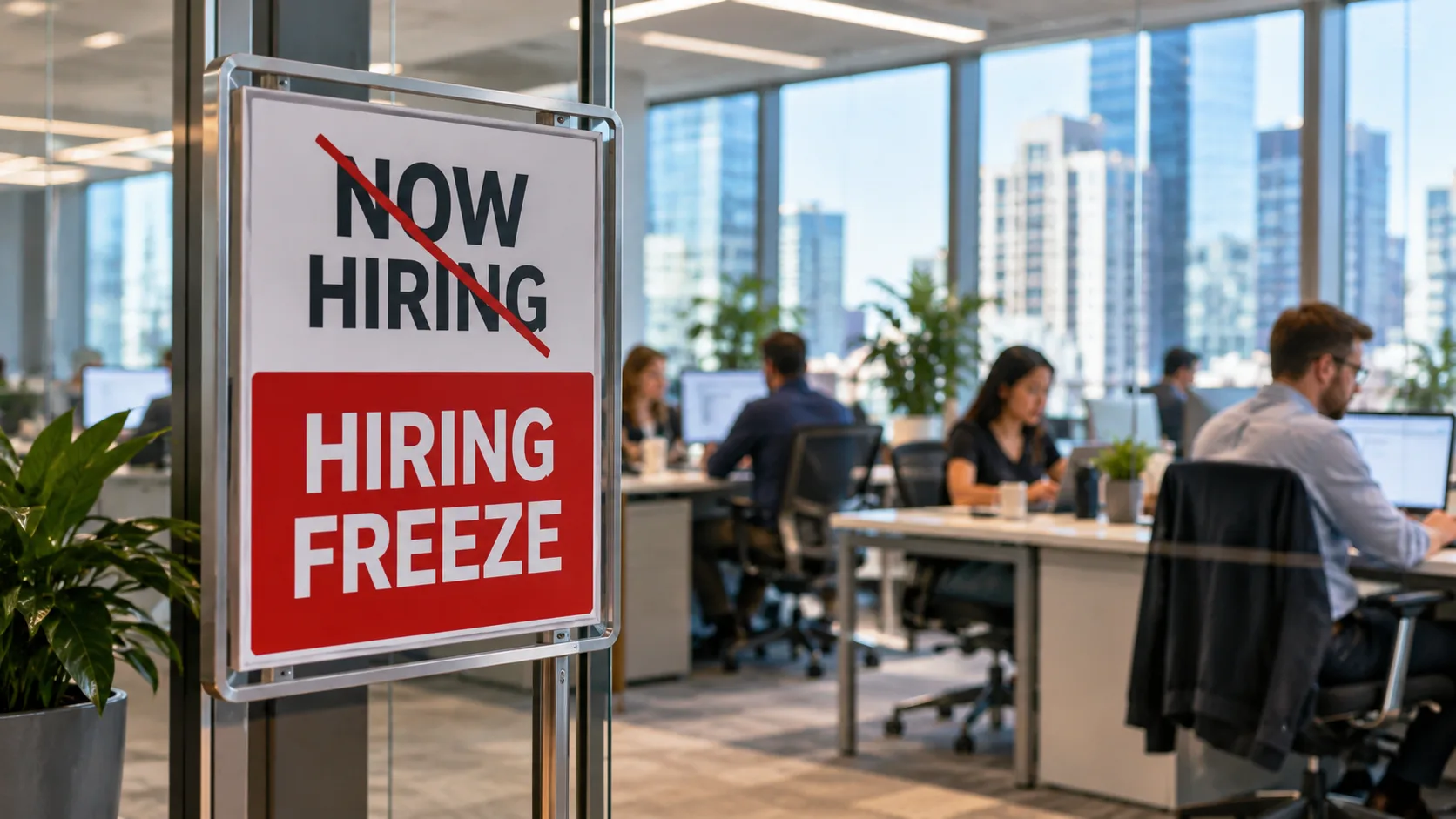
Expectations for a U.S. government shutdown surged dramatically over the weekend following a deadly incident in Minnesota and a sharp escalation in political tensions over immigration funding.
Prediction markets now show a sharply higher probability that Washington could fail to pass a funding agreement before the end of the month. At the same time, Democratic leaders are signaling they may withhold critical votes unless the Trump administration changes its approach to immigration enforcement.
The convergence of political pressure, public protests, and legislative gridlock is raising fresh concerns across financial markets about volatility, delayed government payments, and renewed uncertainty around federal operations.
Shutdown Odds Jump From Single Digits to Over 80%
According to activity on the prediction platform Polymarket, traders now estimate an 82% chance that the U.S. government could enter a shutdown by Jan. 31.
Just days earlier, the odds stood near 9% and had been trending lower throughout mid-January. By Sunday, those expectations spiked above 70% as news surrounding the Minnesota shooting and political fallout gained momentum.
Prediction markets are not perfect forecasts, but they often capture rapid shifts in investor and public sentiment. The sudden repricing suggests traders believe the probability of political compromise has deteriorated quickly.
For markets, this kind of sentiment shift tends to increase short-term volatility, especially in Treasury yields, government contractors, defense stocks, and sectors dependent on federal spending approvals.
Fatal Shooting Triggers Protests and Political Pressure
The renewed shutdown risk stems in part from growing public outrage after a fatal shooting involving federal law enforcement.
Alex Pretti, a 37-year-old intensive care nurse, was killed Saturday morning in Minneapolis by a federal Border Patrol agent. The incident occurred just two weeks after another fatal shooting in the same city, when Renee Good was killed by an Immigration and Customs Enforcement officer.
Despite harsh winter conditions, protests erupted over the weekend in several major cities. Demonstrators demanded accountability and changes to immigration enforcement policies, adding pressure on lawmakers heading into critical budget negotiations.
The back-to-back incidents intensified scrutiny of federal immigration agencies and accelerated political responses in Washington.
Democrats Signal They Will Block Funding Bill
Senate Minority Leader Chuck Schumer escalated the standoff by publicly stating that Senate Democrats would not provide the necessary votes to pass the upcoming appropriations bill if funding for the Department of Homeland Security remains included.
Calling the situation in Minneapolis “appalling—and unacceptable” in a post on X, Schumer said Democrats would withhold support needed to keep the government funded past June 30 if DHS funding is attached. The bill reportedly requires at least seven Democratic votes to advance and could come to a vote as early as this week.
The Trump administration responded by placing responsibility for the crisis on Minnesota Democrats, framing the dispute as politically motivated rather than policy-driven.
Once leadership positions harden publicly, the political cost of backing down increases significantly, especially during an election cycle.
Analysts See Few Paths to Avoiding a Shutdown
Political risk firm Signum Global Advisors said the situation now makes a shutdown increasingly difficult to avoid.
Lew Lukens, senior partner, and George Pollack, senior analyst, described how public sentiment among Democratic voters has hardened following the shootings.
“The Renee Good and Alex Pretti killings in Minnesota have intensified Democratic base sentiment against Immigrations and Customs Enforcement (ICE) operations to a degree that leaves congressional Democrats little choice but to use funding bills as leverage against the Trump administration,” they said in a note to clients.
That political pressure limits lawmakers’ flexibility to compromise even if they privately prefer to avoid a shutdown.
The analysts outlined several theoretical ways a shutdown could be avoided, but they characterized most of them as politically unlikely.
Splitting DHS Funding Would Create New Risks
One possible workaround would involve Senate Republican Majority Leader John Thune separating DHS funding from the remaining five department funding bills. This would technically restrict any shutdown impact to DHS rather than the entire federal government.
However, Signum noted several complications with this approach. Much of ICE’s operational budget is funded through separate legislative mechanisms, and “the president can declare all elements of the department essential,” they said.
Removing DHS from the broader bill would also weaken Republican leverage in future negotiations to reopen the government. At the same time, many Republican senators reportedly do not strongly support the remaining five funding bills, making DHS inclusion critical to securing votes.
There is also a political branding risk. Signum warned that such a move could “rebrand the conflict as a DHS-only matter,” which would be undesirable for the White House.
In practical terms, splitting the bill could satisfy neither party and prolong uncertainty rather than resolve it.
Immigration Policy Reversal Seen as Unlikely
Another theoretical solution would involve the Trump administration reducing the intensity of immigration enforcement operations. That could potentially ease political tensions and allow negotiations to resume.
But Signum believes this path is also unlikely now that Democratic opposition has become public and highly visible. Any perceived retreat could alienate core supporters within the administration’s base and weaken political messaging ahead of upcoming elections.
Immigration enforcement has been positioned as a central pillar of the administration’s policy agenda, making rapid shifts politically risky.
Democrats Face Their Own Political Constraints
Signum also outlined a third possibility: Democrats could ultimately step back from shutdown threats out of concern that a prolonged closure could hurt voters and backfire politically.
However, Lukens and Pollack believe that outcome carries risks for Democratic leadership as well.
Backing down could demoralize the party’s base, weaken negotiating credibility, and even threaten leadership stability. With midterm elections approaching, appearing soft on an emotionally charged issue could create internal challenges for party leadership.
In other words, both sides face political penalties for compromise, making gridlock more likely.
What a Shutdown Means for Markets and Investors
Historically, government shutdowns tend to create short-term market volatility rather than long-lasting economic damage. However, the timing and political climate matter.
Key areas investors should watch include:
- Treasury markets: Shutdowns can temporarily disrupt economic data releases, creating uncertainty around interest rate expectations.
- Defense and government contractors: Delayed payments and contract approvals can pressure stock prices in sectors reliant on federal spending.
- Consumer confidence: Prolonged political dysfunction can weigh on sentiment and discretionary spending.
- Federal workers and local economies: Missed paychecks can ripple into regional economic activity, especially in government-heavy regions.
Markets often recover quickly once funding agreements are reached, but sharp intraday swings are common during shutdown headlines.
Investors may also see increased volatility in sectors tied to border security, defense technology, cybersecurity, and government services as political narratives evolve.
Broader Political and Economic Implications
This standoff reflects a deeper trend in U.S. politics where funding deadlines increasingly become leverage points for policy disputes rather than routine legislative exercises.
Frequent brinkmanship can raise the perceived risk premium in U.S. assets, particularly for foreign investors evaluating political stability. While the U.S. remains the world’s safest large capital market, repeated shutdown threats introduce friction into economic forecasting and corporate planning.
For businesses reliant on federal approvals, licensing, or contracting, uncertainty can delay investment decisions and hiring plans.
The longer political tensions remain unresolved, the more likely spillover effects could appear in quarterly earnings guidance and business sentiment surveys.
What Investors Should Watch Next
Over the coming days, investors should monitor several key signals:
- Whether Senate leadership schedules a vote on the funding bill and how vote counts evolve.
- Any changes in public messaging from Democratic leadership regarding DHS funding.
- Statements from the White House signaling flexibility or hardening positions.
- Movement in prediction markets and bond yields reflecting shifting shutdown expectations.
- Market reaction in government-exposed sectors.
While shutdowns often generate more headlines than lasting damage, they can create tactical trading opportunities and short-term risk for unprepared portfolios.
Investors focused on capital preservation may want to reduce exposure to highly sensitive government contractors or increase cash flexibility until funding clarity improves.
If history is any guide, resolution often comes at the last possible moment. But this time, political incentives on both sides make compromise far from guaranteed.
About Author