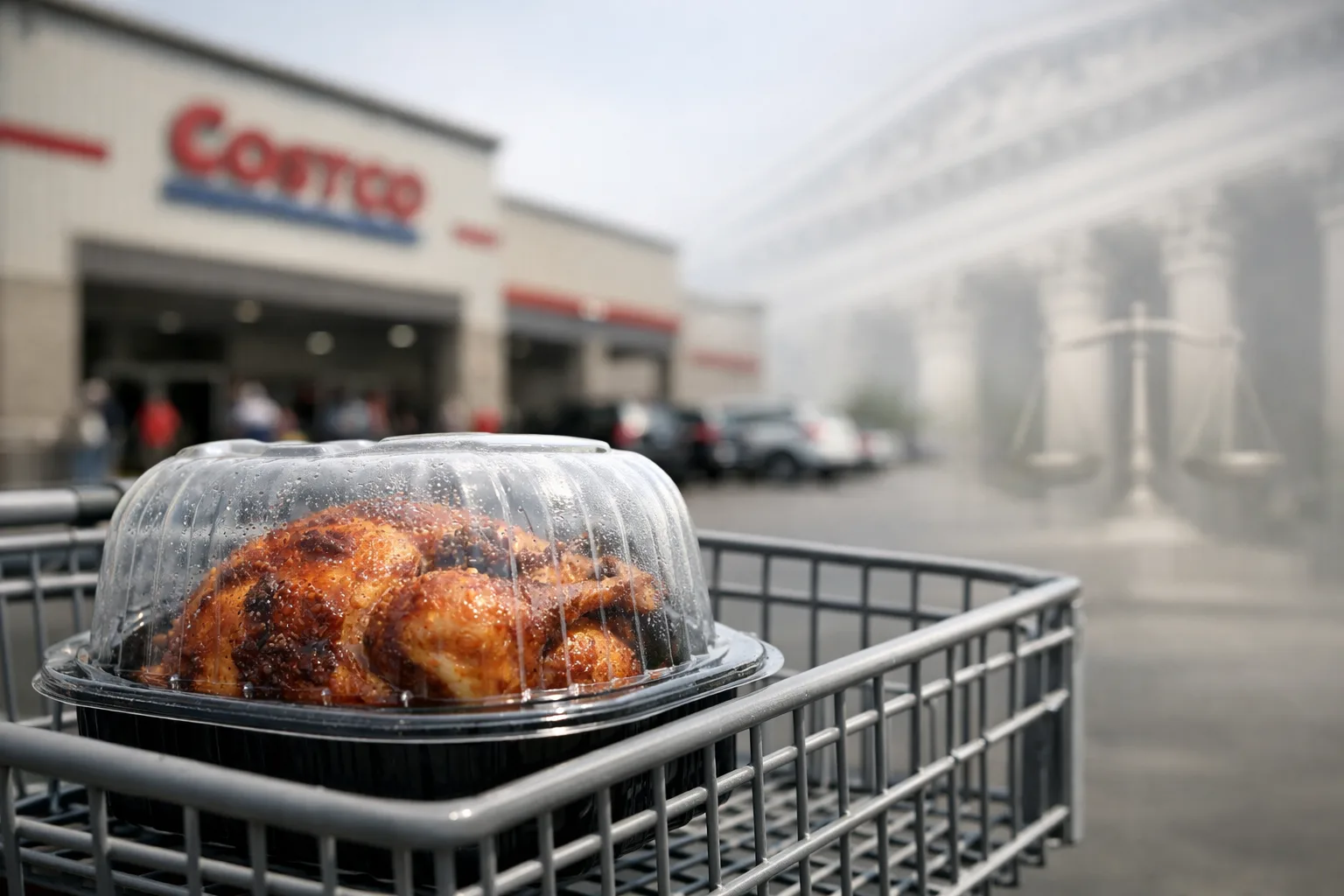
Costco’s famously inexpensive rotisserie chicken has long been a staple for shoppers looking for a fast, affordable meal. Now that same product is at the center of a new class action lawsuit that could raise broader questions about food labeling, marketing transparency, and consumer trust across the grocery industry.
A lawsuit filed Thursday in the U.S. District Court for the Southern District of California alleges that Costco falsely advertises its Kirkland Signature Seasoned Rotisserie Chicken as containing no preservatives. According to the complaint, the product allegedly contains sodium phosphate and carrageenan, which plaintiffs argue function as preservatives despite marketing claims suggesting otherwise.
The case was filed on behalf of Anatasia Chernov and Bianca Johnston, who claim Costco’s signage and website misled them into believing the chicken was free of preservatives.
The lawsuit alleges that Costco’s marketing materials “create an overall net impression that the Rotisserie Chicken does not contain added preservatives.” However, the plaintiffs argue that this impression is inaccurate.
“The presence of sodium phosphate and carrageenan, added preservatives which function as such in the Rotisserie Chicken, contradict the overall net impression that Costco’s ‘No Preservatives’ representations and advertising create,” the lawsuit states.
The plaintiffs argue that they and other consumers rely heavily on preservative-free labeling when making food purchases, particularly for family meals. They claim they were unable to determine before buying the product that it allegedly contained these ingredients.
According to the complaint, any disclosure of the ingredients appears only in small print on the back of the label and does not explain their preservative function. The lawsuit argues that this disclosure was insufficient to counter Costco’s more prominent “no preservatives” messaging.
The filing also alleges that Costco had superior knowledge about how the ingredients functioned in the product and failed to clearly disclose that information to shoppers.
“Consumers reasonably rely on clear, prominent claims like ‘No Preservatives,’ especially when deciding what they and their families will eat,” Wesley Griffith, California managing partner at the Almeida Law Group LLC who is representing the party suing Costco, told FOX Business.
He added that “Costco’s own ingredient list contradicts its marketing. Our lawsuit seeks to hold Costco accountable for deceiving its customers.”
At the time of publication, Costco has not publicly commented on the lawsuit.
Why Sodium Phosphate and Carrageenan Are Controversial Ingredients
Sodium phosphate is commonly used in processed meats and poultry to retain moisture, improve texture, and extend shelf life. Carrageenan, derived from seaweed, is frequently used as a thickener or stabilizer in food products. Both ingredients are approved by the Food and Drug Administration for use in food.
However, consumer advocacy groups have increasingly raised concerns about how these additives are disclosed and marketed. Some shoppers associate “no preservatives” labeling with a cleaner ingredient profile, even if certain additives technically serve functional roles rather than traditional preservation purposes.
That gray area often becomes fertile ground for litigation. Food labeling lawsuits frequently hinge on whether a reasonable consumer would interpret marketing language in a way that contradicts the ingredient list.
Courts have historically been divided on these disputes. Some cases have been dismissed when judges rule that ingredient labels adequately disclose product contents. Others have proceeded when plaintiffs demonstrate that front-of-package marketing materially misled consumers.
Costco’s Rotisserie Chicken Is a High-Visibility Product
Costco sells tens of millions of rotisserie chickens annually. The $4.99 price point has remained unchanged for years and is widely considered a loss leader designed to drive foot traffic into warehouses.
Because the chicken is so visible and so widely purchased, any controversy surrounding its labeling or quality has outsized reputational impact compared with niche food products.
Even small legal disputes involving staple items can trigger headlines, social media attention, and regulatory scrutiny. For a retailer as brand-sensitive as Costco, maintaining trust around private-label products is strategically important.
Kirkland Signature represents a major pillar of Costco’s merchandising strategy, driving both margins and customer loyalty across categories ranging from groceries to household goods and supplements.
Potential Legal and Financial Implications for Costco
From a pure financial standpoint, this lawsuit is unlikely to materially impact Costco’s earnings in the near term. Costco generates well over $200 billion in annual revenue and has significant legal resources to defend itself.
However, food labeling lawsuits can create secondary risks that investors should monitor:
Reputational Risk
Consumer trust is central to Costco’s value proposition. The company’s private label brand relies heavily on perceived quality and transparency. Any sustained negative publicity could pressure brand equity.
Compliance and Labeling Costs
If the lawsuit proceeds and results in changes to packaging or marketing language, Costco may incur incremental compliance, legal, and operational costs across warehouses and digital platforms.
Copycat Litigation Risk
Food labeling cases often inspire similar lawsuits in other jurisdictions or against similar products. A single case can sometimes trigger a broader wave of legal challenges across the industry.
Regulatory Attention
High-profile lawsuits sometimes attract attention from state attorneys general or federal regulators, especially if allegations involve consumer deception.
That said, large retailers routinely face class action litigation and often resolve cases through settlements without admitting wrongdoing.
What Shoppers Should Know
Consumers concerned about preservatives or additives should always review ingredient labels carefully, even when front-of-package marketing highlights simplified claims.
Ingredients like sodium phosphate and carrageenan can serve multiple functional roles in food products. Whether they qualify as preservatives often depends on regulatory definitions and marketing interpretations rather than health risk alone.
Shoppers who prioritize clean-label foods may want to compare ingredient lists across fresh and prepared food options and consult dietary professionals if they have specific health concerns.
What Investors Should Watch Next
For Costco shareholders and retail investors, the key developments to monitor include:
- Whether the court allows the lawsuit to proceed past early dismissal motions
- Any official statement or response from Costco addressing the allegations
- Potential settlement discussions or labeling changes
- Consumer sentiment impact, if any, reflected in sales trends or media coverage
Unless the case escalates significantly or triggers broader regulatory action, it is unlikely to materially alter Costco’s long-term investment outlook. Costco remains one of the strongest operators in retail with high renewal rates, consistent traffic growth, and disciplined cost management.
Still, the lawsuit highlights how even trusted consumer brands face ongoing scrutiny in an era where shoppers increasingly demand transparency around food sourcing and ingredients.
About Author