
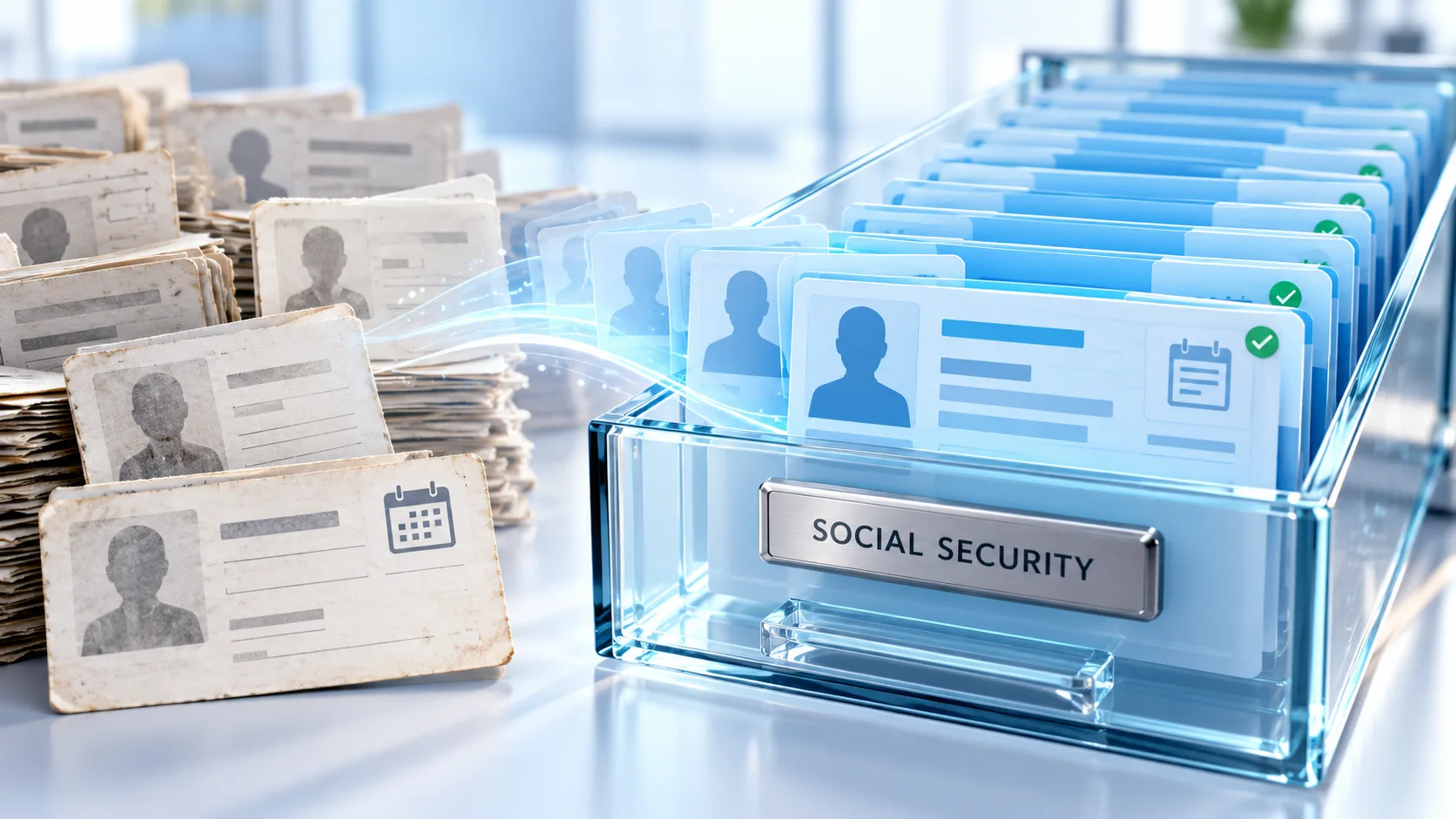
Social Security says it has corrected tens of millions of identity records in the largest database cleanup in its history. The changes involve missing death dates and citizenship information, raising understandable questions about what the effort means for people receiving benefits.
The agency’s October 20 announcement reports progress on work underway since the beginning of the Trump administration. It does not announce a benefit cut, a new application requirement or a deadline for everyone to verify their Social Security number.
The practical issue is accuracy. Better records can help prevent improper payments and identity misuse, while incorrect changes can create problems for people entitled to benefits.
What Social Security Has Changed
The Social Security Administration describes the effort as the most comprehensive cleanup of its Social Security number database in the agency’s 91-year history. Commissioner Frank Bisignano said accurate identity information supports government services and helps prevent fraud.
According to the announcement, the work includes:
| Type of Record | What SSA Reports |
|---|---|
| Missing death dates | Added 17 million dates using internal systems and State Department information |
| Missing citizenship information | Updated approximately 25 million records using Department of Homeland Security data |
| Incorrect citizenship status | Corrections to another 8.5 million records remain underway |
| Manual data-entry errors | Introduced stronger internal controls to prevent future inaccuracies |
SSA says it has corrected nearly 15% of active Social Security numbers since the administration began. The announcement describes both completed updates and work still in progress, so the categories should not be treated as a simple count of newly completed corrections.
The scale is significant because Social Security records serve purposes throughout government. Other agencies use the information to verify identities and administer programs, which means the consequences of an error can extend beyond a retirement check.
A Missing Death Date Does Not Automatically Mean Someone Was Receiving Benefits
One important distinction can get lost in headlines about millions of corrected records: maintaining a Social Security number record and receiving a monthly benefit are different things.
Someone can remain in the agency’s identity database without collecting retirement, disability or survivor benefits. Adding a missing death date to that record does not establish that checks were being issued in the person’s name.
SSA addressed this distinction in March 2025, explaining that reports of extremely old people in its records reflected missing death information and that those individuals might not be receiving benefits. The agency also described procedures for investigating cases involving older beneficiaries whose continued eligibility needs verification.
The October 20 announcement does not quantify fraud uncovered, money recovered or benefit savings attributable to the cleanup. Those results would require separate evidence.
Accurate records can still have considerable value. They can reduce the opportunity for identity misuse, improve verification and save employees from repeatedly investigating the same discrepancies. Measuring that value requires looking at outcomes as well as the number of fields updated.
Why Death Records Matter Financially
Government audits show that death-reporting problems can create real costs.
In March 2025, Social Security’s inspector general reported that the agency’s processing system had rejected hundreds of thousands of valid state death reports. The audit examined reports submitted between November 2018 and October 2022 and estimated that the problem resulted in $327 million in improper payments.
That was a separate audit of earlier activity. Its findings should not be presented as money recovered through the cleanup announced this week.
The audit illustrates the challenge facing the agency. Verification checks need to identify genuine deaths without accepting reports that incorrectly identify a living person. Weaknesses in either direction can be costly: taxpayers can fund payments that should have stopped, or eligible beneficiaries can lose access to money they need.
For someone relying on Social Security to cover housing, food and healthcare, even a temporary interruption can force an unplanned withdrawal from savings. That makes the speed and accuracy of corrections especially important.
Incorrect Death Reports Can Also Harm Living Beneficiaries
The risk of a mistaken death entry is documented, although the latest announcement does not establish that this cleanup has caused new errors.
A July 2026 inspector general report said SSA posted approximately 5.6 million death records during 2025 and subsequently determined that 12,504, or 0.22%, were erroneous. The report identified administrative mistakes and inaccurate reports from outside sources as possible causes.
Auditors also found weaknesses in how employees documented corrections. Without adequate explanations, the agency can have difficulty answering beneficiaries’ questions or identifying the causes of repeated mistakes.
SSA has acknowledged that being incorrectly recorded as deceased can temporarily stop benefits and create financial hardship until the error is resolved. Because death information is shared, affected individuals may also need documentation to clear up problems with other organizations.
These findings provide a useful standard for judging the current initiative: fewer inaccurate records should be accompanied by a reliable process for fixing mistakes.
What Beneficiaries Can Do
The announcement does not tell every recipient to replace a Social Security card or submit new citizenship documents. People with accurate records and uninterrupted benefits have no new universal requirement arising from this release.
For anyone who notices a problem, the next step depends on the type of error.
If You Are Incorrectly Listed as Deceased
SSA instructs people who suspect they have been mistakenly recorded as dead to visit a local Social Security office as soon as possible.
Bring current identification, such as a passport or driver’s license. The agency requires original documents or copies certified by the issuing agency; ordinary photocopies and notarized copies are insufficient.
Once SSA corrects the record, it can provide an “Erroneous Death Case” notice for banks, doctors and other organizations. Request that documentation and keep copies of communications related to the correction.
If Your Citizenship Information Needs Updating
SSA’s published instructions direct people to request a replacement Social Security card to update citizenship or immigration status. The process includes an appointment and proof of identity and the updated status.
People who are unsure whether their information is accurate can contact SSA directly at 1-800-772-1213 and explain the concern. Naturalized citizens who have never updated their Social Security record have a particular reason to check the agency’s instructions.
If Your Earnings Record Is Wrong
An earnings error is a separate issue from the death and citizenship updates announced this week. It still deserves attention because earnings information helps determine retirement benefits.
SSA recommends reviewing your earnings history through a personal my Social Security account. Depending on the circumstances, you may be able to request a correction online or contact the agency directly.
W-2 forms, pay stubs and other employment records can help support a correction. Address discrepancies promptly because correction time limits apply, with exceptions for certain errors.
Be Careful With Messages Offering to “Fix” Your Record
News about a large government records project can give impersonators a convincing reason to contact people.
Social Security’s inspector general warned in August that scammers may offer to verify an employment history, address or benefit application using someone’s Social Security number. They may direct the person to an official-looking website or form to collect sensitive information.
The agency advises people to end suspicious contacts and reach Social Security through its published channels. Threats to suspend a Social Security number, demands to move money for protection or requests for payment through cryptocurrency, gift cards or wire transfers are major warning signs.
For routine reviews, begin at the agency’s official website yourself. An unsolicited message claiming that your record is part of the cleanup is not a reason to hand over personal information.
The Next Test Is Whether Better Records Produce Better Service
Future updates should clarify how much improper spending the initiative prevents, how SSA verifies changes and how quickly it resolves disputed entries. Independent reviews would help establish whether the new controls are working.
For beneficiaries, the useful response is to maintain accurate information, review legitimate notices and address specific discrepancies promptly. The cleanup’s success will depend on protecting public money while keeping eligible people’s benefits flowing.
About Author