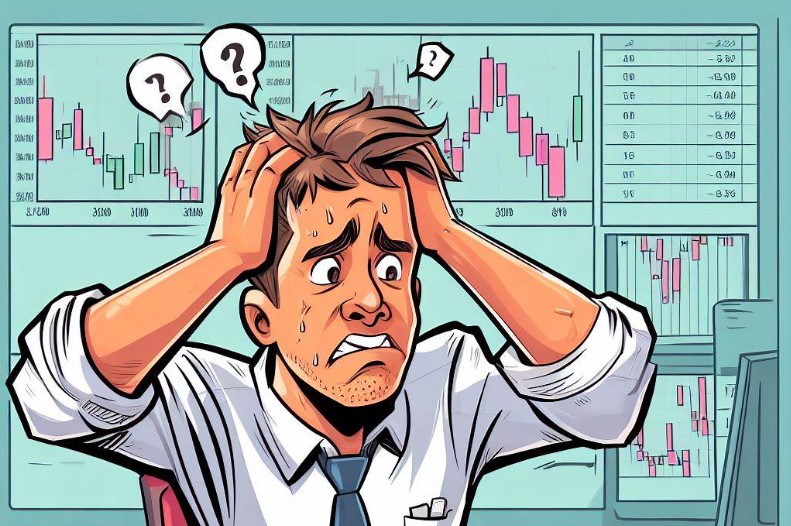
As 2024 progresses, investors are increasingly concerned about the possibility of a stock market crash. The question on everyone’s mind is: will the stock market crash in 2024? This article will explore the arguments for and against such an event, considering current economic conditions, market trends, and expert opinions.
Arguments For a Stock Market Crash in 2024
- Economic Slowdown The U.S. economy, while resilient in many areas, faces significant challenges. High interest rates, aimed at curbing inflation, have tightened credit conditions, which could lead to reduced consumer spending and lower corporate earnings. This economic slowdown could be a precursor to a market downturn as businesses struggle to maintain profitability, and investors begin to lose confidence in future growth prospects (Money) (NerdWallet: Finance smarter).
- High Market Valuations Certain sectors of the stock market, particularly technology, are currently viewed as being overvalued. When valuations are detached from underlying economic fundamentals, there is a heightened risk of a market correction. If investors begin to question these high valuations, it could trigger a sell-off, leading to broader market declines. Historical precedents suggest that such corrections are often sudden and severe, particularly in overvalued markets (Money).
- Geopolitical Risks The global geopolitical landscape remains tense, with ongoing conflicts and trade tensions between major economies, such as the United States and China. These tensions could escalate, leading to disruptions in global trade and investment flows. Additionally, unexpected geopolitical events, such as natural disasters or political instability, could serve as catalysts for a market crash. Investors typically react to uncertainty by pulling out of riskier assets, which can exacerbate market declines (NerdWallet: Finance smarter).
- Rising Debt Levels The high levels of corporate and government debt are another significant risk factor. As interest rates rise, the cost of servicing this debt increases, potentially leading to financial instability. Companies with high leverage may face difficulties refinancing their debt, leading to defaults that could ripple through the financial system. In such a scenario, the stock market could experience a severe correction as investors reassess the risk profiles of their investments (NerdWallet: Finance smarter).
Arguments Against a Stock Market Crash in 2024
- Strong Economic Fundamentals Despite the challenges, the U.S. economy has shown remarkable resilience. The labor market remains strong, with low unemployment and steady wage growth, supporting consumer spending. Moreover, many companies continue to report robust earnings, particularly in sectors that are benefiting from long-term trends such as digital transformation and renewable energy. These strong fundamentals provide a solid foundation for continued market growth, reducing the likelihood of a crash (Money) (NerdWallet: Finance smarter).
- Sectoral Strength Certain sectors, such as energy and real estate, are expected to perform well in 2024. The energy sector, in particular, is benefiting from high demand and limited supply, which is driving up prices and profits. Similarly, the real estate market, while facing challenges in some areas, continues to see strong demand in key regions. These sectoral strengths could help offset weaknesses in other parts of the market, providing a buffer against a broader market downturn (Money).
- Investor Sentiment Investor sentiment remains relatively optimistic, supported by ongoing innovation and corporate profitability. Many investors continue to see opportunities in the market, particularly in sectors that are poised for growth. This optimism can help sustain market valuations, even in the face of economic headwinds. Moreover, the stock market has historically shown a remarkable ability to recover from short-term volatility, suggesting that any downturn in 2024 may be temporary rather than catastrophic (NerdWallet: Finance smarter).
- Monetary Policy Flexibility While central banks, including the Federal Reserve, have been raising interest rates, they still have tools at their disposal to support the economy if conditions worsen. For example, they could pause or reverse rate hikes if economic data indicates a significant slowdown. Additionally, central banks could deploy other measures, such as quantitative easing, to stabilize markets. This flexibility in monetary policy could help prevent a market crash, or at least mitigate its severity (NerdWallet: Finance smarter).
Conclusion
The possibility of a stock market crash in 2024 cannot be ruled out, given the various economic and geopolitical risks. However, strong economic fundamentals, sectoral resilience, and flexible monetary policies provide reasons for optimism. Investors should remain vigilant and consider diversifying their portfolios to mitigate potential risks. While predicting the future of the stock market is inherently uncertain, staying informed and prepared is the best strategy for navigating potential volatility.
For those closely watching the markets, it’s crucial to keep an eye on key economic indicators and to be prepared for a range of scenarios. Whether the market experiences a crash, a correction, or continues its growth, being proactive and informed will help you make the best decisions for your financial future.
About Author