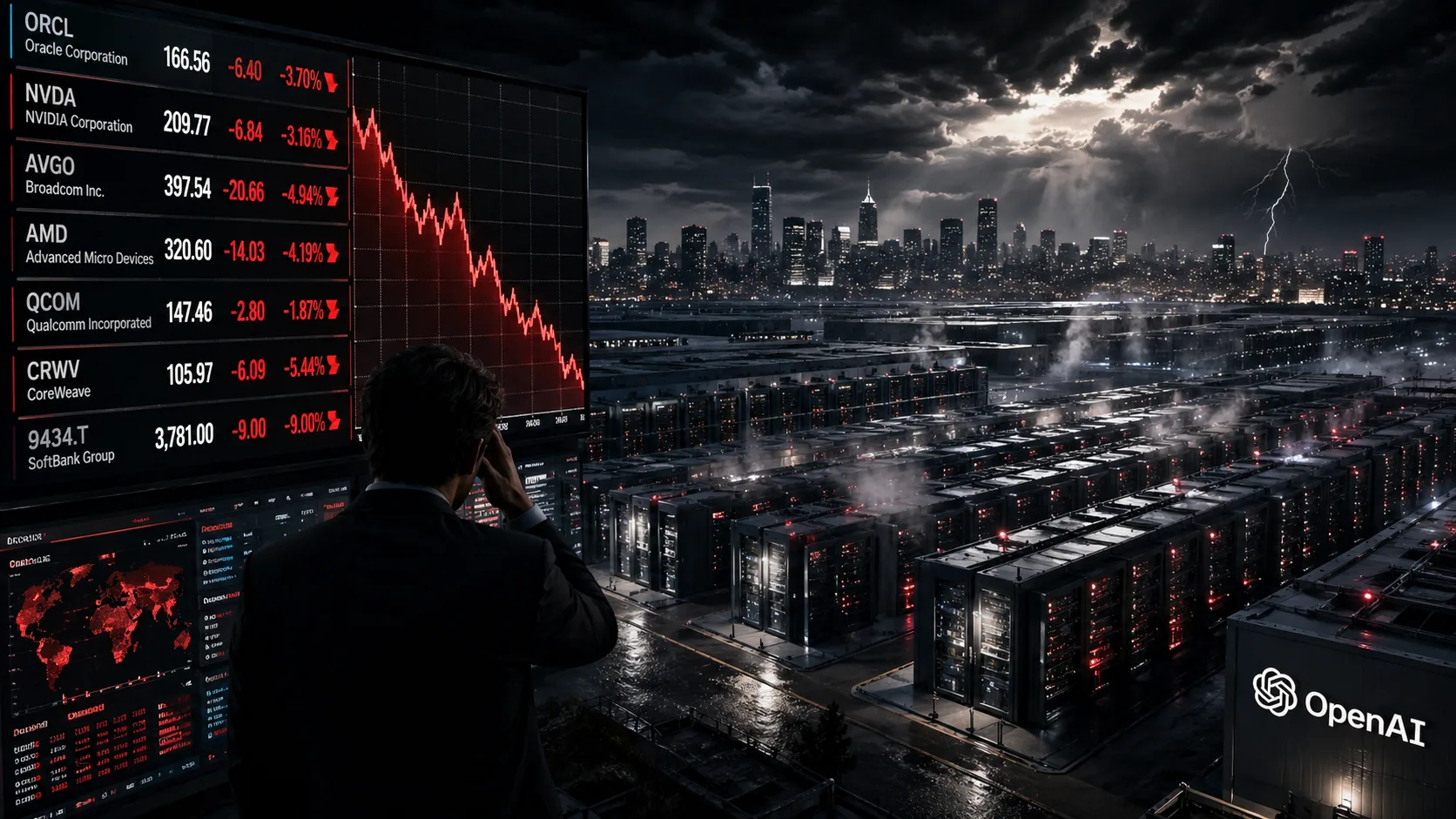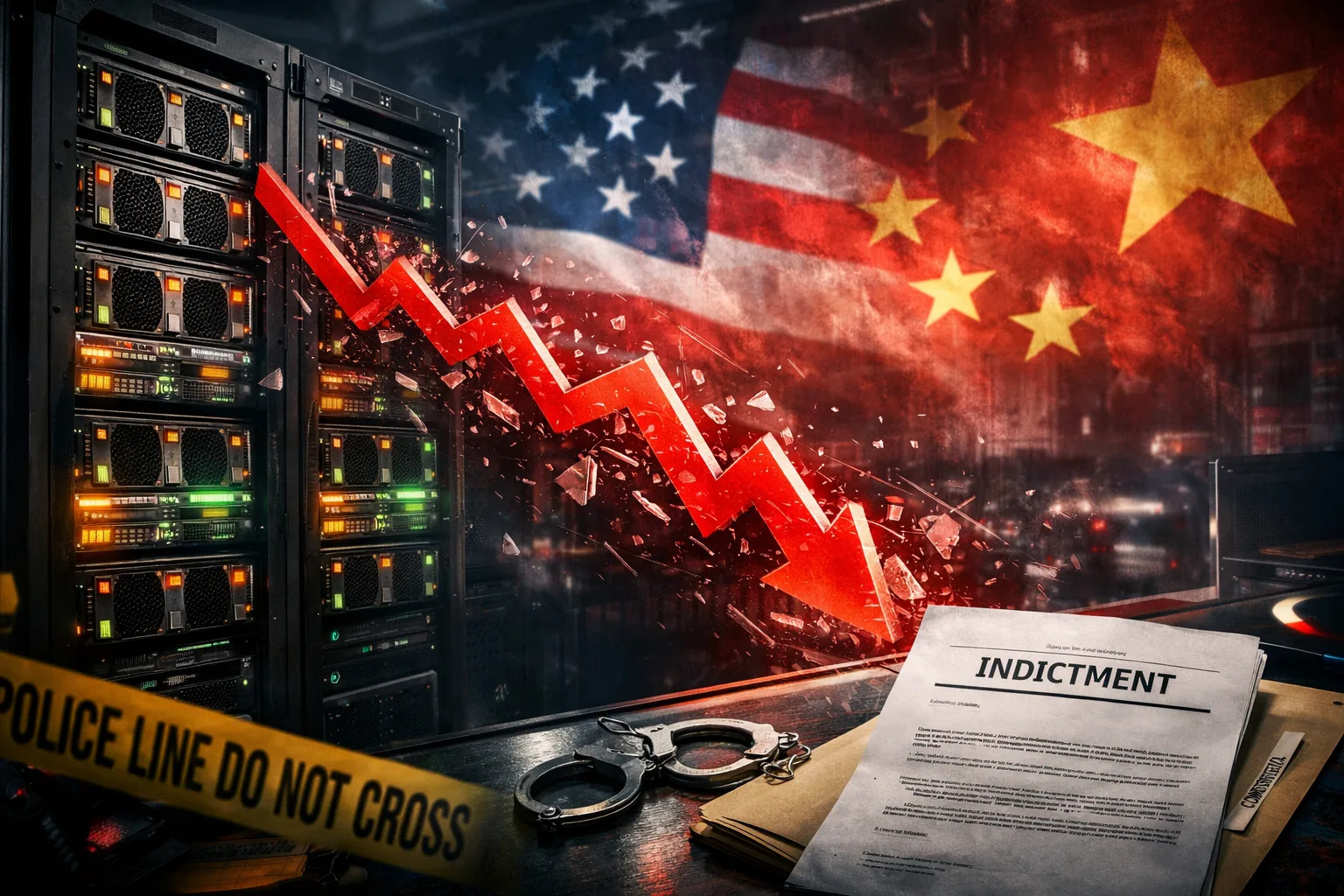
Super Micro Computer shares were hammered Friday after federal prosecutors unsealed a case alleging that people tied to the company helped route billions of dollars worth of Nvidia-powered servers into China in violation of U.S. export controls.
The sell-off was brutal because the charges hit at the heart of what investors care most about with Super Micro right now: trust, compliance, and continued access to the AI hardware supply chain that made the company one of the biggest winners of the artificial intelligence boom.
According to the U.S. Attorney’s Office for the Southern District of New York, three individuals associated with Super Micro were charged in connection with an alleged scheme to divert restricted AI server technology to China through intermediaries in Taiwan and Southeast Asia. Prosecutors said the operation involved fake paperwork, repackaged servers, dummy inspection equipment, and efforts to mislead both company compliance teams and U.S. officials.
The market’s reaction was swift. Shares of Super Micro plunged after the news broke, wiping out a significant chunk of market value in a single session and raising fresh doubts about the company’s governance at a time when Wall Street was already sensitive to execution risk and reputational damage.
What the government is alleging
At the center of the case is Yih-Shyan “Wally” Liaw, a co-founder of Super Micro and a current board member who, according to the company, also serves as senior vice president of business development. Also charged were Ruei-Tsang “Steven” Chang, identified by Super Micro as a sales manager in Taiwan, and Ting-Wei “Willy” Sun, who the company said worked as a contractor.
Federal prosecutors allege the group helped move at least $2.5 billion worth of AI server technology to China despite strict U.S. controls on advanced computing exports. Those restrictions were put in place to slow China’s access to high-end computing power that could support military modernization, surveillance systems, and next-generation artificial intelligence development.
The indictment describes an elaborate system designed to conceal the true destination of the equipment. Prosecutors say a Southeast Asian intermediary was used to create false documents making it appear the servers would remain outside China. Authorities also allege that the equipment was repackaged and relabeled before being sent onward, and that dummy servers were placed in facilities to fool compliance teams and visiting export-control personnel.
One of the most damaging claims for investors is the scale. Prosecutors said the effort generated roughly $2.5 billion in sales since 2024. They also alleged that more than $500 million worth of servers were moved in just a short stretch between late April 2025 and mid-May 2025.
That kind of volume suggests this was not some tiny side operation. If the allegations are proven, the case points to a systematic and highly profitable effort to get advanced computing gear into China despite U.S. restrictions.
Why the stock got crushed
A 25% to 27% collapse in a single day does not happen because traders are mildly concerned. It happens because investors immediately begin repricing the company for a much uglier future.
The first reason is obvious: legal and compliance risk. Even though Super Micro itself was not named as a defendant, investors know that does not end the story. If senior people tied to the company are alleged to have participated in export-control evasion, the fallout can spread far beyond the individuals charged.
The second reason is operational risk. Super Micro’s rise has been closely tied to demand for Nvidia-powered AI servers. If Nvidia, regulators, or large enterprise customers lose confidence in the company’s controls, that could threaten supply allocations, customer relationships, and future growth.
The third reason is credibility. Super Micro has already spent time under a cloud after past accounting and governance controversies. Investors are much less willing to give the company the benefit of the doubt when another major controversy lands, especially one tied to national security and U.S.-China technology restrictions.
Reuters reported that some analysts are already warning the case could jeopardize Super Micro’s relationship with Nvidia and undermine confidence in the company’s ability to operate cleanly within export-control rules.
That matters because Super Micro is not just selling generic hardware. It is a key assembler and seller of high-performance AI server systems built around chips that remain in extremely high demand worldwide. If access to those components gets questioned, the core bull case weakens fast.
Super Micro’s response
Super Micro moved quickly to distance itself from the accused individuals. In a public statement, the company said it was not named as a defendant in the indictment. It also said Liaw and Chang had been placed on administrative leave and that its relationship with contractor Ting-Wei Sun had been terminated immediately. The company added that the alleged conduct violated its policies and compliance controls.
The company stated: “The conduct by these individuals alleged in the indictment is a contravention of the Company’s policies and compliance controls, including efforts to circumvent applicable export control laws and regulations.”
That is the right public posture, but investors are unlikely to stop at the statement itself. They will want answers to harder questions.
How did this allegedly happen at such scale without being detected sooner? Were internal compliance systems strong enough? Were warning signs missed? Did the company’s controls fail, or were they deliberately bypassed in ways that should have raised red flags faster?
Those questions will now hang over the stock.
Why this story is bigger than just Super Micro
This case landed at a sensitive moment in the broader AI and semiconductor race.
Washington has spent the last several years tightening export controls on advanced chips and the servers that use them, especially when it comes to China. The goal has been straightforward: make it harder for Chinese firms and state-linked actors to access the most powerful U.S.-designed computing infrastructure.
That has not been easy to enforce.
Smuggling, rerouting through third countries, shell intermediaries, gray-market procurement, and document manipulation have all been recurring concerns. U.S. officials have been under pressure to show they can actually enforce the rules rather than just write them.
This case gives prosecutors a chance to do exactly that.
Jay Clayton, the U.S. Attorney for the Southern District of New York, put it bluntly: “Crimes involving sensitive technology must be met with swift action. Otherwise the law is meaningless.”
For investors, that means this is not just a one-company scandal. It is part of a much bigger crackdown around advanced AI hardware, export compliance, and U.S.-China tech competition.
Any company operating in the AI infrastructure stack now faces a higher burden to prove that its products are ending up where they are legally supposed to end up.
The Nvidia angle investors cannot ignore
Nvidia is not charged in this case, but it sits near the center of the story because its GPUs power the kind of servers prosecutors say were diverted.
That puts fresh attention on a difficult reality for the chip giant and its ecosystem partners. Demand from China remains enormous, but the rules around what can and cannot be sold there continue to shift.
Reuters reported this week that Nvidia is restarting manufacturing of its H200 chip variant for China after receiving the approvals needed to move forward with orders. Reuters also reported that Nvidia had secured Beijing’s approval for H200 sales and was reviving supply chain activity following renewed demand.
That creates a strange backdrop for the Super Micro story. On one hand, Washington is trying to police leakage of advanced AI systems into China. On the other hand, some Nvidia products are again being licensed for sale under specific conditions. That tension is exactly why compliance matters so much.
A company cannot just say demand exists and shipments happened. Investors and regulators increasingly want to know which chips, under what license, through which channel, to which end user, and under what controls.
The case also reportedly includes allegations that Liaw pushed the intermediary company toward more advanced Nvidia products, including systems tied to Blackwell architecture. If that detail holds up in court, it will only intensify concerns because it suggests efforts were not limited to older, lower-sensitivity equipment.
What this could mean for Super Micro going forward
There are a few ways this could play out, and none of them are trivial.
First, the company may face increased regulatory scrutiny even if it is not criminally charged. U.S. agencies could examine its export-control systems, documentation procedures, partner networks, and international shipment monitoring much more aggressively.
Second, customers may become more cautious. Enterprise buyers, cloud providers, and government-related clients do not want to be caught in supply-chain controversies involving restricted technology. Any perception that Super Micro became a weak link could hurt future sales.
Third, Nvidia and other suppliers could take a harder look at downstream controls and channel relationships. Even if no immediate commercial action is taken, the mere possibility of tighter oversight can slow operations and reduce flexibility.
Fourth, investors may apply a permanently lower valuation multiple. In other words, even if revenue growth remains strong, the market may decide the company deserves a lower price relative to earnings or sales because governance and compliance risk are now viewed as structural issues.
That is often how these stories work. The first sell-off reflects shock. The longer-term damage comes from a lower trust premium.
Why this matters for the entire AI trade
This is also a reminder that the AI boom is not just about who has the best chips or the fastest revenue growth. It is also about geopolitics, national security, export law, and corporate controls.
Investors chasing AI infrastructure names have often focused on demand curves, power usage, server rack deployment, and GPU availability. Those things still matter. But this case shows that political and legal risk can hit just as hard as a bad quarter.
The AI supply chain is now one of the most strategically sensitive parts of the market. That means companies in the space can no longer be valued purely as growth stories. They have to be judged partly as compliance stories too.
For server makers, component suppliers, logistics operators, and global distributors, the message is clear: one weak point in the chain can trigger regulatory shockwaves, legal exposure, and brutal stock-market punishment.
What investors should watch next
For Super Micro shareholders and anyone watching the AI hardware trade, the next few developments matter most.
Watch whether the company discloses any internal investigation, compliance overhaul, or board-level review tied to the case. A stronger governance response could help calm markets, but silence would likely keep pressure on the stock.
Watch whether Nvidia comments further or whether there are signs of any changes in commercial ties, allocation priorities, or oversight. Even subtle signals there would matter.
Watch for any new court filings or expanded enforcement actions. Cases like this sometimes widen once authorities review communications, shipment data, and partner records.
Watch customer sentiment and analyst revisions. If major customers hesitate or analysts start cutting forecasts because of operational uncertainty, the damage could extend well beyond one ugly trading day.
And most of all, watch whether this becomes a broader turning point in how investors evaluate AI infrastructure companies. For a long time, the market rewarded speed, scale, and exposure to Nvidia. Now it may start rewarding something else too: the ability to prove that growth is happening inside the rules.
The bottom line
Super Micro’s stock did not just fall because three people were charged. It fell because the allegations strike at the foundation of the company’s AI story.
If a major AI server player is seen as vulnerable to export-control breaches involving China, investors are going to rethink risk fast. That is especially true when the allegations involve a co-founder, when the dollar amounts are huge, and when the broader U.S.-China technology fight is only getting more intense.
The company says it was not charged, that the alleged conduct violated its policies, and that it has taken immediate action against the individuals involved. That may help contain some damage. But for now, the market is telling you exactly how it sees this story: not as a small legal sideshow, but as a major threat to credibility, growth, and future access to the most important AI supply chain in the world.
For investors, this is no longer just a story about one stock plunging. It is a warning shot across the entire AI hardware trade.
Sources
About Author