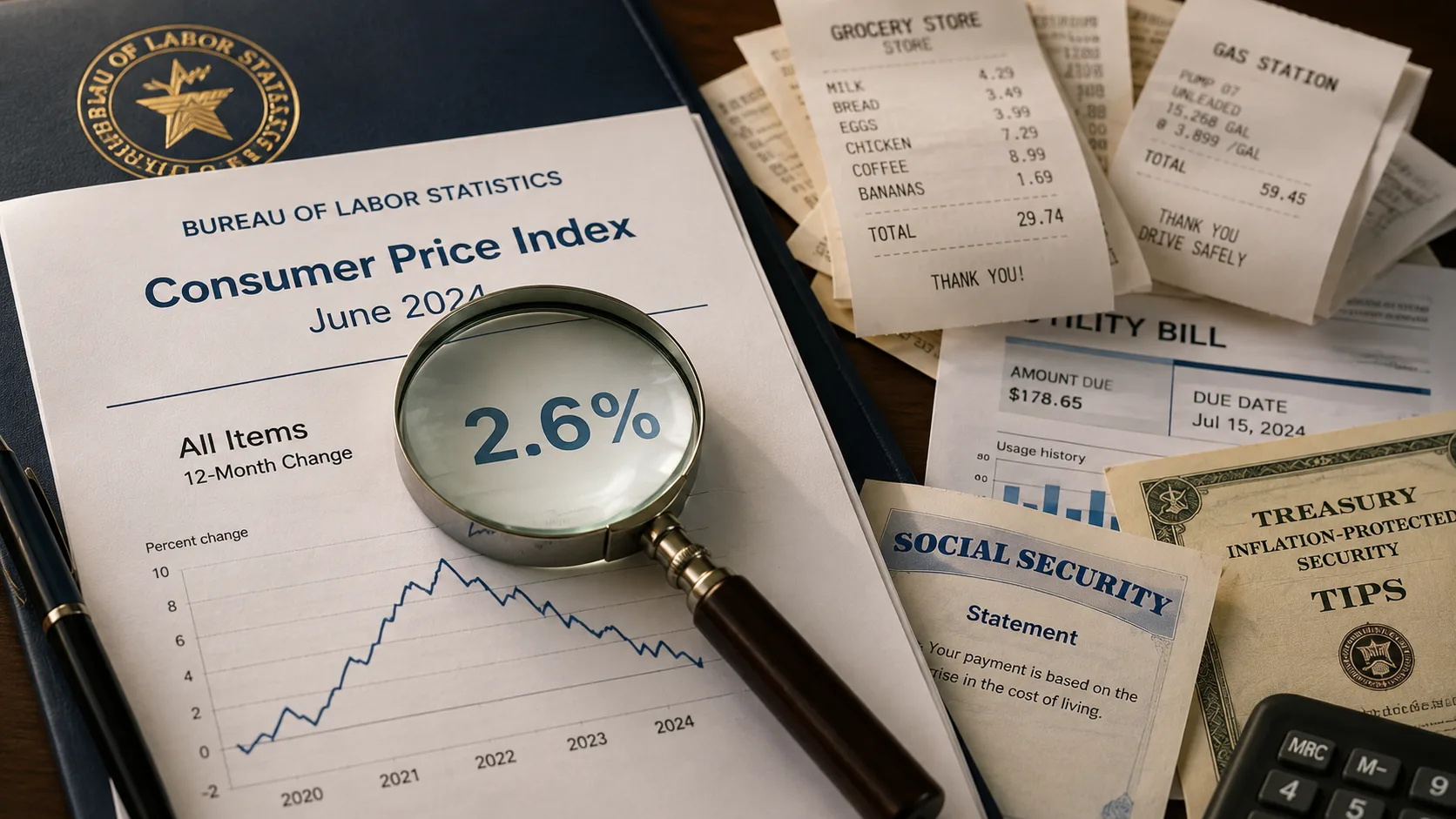
Many Americans believe the official inflation rate is much lower than what they’re experiencing in their daily lives. Grocery bills have surged, insurance premiums keep climbing, and housing costs remain painfully high. So it’s no surprise a growing number of investors are asking a provocative question:
Is the government manipulating inflation data?
The answer matters more than most people realize. Inflation doesn’t just affect prices at the checkout line. It influences Social Security cost-of-living adjustments (COLAs), Treasury Inflation-Protected Securities (TIPS), tax brackets, federal benefits, and even Federal Reserve policy.
Here’s what the evidence says.
Why So Many Investors Are Skeptical
Trust in government statistics has fallen in recent years, particularly after the inflation surge that followed the pandemic.
Many Americans felt prices were rising far faster than official reports suggested. At the same time, inflation became one of the defining political issues heading into the 2024 election, leading some investors to wonder whether elected officials had incentives to make inflation appear lower than it really was.
On the surface, it’s an understandable concern.
But proving manipulation is an entirely different matter.
Why It Would Be Extremely Difficult to Fake Inflation Data
According to Alberto Cavallo, a Harvard Business School professor and former adviser to the Bureau of Labor Statistics (BLS), large-scale manipulation of inflation data would likely be discovered almost immediately.
That’s because independent organizations continuously track prices using millions of online transactions and retail prices.
One of the best-known examples is PriceStats, a private inflation tracker now owned by State Street.
Its daily inflation measurements have closely tracked the government’s Consumer Price Index (CPI) for years.
If the BLS suddenly began reporting inflation that differed significantly from real-world pricing, outside researchers would likely detect the discrepancy very quickly.
Cavallo points to Argentina as proof.
When Argentina manipulated its inflation statistics in 2007, independent economists were able to uncover the discrepancies using publicly available pricing data.
Today, with vastly more data available in real time, hiding large-scale manipulation would be even more difficult.
What About Changes to the Inflation Formula?
Some critics argue the government doesn’t need to falsify data because it can simply change how inflation is calculated.
The Bureau of Labor Statistics has updated its methodology more than two dozen times over the past 50 years.
That has fueled claims that inflation today would be 6% to 8% higher if older calculation methods were still being used.
However, the government’s own historical analysis paints a much different picture.
When economists recalculated decades of inflation using both the old and current methodologies, the cumulative impact was surprisingly small.
The difference worked out to roughly 0.2 percentage points per year over the past five decades.
While methodology changes do affect the numbers slightly, they don’t come close to explaining the massive gap many critics claim exists.
Are Social Security COLAs Being Shortchanged?
Another common concern involves Social Security.
Many retirees argue their monthly benefits aren’t keeping up with their actual living expenses.
The concern stems from the fact that Social Security uses the Consumer Price Index for Urban Wage Earners and Clerical Workers (CPI-W) to calculate annual COLAs.
Some economists believe retirees would be better served by using the Consumer Price Index for the Elderly (CPI-E), which places greater weight on healthcare and other expenses common among older Americans.
Interestingly, the two indexes are remarkably similar.
Over roughly the past four decades, CPI-E has risen only about 0.21 percentage points per year faster than CPI-W.
For today’s average Social Security recipient, that translates into only about $4 more per month in benefits.
While retirees certainly face unique financial pressures, switching indexes would produce a far smaller increase than many people expect.
Why Inflation Often Feels Worse Than the Official Number
One reason many Americans distrust inflation reports is that personal inflation rarely matches national averages.
A retiree spending heavily on healthcare may experience much faster inflation than someone with few medical expenses.
A young family buying groceries every week may notice food prices far more than falling prices for electronics.
Housing costs also vary dramatically depending on where someone lives.
The Consumer Price Index measures inflation across the entire economy—not the experience of any single household.
That disconnect often leads people to conclude the official number must be wrong, even when it’s accurately measuring the broader economy.
What This Means for Investors
Rather than focusing on whether the CPI is being manipulated, investors may benefit more from paying attention to where inflation is headed next.
Future inflation affects:
- Federal Reserve interest-rate decisions
- Bond yields and Treasury Inflation-Protected Securities (TIPS)
- Stock market valuations
- Corporate profit margins
- Consumer spending
- Social Security COLAs
Even modest changes in inflation expectations can have a meaningful impact on investment returns.
The Bottom Line
The idea that the government is deliberately understating inflation has become increasingly popular, but the available evidence doesn’t support claims of widespread manipulation.
Independent inflation trackers closely mirror official government data, and decades of methodological changes have altered reported inflation by only a modest amount over the long run.
That doesn’t mean every household experiences inflation the same way. Personal expenses, healthcare costs, housing, and geography all influence how inflation feels in everyday life.
For investors, however, the bigger question isn’t whether today’s inflation number is being manipulated. It’s where inflation is headed next—and how that will shape interest rates, markets, and the economy in the months ahead.
About Author