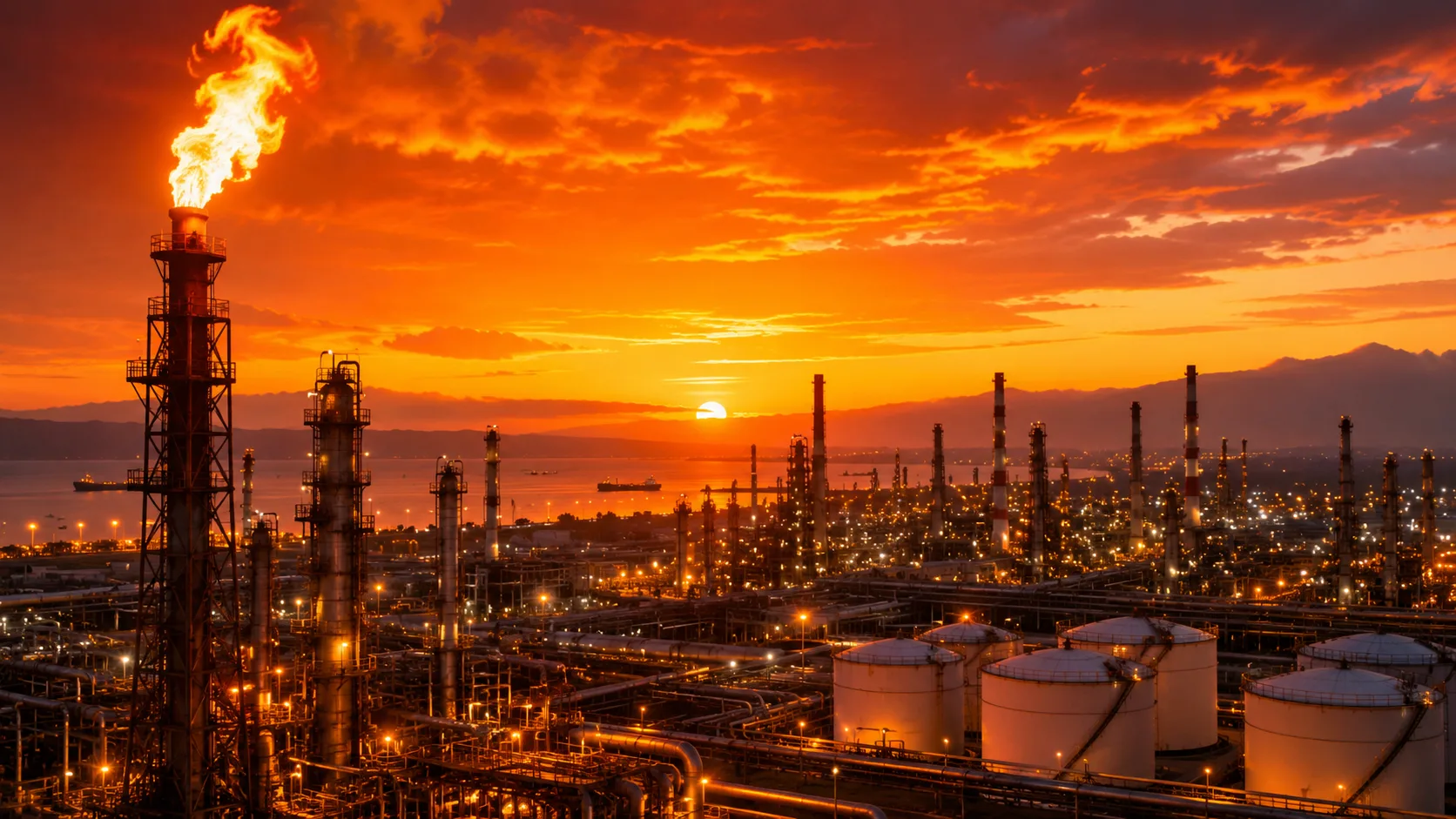
Chevron crushed Wall Street expectations while Exxon doubled profits, as the Iran conflict continues to reshape global energy markets.
ExxonMobil (NYSE: XOM) and Chevron (NYSE: CVX) reported blockbuster second-quarter results Friday as oil prices surged on fears of prolonged supply disruptions across the Middle East. While Chevron delivered a major earnings beat, Exxon narrowly missed Wall Street’s expectations despite more than doubling its profit from a year ago.
More importantly, both CEOs delivered a sobering message: the disruption that fueled these record profits may be far from over.
Chevron Delivers a Blowout Quarter
Chevron posted one of its strongest quarters in years.
The company reported adjusted earnings of $6.06 per share, easily topping analyst expectations of $5.56 per share. Revenue reached $70 billion, well above the expected $62 billion.
Net income exploded to $12 billion, nearly five times higher than the $2.5 billion it earned during the same quarter last year.
The company also reached a major operational milestone:
- U.S. production hit a record 2 million barrels per day
- Global production climbed to 4 million barrels per day, up roughly 20% year over year
- Refining profits surged nearly 500% as gasoline and diesel prices climbed sharply
Chevron CEO Mike Wirth said the company is benefiting from strength across nearly every part of its business.
“We’re kind of firing on all cylinders, which is good, because the world needs it.”
Exxon Posts Massive Profits Despite Missing Estimates
Exxon also reported enormous profits, though investors were disappointed by a slight earnings miss.
The oil giant earned:
- $3.52 adjusted EPS versus $3.60 expected
- $116 billion in revenue, crushing expectations of $97.8 billion
- $14.5 billion in quarterly profit, more than double last year’s $7.1 billion
CEO Darren Woods attributed the earnings miss primarily to the company’s refining business, where rapidly changing crude and fuel prices made forecasting unusually difficult.
“We have so much disruption,” Woods said during an interview with CNBC, noting that volatility across global oil markets made refinery margins especially difficult to predict.
Despite the miss, Exxon reported:
- Its highest upstream production in more than two decades (excluding Middle East disruptions)
- Record output from the Permian Basin
- Refining earnings of $5.5 billion, compared to a $1.3 billion loss in the previous quarter
Oil Prices Continue to Drive Windfall Profits
The biggest catalyst behind both companies’ results was crude oil.
During the second quarter, U.S. crude averaged $92.45 per barrel, roughly 27% higher than during the first quarter.
The jump came as traders priced in growing supply risks tied to the expanding conflict in the Middle East.
Beyond the ongoing threats surrounding the Strait of Hormuz, Iran-backed Houthi forces have expanded attacks into the Red Sea, disrupting another critical shipping route used by Saudi Arabia to move crude to global markets.
Higher crude prices flowed directly into stronger profits for both producers while also boosting refining margins as gasoline and diesel prices climbed worldwide.
Chevron Warns the Market Is Running Out of Time
Perhaps the biggest takeaway from Friday’s earnings wasn’t the profits.
It was Chevron CEO Mike Wirth’s warning about the broader energy market.
According to Wirth, global oil inventories continue falling while geopolitical risks continue rising.
“The situation is under stress and I’m afraid it’s going to continue to do so,” Wirth said.
He added that each passing day makes global supply conditions more difficult, suggesting markets remain vulnerable to additional price spikes if the conflict expands further.
For investors, that warning could prove just as important as this quarter’s earnings.
What Investors Should Watch Next
Oil markets remain highly sensitive to developments across the Middle East.
If supply disruptions worsen or shipping through key routes becomes further constrained, elevated oil prices could continue supporting earnings for major integrated producers like Exxon and Chevron.
However, prolonged volatility also creates challenges. As Exxon demonstrated this quarter, rapidly shifting crude and refined-product prices can make forecasting difficult even during periods of exceptionally strong profitability.
With both CEOs signaling continued uncertainty, investors will be watching not only corporate earnings, but also every major development in the Middle East that could impact global energy supplies.
The Bottom Line
The Iran war has dramatically boosted profits for America’s largest oil companies, delivering record production, soaring refining margins, and billions of dollars in additional earnings.
Chevron significantly outperformed Wall Street’s expectations, while Exxon generated enormous profits despite a modest earnings miss.
Perhaps the most important message, however, came from Chevron’s CEO: the global energy market remains under increasing strain, and if geopolitical tensions continue escalating, today’s elevated oil prices may not be the peak.
About Author