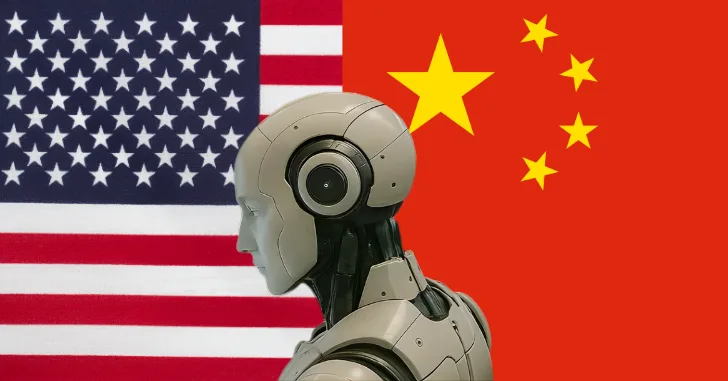
The Trump administration is moving quickly from its aggressive push into artificial intelligence toward an equally ambitious bet on robotics, signaling that advanced automation is now being elevated as a strategic national priority. The shift reflects growing concern in Washington that whoever dominates physical automation will control the next phase of industrial, military, and economic power.
Senior officials are now holding high-level discussions with robotics executives as part of what may soon become the foundation for a formal national robotics strategy. Industry leaders and policy insiders say the administration is considering a potential executive order on robotics next year as it looks to counter China’s rapidly expanding industrial automation machine.
Commerce Department Signals Full Commitment to Robotics
At the center of the new initiative is Commerce Secretary Howard Lutnick, who has recently met privately with leaders from several major robotics firms. People familiar with those talks describe Lutnick as fully committed to fast-tracking development across the sector.
A spokesperson for the Commerce Department confirmed that robotics is now viewed as essential to reshoring U.S. manufacturing and strengthening economic security, saying the technology is core to rebuilding domestic production capacity.
Meanwhile, the Department of Transportation is preparing to establish a federal robotics working group aimed at coordinating policy across transportation, logistics, and infrastructure. That effort could be announced before the end of the year.
Washington Awakens to Robotics as Strategic Weapon in Tech War
Interest in robotics is also intensifying on Capitol Hill. Lawmakers recently attempted to create a national robotics commission through an amendment to the National Defense Authorization Act. While that provision ultimately did not survive final negotiations, lawmakers from both parties are signaling renewed legislative efforts in 2026.
This growing activity underscores a broader reality. Robotics is now being viewed as the next major battlefield in America’s technology competition with China. After artificial intelligence, automation is becoming the next strategic layer of industrial policy.
China already treats robotics as a core national asset. According to the International Federation of Robotics, factories across China were operating nearly 1.8 million industrial robots as of 2023, roughly four times the U.S. total. Many U.S. allies including Japan, Germany, Australia, and Singapore also operate under formal national robotics strategies.
Private Capital Floods the Sector as Market Outlook Explodes
Massive investment is already flowing into the robotics ecosystem. Data from CB Insights shows funding is on pace to reach $2.3 billion in 2025, nearly double the previous year’s level.
Wall Street sees even larger opportunity ahead. Goldman Sachs estimates the global market for humanoid robots alone could grow into a $38 billion industry by 2035. That estimate excludes industrial robotics, defense automation, health care robotics, and logistics.
For investors, the message is clear. Robotics is shifting from speculative tech to strategic infrastructure.
Why Robotics Is Being Framed as the Physical Form of AI
Industry advocates increasingly describe robotics as the physical extension of artificial intelligence. As AI software becomes more capable at perception, decision making, and task execution, robots serve as the bridge between data and the real world.
Executives argue that any national AI strategy that ignores robotics risks leaving manufacturing, defense, and logistics vulnerable to foreign competitors. The robots of tomorrow will not simply weld or lift. They will think, adapt, and coordinate at machine speed.
This is why companies are lobbying Washington for tax incentives, public research funding, expanded supply chains, and trade policies designed to counter Chinese subsidies and intellectual property pressure.
American Robotics Champions Begin to Emerge
One of the most closely watched U.S. startups is Apptronik, a humanoid robotics company valued near $5 billion and backed by Google. The firm has already deployed early versions of its general-purpose humanoid robot, Apollo, inside an American auto factory.
Apptronik and similar firms are positioning themselves as both industrial workhorses and national security assets as demand grows for automated logistics, defense systems, and advanced manufacturing tools.
Another heavyweight in the space, Boston Dynamics, says government focus is long overdue. Company leadership argues that investment momentum inside China has now reached a level that western governments can no longer afford to ignore.
The Political Tension: Robots vs. U.S. Manufacturing Jobs
Despite growing enthusiasm, the robotics boom creates a direct political dilemma for the White House. One of the administration’s core promises remains the revival of American manufacturing jobs. Large-scale automation threatens to clash with that goal.
Economists warn that if automation expands too quickly, companies may reshore factories only to staff them primarily with machines rather than people.
Research from the National Bureau of Economic Research shows that rapid automation often reduces wages and employment opportunities for workers in replaceable roles, particularly in routine production jobs.
For voters and labor groups, this represents a difficult contradiction. A robotics boom could restore industrial output while simultaneously shrinking employment demand inside factories.
The Alternative Vision: Robots That Multiply Human Productivity
Industry leaders counter that automation does not have to eliminate jobs. Instead, they argue it can transform them.
Proponents believe the next phase of robotics will create entirely new categories of employment in design, maintenance, programming, logistics, artificial intelligence supervision, and industrial deployment. In this model, workers operate in partnership with machines rather than being displaced by them.
They point to historical trends in manufacturing where productivity gains from mechanization eventually created broader economic growth and new job roles across industries.
From an investment perspective, this outlook matters. If robotics reinforces employment rather than destroys it, political support for subsidies and incentives becomes far more durable.
Why This Matters for Investors Right Now
For investors, the administration’s pivot toward robotics is not just a policy shift. It is a powerful signal that advanced automation is entering a multi-year federal support cycle similar to past clean energy and semiconductor initiatives.
A national robotics strategy could trigger:
• New public-private research funding
• Tax incentives for factory automation
• Defense and logistics procurement contracts
• Supply chain onshoring initiatives
• Trade protections aimed at Chinese robotics firms
• Expanded infrastructure support for smart manufacturing
These programs would directly benefit components suppliers, AI software firms, sensor manufacturers, materials companies, and advanced chip producers.
The Bigger Picture: Robotics as the Next Industrial Revolution
Robotics now sits at the intersection of artificial intelligence, national security, labor markets, trade policy, and industrial resilience. The pivot by the Trump White House confirms that automation is no longer viewed as optional innovation. It is now strategic infrastructure.
The world’s next manufacturing superpower will not simply be the country with the cheapest labor. It will be the nation with the most intelligent machines.
For investors willing to follow the policy signals early, the robotics wave now forming in Washington may resemble the early AI boom that reshaped markets over the past several years.
The race is no longer just about smarter software. It is about smarter machines.
About Author