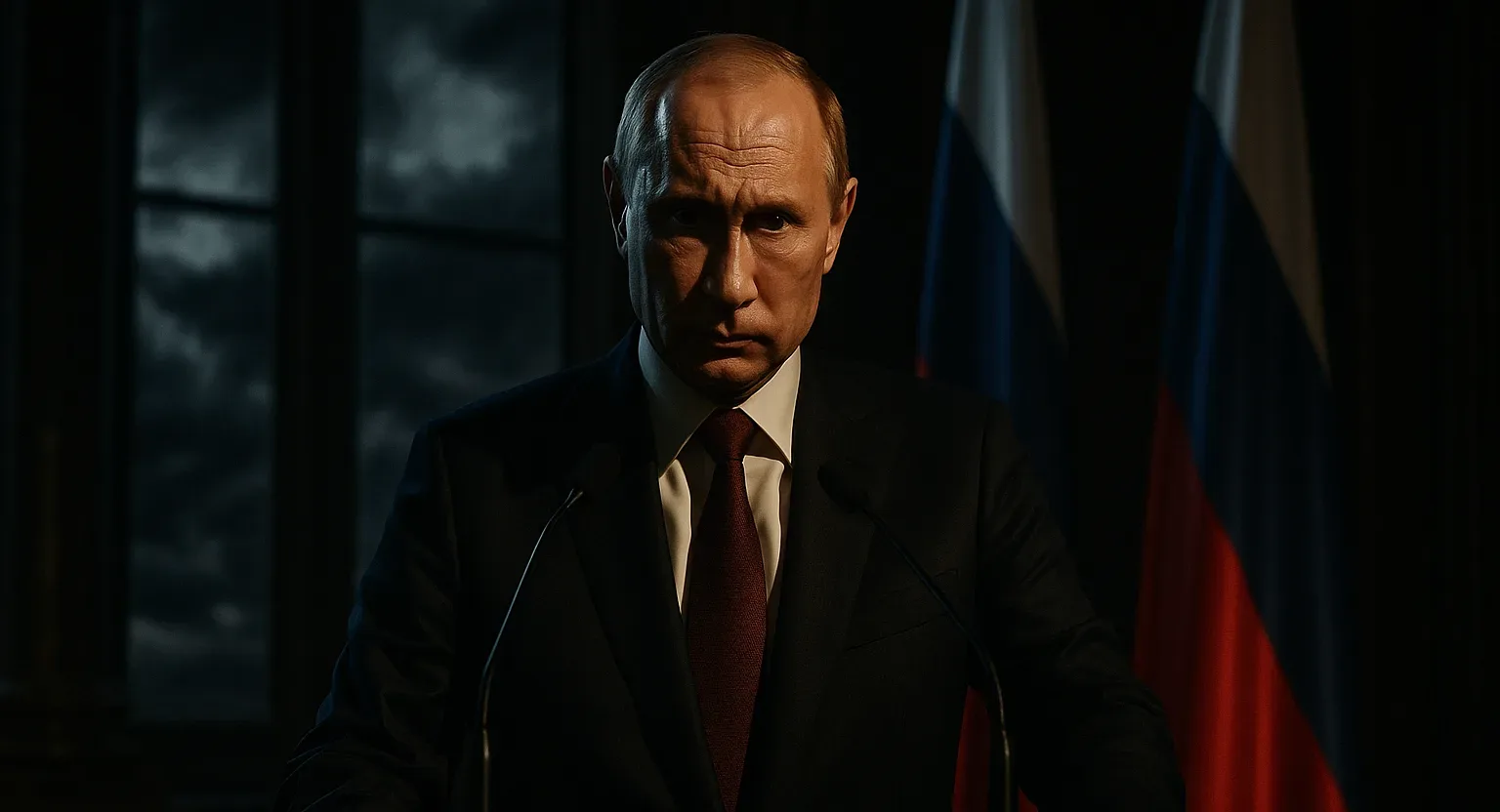
Efforts to broker a peace agreement between Russia and Ukraine showed little sign of progress this week after high level talks between Washington and Moscow ended without a breakthrough. As negotiations stalled, Russian President Vladimir Putin escalated rhetoric toward Europe, warning that Russia is prepared for conflict if European nations pursue confrontation.
U.S. representatives traveled to Moscow in hopes of advancing a draft peace framework aimed at ending the nearly four year war in Ukraine. But while both sides described the discussions as constructive, fundamental disagreements remain unresolved and Russia has made clear it is in no rush to compromise.
The diplomatic gridlock underscores a growing concern among global leaders and investors that Europe’s largest war since World War II is likely to grind on well into the future.
Inside the U.S.–Russia Moscow Talks
The discussions in Moscow involved U.S. special envoy Steve Witkoff and Jared Kushner, who met with Putin and senior Kremlin officials for roughly five hours. Russian presidential aide Yuri Ushakov described the meeting as “very useful, constructive, and highly informative,” while acknowledging that major differences persist.
“We agreed on some things … while others caused criticism, and the President also made no secret of our critical, even negative, attitude toward a number of proposals. But the main thing is that we had a very useful discussion,” Ushakov said in remarks translated by NBC News.
According to Russian officials, the talks centered on a 27 point draft peace framework. Details remain undisclosed, and both sides agreed not to release specifics publicly. This follows earlier discussions that produced a longer U.S. drafted proposal that was later revised in coordination with Ukrainian and European officials.
A Kremlin spokesperson later confirmed that some U.S. proposals were accepted while others were rejected as part of what he described as a normal negotiating process.
“A direct exchange of views took place yesterday for the first time. Some things were accepted, some things were marked as unacceptable. This is a normal working process of finding a compromise,” said Dmitry Peskov in comments reported by Reuters.
Europe Drawn into Rising Tensions
The breakdown in progress comes as European leaders grow increasingly frustrated with being sidelined from earlier rounds of negotiations. Russian demands that Ukraine cede territory in exchange for limited security guarantees remain a central barrier to any agreement.
Before the Moscow talks even began, Putin publicly criticized Europe’s involvement and dismissed counter proposals put forward by European officials. He went further by issuing a stark warning to the continent.
“We’re not going to war with Europe; I’ve said that a hundred times. But if Europe suddenly wants to fight us and starts, we’re ready right now,” Putin told journalists.
European Union foreign policy chief Kaja Kallas warned earlier this week that Russia appears to have no genuine interest in peace and urged Western governments to strengthen Ukraine’s position militarily and financially.
Meanwhile Ukraine’s president Volodymyr Zelenskyy attempted to strike an optimistic tone during an address to Irish lawmakers, saying Ukraine was “closer to peace than ever before” and that there was a real chance for an agreement following continued coordination with Washington.
Despite that optimism, officials inside Europe remain deeply wary that any deal rushed by Washington could tilt heavily in Moscow’s favor.
Russia Accused of Deliberately Delaying Peace
Geopolitical analysts broadly agree that Russia currently sees little incentive to move quickly toward a settlement. With battlefield momentum still favoring Moscow in parts of eastern Ukraine, the Kremlin is widely viewed as attempting to extend negotiations while continuing military pressure.
Paul Skinner, investment director at Wellington Management, summarized the bleak outlook during an interview on Squawk Box Europe.
“We think the Ukraine-Russia story is going to grind on, and on, and on. It’s very unlikely we’re going to get a resolution. While Putin is still making ground, he’s unlikely to sue for peace. I’m afraid that our prognosis, and it has been from the start, is that this is going to be a very long drawn-out problem,” Skinner said.
Michael Froman, president of the Council on Foreign Relations, echoed that view, arguing that protracted diplomacy works in Moscow’s favor.
“He wants to have a broader conversation about Russia’s reintegration with the West and relations with the United States, commercial agreements with the United States, and to make this long and drawn out while he continues to bomb Ukraine’s energy infrastructure and makes incremental progress on the ground,” Froman said in a separate CNBC interview.
Territorial Concessions Remain a Major Roadblock
One of the most contentious elements blocking a deal remains Russia’s demand that Ukraine formally cede partially occupied territories in eastern Ukraine. Western leaders and Ukrainian officials have pushed back forcefully against such concessions, arguing they would reward aggression and destabilize Europe’s long term security architecture.
Amos Hochstein, managing partner at TWG Global and a former senior White House energy advisor, noted that any agreement requiring major territorial losses would be politically devastating for Kyiv.
“I think it’s difficult to get to a point of a deal where a lot of territory has to be given up by the Ukrainians in return for security guarantees that are a bit loose and flimsy, and for the Ukrainians who fought so much over the last several years, that’s hard to swallow,” Hochstein said on CNBC’s Squawk Box.
He added that concessions sought by Ukraine from the United States would also be politically difficult for Russia to accept.
“The Russians are not in a hurry for a deal here,” Hochstein concluded.
Market and Investor Implications
For global markets, the slow march toward peace carries important implications. Energy markets remain particularly sensitive to developments in Eastern Europe, with natural gas, crude oil, and refined fuel flows still vulnerable to geopolitical shocks. Prolonged conflict also keeps defense spending elevated across NATO member states, supporting the outlook for major defense contractors while putting upward pressure on government budgets.
Equity investors continue to face uncertainty tied to sanctions policy, global trade disruptions, infrastructure damage in Ukraine, and persistent volatility in European energy prices. Currency markets also remain exposed, particularly in Eastern Europe, where currencies have weakened amid ongoing military risk.
For bond markets, the war continues to contribute to elevated sovereign borrowing and long term fiscal strain across parts of Europe as governments fund military aid, refugee support, and national defense expansions.
What Comes Next
Despite repeated U.S. diplomatic efforts, the current negotiation phase appears to be entering yet another prolonged holding pattern. Russia continues to leverage its battlefield position to extract concessions while Ukraine and Europe remain unwilling to legitimize territorial losses.
With no clear inflection point in sight, the war’s influence on global politics, defense spending, energy markets, and investor sentiment is likely to persist well into 2025 and beyond.
For investors, the takeaway is clear. As long as the Russia Ukraine conflict remains unresolved, geopolitical volatility will continue to shape commodity prices, government spending priorities, capital flows, and risk appetite across global markets.
About Author