The U.S. labor market delivered an unexpected shock in July, raising fresh questions about the strength of the economy and potentially changing the Federal Reserve’s next move on interest rates.
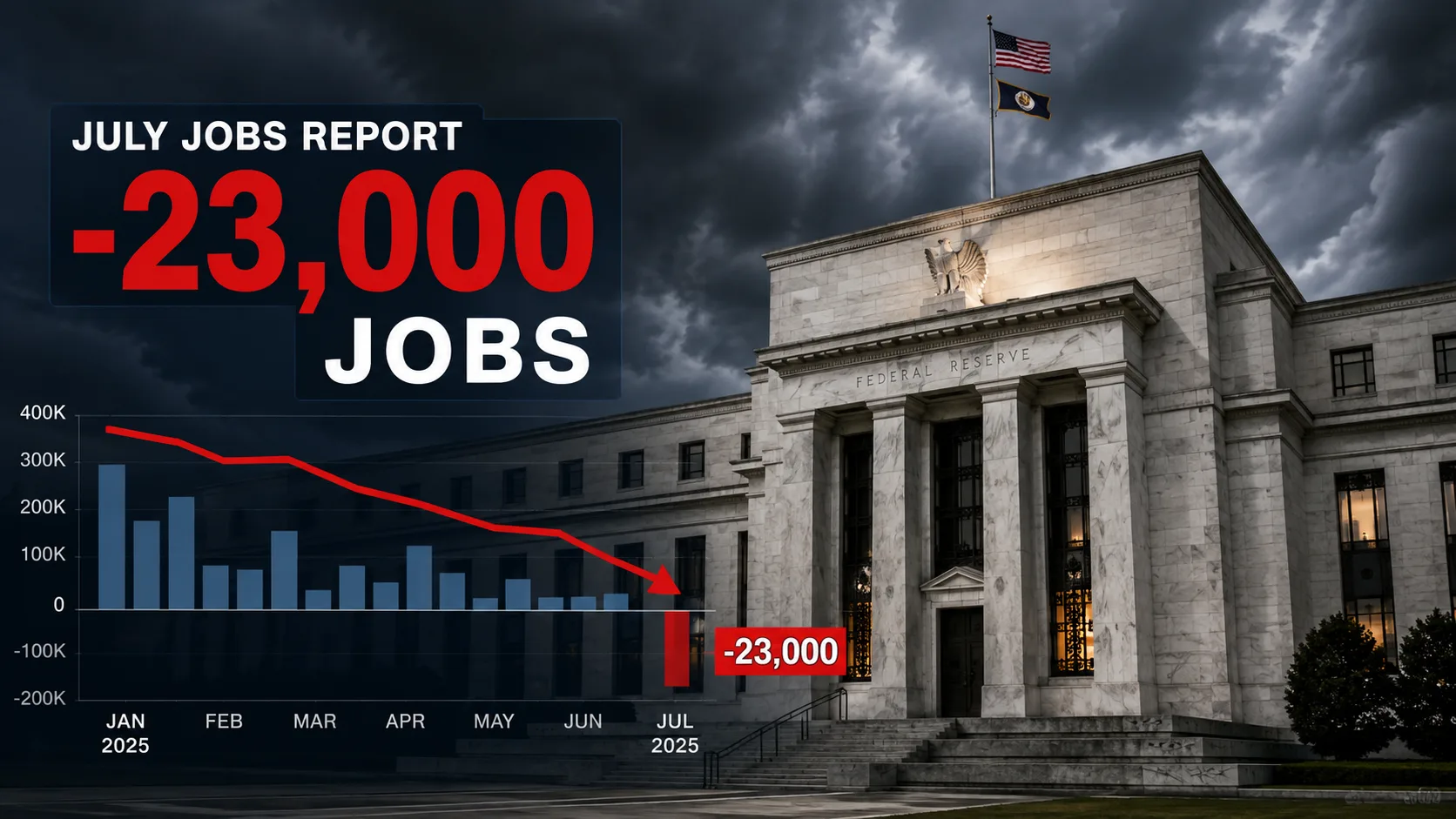
The Labor Department reported that the U.S. economy lost 23,000 jobs in July, far worse than economists’ expectations for a gain of roughly 83,000 jobs. Even more concerning, the government sharply revised down payroll gains from May and June, revealing the labor market was much weaker than previously believed.
The disappointing report immediately cooled expectations that the Federal Reserve could raise interest rates as soon as September, sending investors scrambling to reassess the outlook for stocks, bonds, and the broader economy.
Payrolls Unexpectedly Turn Negative
July marked the first monthly decline in nonfarm payrolls since February, signaling that hiring momentum may be fading after what appeared to be a modest rebound earlier this year.
The headline numbers included:
- 23,000 jobs lost in July
- Economists had expected 83,000 jobs to be added
- May and June payrolls were revised lower by a combined 103,000 jobs
- Government employment fell by 53,000 jobs
- Private-sector employers added just 30,000 jobs
While private hiring remained positive, it was considerably weaker than investors had hoped.
The large decline in government employment accounted for much of the overall drop, but the broader slowdown suggests businesses are becoming increasingly cautious about hiring.
Why the Unemployment Rate Fell Anyway
At first glance, the unemployment rate appeared to improve.
It declined from 4.2% to 4.1%, reaching its lowest level in more than a year.
However, the improvement wasn’t driven by stronger hiring.
Instead, fewer Americans were actively looking for work, causing the labor force participation rate to decline. When people stop searching for jobs, they are no longer counted as unemployed, which can lower the unemployment rate even as the labor market weakens.
For economists, that is generally viewed as a negative signal rather than a positive one.
Wage Growth Also Slowed
Another warning sign came from wages.
Average hourly earnings rose just enough to push annual wage growth down to 3.2%, compared with 3.4% the previous month.
That marks the slowest pace of wage growth since just before the pandemic.
Cooling wage growth can help reduce inflation pressures, but it also reflects softer demand for workers.
Taken together, slower hiring, weaker wage gains, and declining labor force participation paint a picture of a labor market that is gradually losing momentum.
What This Means for the Federal Reserve
The July employment report could significantly influence the Fed’s next interest-rate decision.
Before Friday’s data, several Federal Reserve officials had suggested that resilient hiring would allow policymakers to keep their focus on fighting inflation, even if it meant another rate hike.
That assumption is now being questioned.
The Fed has a dual mandate:
- Maintain price stability by controlling inflation.
- Support maximum employment.
If the labor market continues to weaken, policymakers may become less willing to raise interest rates, even if inflation remains above target.
Following the report, traders reduced the probability of a September rate hike.
The Fed will still receive another employment report and additional inflation data before making its next policy decision, meaning incoming economic reports will take on even greater importance.
Investors Will Be Watching the Next Jobs Report Closely
Although one month’s data rarely changes the entire economic picture, the sharp downward revisions to previous months make this report more difficult to dismiss.
Instead of a labor market that appeared stable, investors now see evidence that hiring has been slowing for several months.
That has important implications across financial markets.
A softer labor market could:
- Reduce the likelihood of additional Fed rate hikes.
- Increase expectations for future interest-rate cuts if weakness continues.
- Pressure economically sensitive stocks.
- Support Treasury bonds if investors seek safety.
- Renew concerns about the pace of economic growth.
Markets will now shift their attention toward upcoming inflation reports and the August jobs report to determine whether July was an isolated setback or the beginning of a broader slowdown.
Why This Matters
For months, the U.S. economy appeared to be threading the needle between moderating inflation and a stable labor market.
July’s employment report complicates that narrative.
The unexpected loss of 23,000 jobs, combined with substantial downward revisions and slowing wage growth, suggests the labor market may be losing more momentum than previously believed.
For investors, the report could mark an important turning point.
If employment continues to weaken, the Federal Reserve may have to shift its focus away from inflation and toward supporting economic growth—an outcome that could reshape expectations for interest rates, stocks, and the economy over the remainder of the year.
About Author