

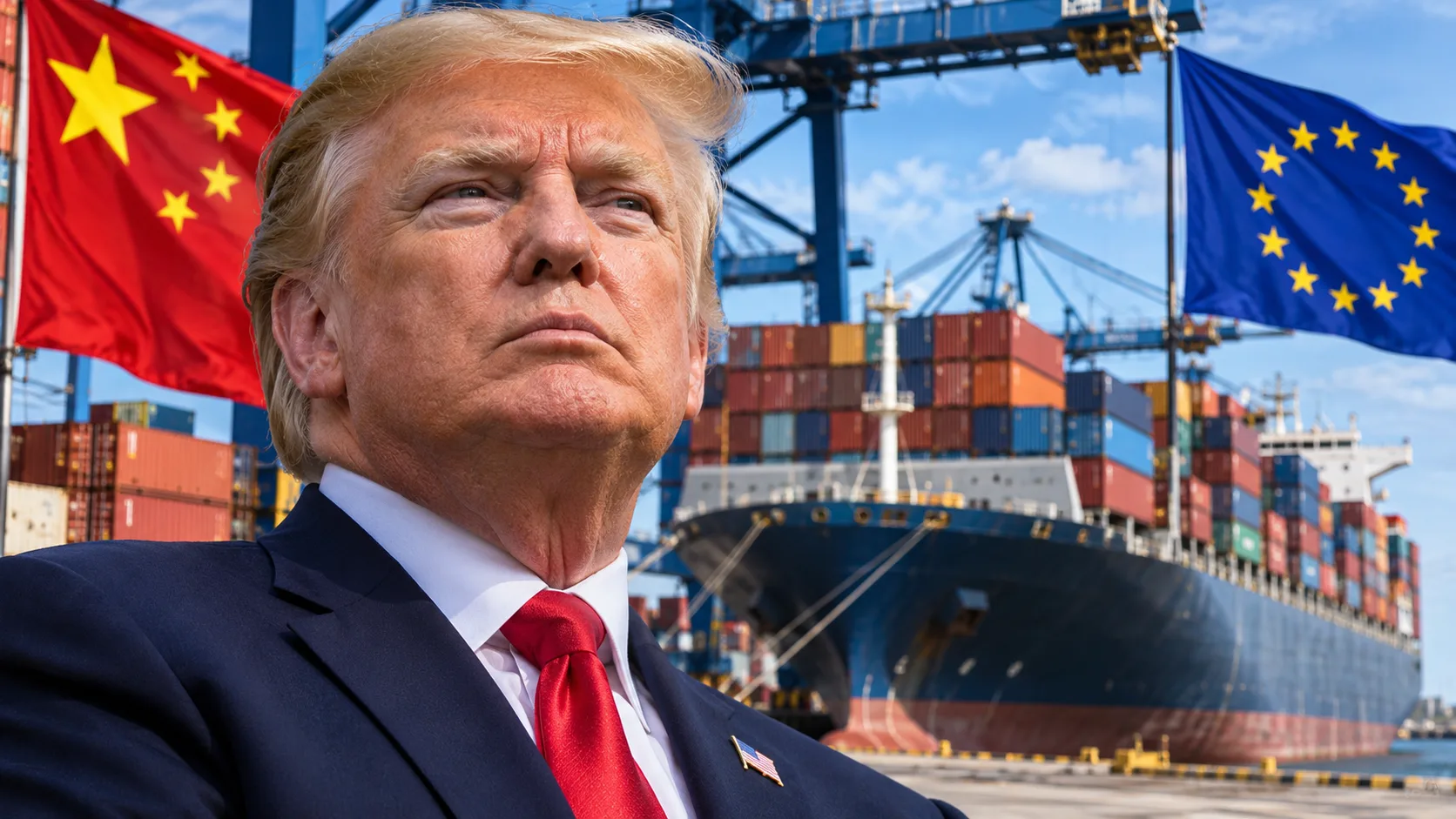
President Donald Trump is opening a new front in his global trade war, proposing tariffs on 14 major trading partners, including China, the European Union, Japan and India. The move could reshape global supply chains, put renewed pressure on consumer prices and complicate the Federal Reserve’s fight against inflation heading into 2027.
The announcement comes months after the Supreme Court struck down a central component of Trump’s tariff policy. Armed with a different legal authority, the administration is now pursuing trade measures that could restore much of the economic pressure those earlier tariffs were designed to create.
For American businesses, consumers and investors, the biggest question is how much of the additional cost will ultimately be passed on to them.
Trump Unveils a New Round of Global Tariffs
On Wednesday, November 25, the Office of the U.S. Trade Representative announced the results of investigations into foreign manufacturing practices that Washington believes unfairly disadvantage American businesses.
The investigations, launched in March, concluded that 14 economies engage in practices that contribute to persistent industrial overproduction, distort international competition and restrict opportunities for U.S. manufacturers.
The administration is proposing tariff rates generally ranging from 15% to 20%, although exemptions, existing duties and previously negotiated trade agreements will affect the actual rates applied.
The 14 economies targeted include:
| Trading Partner | Trading Partner |
|---|---|
| China | Taiwan |
| European Union | Bangladesh |
| Japan | Cambodia |
| India | Indonesia |
| South Korea | Malaysia |
| Switzerland | Thailand |
| Singapore | Vietnam |
Mexico and Norway were included in the original investigations, although the administration has yet to announce determinations regarding either country.
U.S. Trade Representative Jamieson Greer indicated Wednesday that the proposed tariffs generally would bring existing duties closer to previously negotiated levels rather than impose an entirely new layer of import taxes on most trading partners.
China, however, faces a potentially more expensive outcome. United States Trade Representative+2
Chinese Goods Could Face Tariffs of 45%
Under the administration’s proposal, many Chinese imports could face tariffs of up to 20% under the new manufacturing investigation, alongside certain existing tariffs of approximately 25% dating back to Trump’s first presidency.
That could bring combined duties on some Chinese products to approximately 45%, although the actual rate would depend on the product, applicable exemptions and other existing trade measures.
The Congressional Research Service estimated that average U.S. tariff rates on Chinese goods stood at approximately 36.5% in July. The latest proposal could increase the financial burden on companies that continue to depend heavily on Chinese manufacturing.
The administration is also pursuing selected tariff reductions between Washington and Beijing, suggesting that both countries remain interested in maintaining some degree of economic stability despite their broader disagreements.
For American importers, the result could be an increasingly complicated trading environment in which costs rise for certain products while falling for others.
The Supreme Court Struck Down Trump’s Tariffs. Now He’s Taking a Different Route.
Earlier this year, the Supreme Court invalidated sweeping tariffs Trump had imposed under the International Emergency Economic Powers Act, delivering a significant setback to one of his signature economic policies.
The administration subsequently imposed a temporary 10% global tariff under Section 122 of the Trade Act of 1974. When that authority expired after 150 days, Washington replaced those duties with tariffs tied to investigations into foreign forced-labor practices.
The latest measures rely on Section 301 of the same trade law, which gives the United States authority to respond to foreign government practices deemed unfair or harmful to American commerce.
Section 301 has already played a significant role in U.S. trade policy. Trump used it extensively during his first presidency to impose tariffs on Chinese imports.
Critics argue that the administration is using alternative legal authorities to reconstruct the tariff system the Supreme Court dismantled. An ongoing lawsuit challenging the administration’s forced-labor-related tariffs reflects that broader legal dispute.
For businesses and investors, the message is becoming increasingly clear. A court ruling against one tariff program does not necessarily mean trade barriers will disappear.
Why Trump Is Targeting Foreign Manufacturing
At the center of the latest dispute is an economic problem known as structural overcapacity.
It occurs when manufacturers produce significantly more goods than consumers and businesses can absorb, often with the assistance of government subsidies, favorable financing, tax incentives or other forms of state support.
When domestic demand cannot absorb that production, manufacturers may sell their excess inventory abroad at prices that foreign competitors struggle to match.
American manufacturers can face declining profit margins, reduced market share and pressure to cut jobs or postpone investments as a result.
Industries particularly exposed to global manufacturing overcapacity include steel, aluminum, automobiles, solar panels, batteries and industrial equipment.
The Trump administration argues that foreign industrial policies have contributed to the erosion of America’s manufacturing base and increased its dependence on overseas suppliers. China disputes that characterization, rejecting Washington’s allegations of excess production.
There is also an important economic trade-off. Inexpensive foreign goods help American consumers stretch their budgets and allow U.S. businesses to acquire components at lower prices. Restricting those imports may protect certain domestic industries while increasing costs elsewhere in the economy.
What the New Tariffs Could Mean for Your Wallet
American consumers could eventually feel the effects of higher import duties across several spending categories, even if they rarely purchase products directly from overseas.
Tariffs are initially paid by the companies importing goods into the United States. Those businesses must then decide whether to absorb the additional expense, negotiate lower prices with suppliers or pass the costs along to their customers.
The potential impact extends across everyday purchases, including:
- Consumer electronics and household appliances
- Clothing, footwear and furniture
- Automobiles and replacement parts
- Home improvement products
- Tools and industrial equipment
- Products containing imported electronic components
The financial impact will vary considerably. Some retailers may have enough bargaining power to negotiate better terms, while others could find themselves with little choice beyond raising prices or accepting smaller profits.
Consumers may also experience price increases on products assembled in the United States if those goods rely on imported components.
With affordability already a major concern for many American households, another round of tariffs could make it more difficult for consumers to rebuild purchasing power.
The Investment Implications: Who Wins and Who Loses?
The latest tariff proposals could create a significant divide between companies that benefit from increased protection against foreign competition and businesses that depend on inexpensive global supply chains.
American Manufacturers Could Benefit
Domestic producers competing directly with subsidized foreign manufacturers could gain greater pricing power and potentially capture additional market share.
Steelmakers, industrial equipment manufacturers and certain domestic component suppliers may benefit if imported alternatives become more expensive.
However, investors should examine where these companies obtain their raw materials. Even manufacturers operating entirely within the United States may depend on foreign suppliers, potentially offsetting some of the benefits of stronger trade protection.
Retailers Face Another Margin Test
Large retailers have spent years developing international sourcing networks designed to keep prices competitive. Moving production to alternative countries can take considerable time, require significant investment and introduce new operational risks.
The inclusion of countries such as Vietnam, India, Bangladesh and Cambodia is particularly important because these economies have offered businesses alternatives to Chinese manufacturing.
Retailers that previously reduced their exposure to China by shifting production elsewhere in Asia could discover that their new suppliers are also affected by U.S. tariffs.
Companies with strong supplier relationships, healthy margins and substantial pricing power may be better positioned to manage the transition. Businesses competing primarily on low prices could face greater difficulties.
Technology Companies Could Face Higher Costs
The inclusion of Taiwan, South Korea, Japan and China places several of the world’s most important technology manufacturing economies within the scope of the investigation.
Semiconductors, electronic components, advanced manufacturing equipment and hardware supply chains are deeply interconnected across these markets.
Product-specific exemptions will be especially important for technology companies. Even relatively modest increases in the cost of certain components could affect profitability across complex manufacturing networks.
The Federal Reserve Could Face a More Difficult 2027
The timing of the tariff proposal introduces another variable into the outlook for interest rates.
Higher import costs can contribute to inflation, particularly when businesses are able to pass those costs along to consumers. If renewed tariff pressure causes inflation to remain elevated, the Federal Reserve could become more cautious about reducing interest rates.
That could have implications extending well beyond the companies directly affected by tariffs.
Mortgage rates, corporate borrowing costs, bond prices and stock market valuations could all be influenced by changes in expectations for monetary policy.
The outcome is far from predetermined, however. If higher tariffs significantly weaken consumer demand and economic growth, those effects could eventually create pressure in the opposite direction.
The Problem With Moving Manufacturing Out of China
One of the most overlooked aspects of the announcement is the number of alternative manufacturing destinations now facing potential tariffs.
Over the past several years, businesses have increasingly adopted a strategy known as China Plus One. The idea was to maintain access to Chinese manufacturing while establishing additional production facilities in countries such as Vietnam, India, Thailand and Malaysia.
The strategy was designed to reduce geopolitical risk, diversify supply chains and limit exposure to Chinese tariffs.
Now, many of those alternative manufacturing destinations are facing potential U.S. trade restrictions of their own.
The development could make geographical diversification less effective as a standalone strategy. Companies may increasingly need to evaluate domestic manufacturing, automation, supplier flexibility and long-term production costs rather than simply moving factories from one foreign country to another.
That could create longer-term opportunities for American industrial automation, robotics and advanced manufacturing businesses.
Why the Tariff Headlines May Overstate the Immediate Economic Threat
Investors should be careful about interpreting the proposed tariff percentages as entirely new costs.
Many of the announced rates account for duties that are already in place. Greer indicated that the incremental increases for numerous trading partners could amount to only a few percentage points.
That distinction matters because businesses may have already incorporated much of the anticipated expense into their pricing decisions, earnings forecasts and supply chain strategies.
The proposals also include opportunities for exemptions and adjustments based on ongoing negotiations.
Financial markets will ultimately respond to the difference between the costs businesses have already anticipated and the additional expenses they actually incur. A smaller-than-expected increase could prove considerably less disruptive than the headline tariff percentages suggest.
China remains an important exception, particularly for products already subject to substantial duties.
The Next Major Tariff Decision Is Coming in January
The proposed tariffs will not take effect immediately, giving businesses and foreign governments time to respond.
The Office of the U.S. Trade Representative has established January 5, 2027, as the deadline for written public comments and requests to participate in hearings. Public hearings are scheduled to begin on January 25, 2027.
Greer has indicated that implementation is likely several months away. United States Trade Representative
Between now and then, investors should pay particular attention to corporate earnings guidance, product-specific exemptions, negotiations with Beijing and potential retaliation from affected trading partners.
Inflation reports will also become increasingly important as economists assess whether businesses are beginning to adjust their prices in anticipation of higher import costs.
The final tariff structure could look considerably different from the initial proposal, especially if trading partners agree to new concessions.
America’s Trade War Is Entering a New Phase
Trump’s latest tariff proposal demonstrates that his administration remains committed to reshaping America’s trading relationships despite significant legal setbacks.
The economic consequences will depend on how aggressively the administration implements its proposals, how foreign governments respond and how effectively American businesses manage additional costs.
For domestic manufacturers, the policy could create opportunities to regain market share. For retailers, technology companies and consumers, it introduces another layer of financial uncertainty heading into 2027.
Perhaps the most significant development is that companies can no longer assume moving production out of China will insulate them from America’s evolving trade policy.
The global manufacturing map is being redrawn again, and the companies best equipped to adapt could emerge with a lasting competitive advantage.
About Author