Trump Unveils Steep Tariffs on 14 Countries Starting August 1
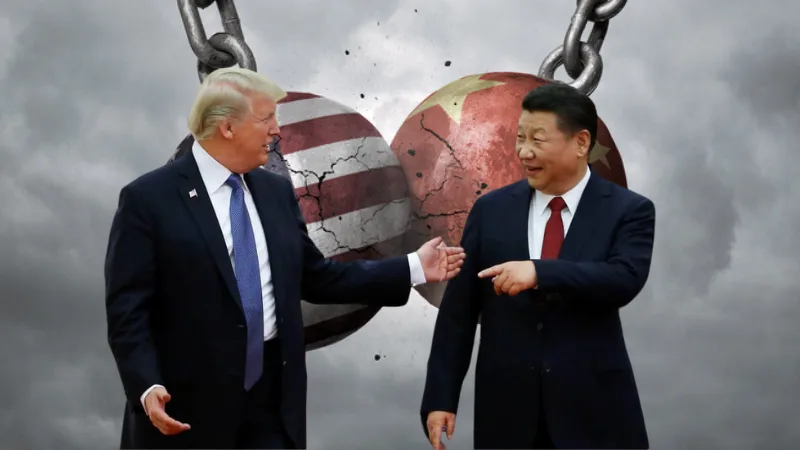
In a move that’s already rattling markets and stoking fresh tensions with U.S. trade partners, President Donald Trump has confirmed that his administration will impose steep new tariffs on imports from at least 14 countries beginning August 1.
Trump’s announcement came directly through social media, where he published screenshots of signed form letters sent to the leaders of countries spanning Asia, Africa, and Europe. The targeted nations include Japan, South Korea, Malaysia, Kazakhstan, South Africa, Laos, Myanmar, Tunisia, Bosnia and Herzegovina, Indonesia, Bangladesh, Serbia, Cambodia, and Thailand.
A Breakdown of the New Tariff Rates
According to the letters posted by Trump on Truth Social, U.S. imports from these countries will soon face blanket tariff rates far higher than the 10% flat duty imposed during the recent 90-day pause. Here’s how the numbers break down:
Japan, South Korea, Malaysia, Kazakhstan, and Tunisia: 25% tariffs.
South Africa and Bosnia: 30% tariffs.
Indonesia: 32% tariffs.
Bangladesh and Serbia: 35% tariffs.
Cambodia and Thailand: 36% tariffs.
Laos and Myanmar: 40% tariffs.
These new rates largely reflect the levels originally announced on April 2, when Trump first revealed what he dubbed “Liberation Day” tariffs. After a turbulent stretch for global markets, the White House paused the rollout for 90 days, temporarily dropping the blanket tariffs to 10%. That pause was due to expire this Wednesday — but Trump signed an executive order delaying the effective date until August 1.
Why Is Trump Raising Tariffs Again?
For President Trump, tariffs have long been a signature economic weapon. He claims they are necessary to “correct” the persistent trade deficits the United States runs with many nations. His argument is that higher import taxes will pressure foreign governments to lower their own barriers and open up more access for American companies.
In the letters shared this week, the administration doubled down on that justification. Each letter warns the targeted countries that the new duties are tied directly to America’s trade deficit with them — and insists the U.S. may “perhaps” adjust the tariffs if trade relations improve.
As Trump’s letter puts it:
“These tariffs may be modified, upward or downward, depending on our relationship with your Country. You will never be disappointed with The United States of America.”
Some Deficits Are Big — Others, Not So Much
Critics argue the policy is a blunt instrument, one that doesn’t always line up with economic realities. For example, the U.S. goods trade deficit with Japan stood at $68.5 billion in 2024, and the deficit with South Korea was $66 billion — large figures that make them obvious targets in Trump’s worldview.
But Myanmar, which now faces a steep 40% tariff, accounted for a much smaller $579 million U.S. deficit last year, according to the Office of the United States Trade Representative (USTR). Other countries, like Laos, are hardly major U.S. trade partners by volume.
Major Industries in the Crosshairs
Many of these countries export crucial goods to the U.S. market. Japan and South Korea, for instance, supply vast amounts of cars, electronics, and industrial machinery — products that American companies and consumers rely on daily. Kazakhstan’s biggest exports include crude oil and metal alloys. Malaysia is a vital link in the electronics supply chain. South Africa exports significant amounts of precious metals.
Meanwhile, countries like Laos and Myanmar mostly export textiles, optical fibers, and basic manufactured goods. Cambodia and Bangladesh are also major garment exporters, meaning these tariffs could hit U.S. clothing prices.
The Risk of Retaliation
One of the big risks for Trump’s “reciprocal tariffs” is tit-for-tat retaliation — and the letters acknowledge that. Trump’s messages preemptively threaten higher penalties if the targeted countries retaliate with tariffs of their own:
“If for any reason you decide to raise your Tariffs, then, whatever the number you choose to raise them by, will be added onto the 25% that we charge.”
Essentially, Trump is warning that any attempt at revenge tariffs will only push U.S. duties higher. On the other hand, the letters offer an out: if these countries fully eliminate their own tariffs and trade barriers, the U.S. “will, perhaps, consider an adjustment.”
How Are Markets Reacting?
The markets didn’t love it. On the day of the announcement, all major U.S. stock indexes closed lower. The Dow Jones Industrial Average shed over 422 points, closing at 44,406.36 — a drop of about 0.94%. The S&P 500 fell 0.79% to 6,229.98, and the Nasdaq Composite lost 0.92%, finishing the session at 20,412.52.
Investors worry that broad-based tariffs can disrupt supply chains, raise costs for manufacturers, and ultimately translate into higher prices for consumers — at a time when inflation is already top-of-mind for the Federal Reserve.
The Legal Fight: Not Over Yet
The new tariff push also faces legal uncertainty. In late May, a federal district court struck down Trump’s “reciprocal tariffs,” ruling that the president did not have the legal authority to impose such sweeping duties under the emergency-powers statute he cited.
However, the administration immediately appealed to the federal circuit court, which allowed the tariffs to stay in effect while the appeal is under review. The legal fight adds another layer of unpredictability for businesses trying to plan for the second half of 2025.
So Far, Few New Trade Deals to Show for It
Trump’s team has portrayed the tariffs as leverage to force new deals. When he paused the first wave of reciprocal tariffs back in April, the White House pledged to strike “90 deals in 90 days.” So far, that bold promise has fallen short.
To date, the administration has only announced general frameworks with the United Kingdom and Vietnam, plus a preliminary agreement with China — but no comprehensive new pacts.
The Vietnam deal is especially telling. Under that framework, Vietnam agreed to accept a 20% tariff on its exports to the U.S., plus a 40% transshipping penalty for goods rerouted through third countries. In return, the U.S. says it will enjoy tariff-free access to Vietnamese markets. Whether that sticks, or just invites more legal and logistical headaches, remains to be seen.
The Transshipping Crackdown
A notable part of Trump’s letters is the explicit warning about “transshipping” — the practice of routing goods through a third country to dodge tariffs. The letters spell it out: “Goods transshipped to evade a higher Tariff will be subject to that higher Tariff.”
Policing this tactic will likely be challenging, as global supply chains are complex and transshipment can be hard to track. But the threat signals that the administration is serious about plugging any potential loopholes.
What This Means for American Businesses and Consumers
The practical impact of Trump’s August 1 tariffs will vary by industry — but most experts agree that American companies that rely on foreign parts and finished goods will face higher input costs. That could mean higher sticker prices for electronics, cars, clothing, and other consumer goods just ahead of the holiday season.
For U.S. exporters, the risk of retaliation is real. Many of these 14 countries could slap counter-duties on American products, making U.S. goods less competitive overseas.
In the bigger picture, the tariffs are another reminder that under Trump’s second term, the old consensus around free trade is effectively dead. Tariffs are back — and investors, businesses, and foreign governments are scrambling to figure out what comes next.
August 1 Is Just the Start
Between the legal challenges, the threat of retaliation, and the potential for on-again, off-again negotiations, this tariff fight is far from settled. But come August 1, importers, manufacturers, and consumers alike should be ready for steeper costs on a wide range of everyday products.
Whether these new tariffs force countries back to the table or simply spark a new round of trade skirmishes remains to be seen — but either way, Trump’s message is clear: reciprocal tariffs are here, and they’re not going away quietly.
To provide the best experiences, we use technologies like cookies to store and/or access device information. Consenting to these technologies will allow us to process data such as browsing behavior or unique IDs on this site. Not consenting or withdrawing consent, may adversely affect certain features and functions.
Functional
Always active
The technical storage or access is strictly necessary for the legitimate purpose of enabling the use of a specific service explicitly requested by the subscriber or user, or for the sole purpose of carrying out the transmission of a communication over an electronic communications network.
Preferences
The technical storage or access is necessary for the legitimate purpose of storing preferences that are not requested by the subscriber or user.
Statistics
The technical storage or access that is used exclusively for statistical purposes.The technical storage or access that is used exclusively for anonymous statistical purposes. Without a subpoena, voluntary compliance on the part of your Internet Service Provider, or additional records from a third party, information stored or retrieved for this purpose alone cannot usually be used to identify you.
Marketing
The technical storage or access is required to create user profiles to send advertising, or to track the user on a website or across several websites for similar marketing purposes.