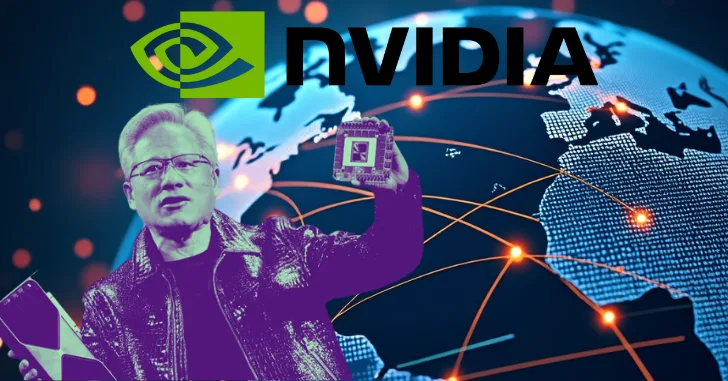
In a landmark moment that cements its dominance in the global tech arena, Nvidia stock just made history by catapulting the company’s market value past an astonishing $4 trillion — an achievement that places it ahead of both Apple and Microsoft in the race for AI supremacy.
On Wednesday, Nvidia shares climbed another 2.5% after the opening bell, pushing the company to an intraday record and officially crowning it the first public company to ever surpass the $4 trillion threshold. For investors, this milestone is not just another headline — it’s a wake-up call about where the real leverage in the next decade of technology and capital markets may lie.
How Nvidia Became a $4 Trillion Giant
Nvidia’s relentless run-up didn’t happen overnight. In fact, Nvidia stock has rocketed about 20% higher just this year, building on its massive surge last year when it crossed the $1 trillion mark in May 2023. The fuel behind this explosive growth? Its near-monopoly on the high-end chips that power the artificial intelligence boom reshaping everything from data centers to self-driving cars.
The company’s graphics processing units (GPUs) were once best known for rendering life-like graphics for PC gamers — but today, they are the beating heart of the generative AI revolution. Giants like Microsoft, Amazon, and Google depend on Nvidia’s cutting-edge chips to train and run large language models and other complex AI workloads.
Market research firm IDC forecasts that global spending on AI infrastructure could blow past $200 billion by 2028, and Nvidia is determined to capture as much of that as possible. In the fiscal quarter ending this April alone, Nvidia generated $44.1 billion in revenue, a staggering 69% increase from the same quarter a year ago.
Nvidia Outruns Apple and Microsoft
What makes this $4 trillion milestone even more striking is who Nvidia has overtaken along the way. For years, Apple wore the crown as the world’s most valuable company, recently valued at about $3.9 trillion before slipping amid tariff tensions under President Donald Trump’s trade policy resets. Microsoft and Nvidia have traded the top spot back and forth in recent months — but Nvidia sprinted ahead decisively.
Wedbush Securities analyst Dan Ives, who has long been bullish on Nvidia stock, summed it up bluntly in a June note: “There is one company in the world that is the foundation for the AI Revolution and that is Nvidia.” In fresh commentary after the $4 trillion breakout, Ives wrote, “This is a historical moment for Nvidia, the tech space flexing its muscles, and speaks to the AI Revolution hitting its next stage of growth led by the one chip fueling AI … Nvidia.”
Beyond Gaming: Nvidia’s Push into Autonomous Tech and Project Stargate
While many still associate Nvidia with gaming, the company has aggressively expanded its reach far beyond video cards. At its annual developers conference this March, Nvidia unveiled the Blackwell Ultra chip — an upgrade to its popular Blackwell series designed to handle AI models that require more sophisticated reasoning.
The company is also eyeing next-generation robotics and autonomous vehicles, positioning its chips as the brain inside everything from driverless trucks to humanoid robots.
Its ambitions don’t stop at hardware. Nvidia is a strategic partner in Project Stargate, the $500 billion AI infrastructure initiative launched by President Trump this year to strengthen America’s technological edge. This tie to Washington underscores Nvidia’s pivotal role not just in Silicon Valley but in the broader geopolitical AI arms race.
CEO Jensen Huang: From Tech Visionary to Geopolitical Player
All this success has turned Nvidia’s founder and CEO, Jensen Huang, into one of the world’s wealthiest individuals. Bloomberg’s Billionaire Index now ranks him as the tenth richest person alive, with an estimated net worth of $140 billion. Huang has become an influential figure in tech policy circles too — he met with President Trump this spring and joined other top tech leaders on a diplomatic mission to Saudi Arabia to discuss AI collaboration and investment.
Huang’s message to investors is simple: Nvidia’s growth is far from done. On the company’s May earnings call, he told analysts and shareholders, “AI is this incredible technology that’s going to transform every industry, from the way we do software to health care and financial services to retail… transportation, manufacturing. And we’re at the beginning of that.”
The China Challenge
Of course, Nvidia’s rise has not been free of hurdles. The company has been caught squarely in the geopolitical crossfire between Washington and Beijing. Earlier this year, Chinese startup DeepSeek rattled the industry with a surprisingly powerful, low-cost AI model — sparking debate about whether expensive, high-end chips like Nvidia’s are really indispensable.
Then came export restrictions: U.S. limits on selling advanced AI chips to China cost Nvidia an estimated $2.5 billion in lost revenue for the fiscal quarter ending in April. Combined with competition jitters, these tensions triggered a sharp sell-off in Nvidia stock from January through April, with shares plunging as much as 37%.
But those concerns have quickly faded. Since bottoming out in early April, Nvidia stock has rallied back nearly 74%, reclaiming lost ground and then some — and it now sits at all-time highs.
How High Can Nvidia Go?
Despite its towering valuation, Wall Street sees more runway for Nvidia stock. Analysts at Loop Capital recently projected that Nvidia could hit $6 trillion in market capitalization by 2028 if it maintains its current stranglehold on AI infrastructure.
“While it may seem fantastic that [Nvidia] fundamentals can continue to amplify from current levels, we remind folks that [Nvidia] remains essentially a monopoly for critical tech” in the AI sector, Loop Capital’s Ananda Baruah and Alek Valero wrote in a note to clients.
Wedbush’s Dan Ives, meanwhile, expects Microsoft to join Nvidia above the $4 trillion mark this summer — but he sees Nvidia staying firmly in the lead.
What This Means for Investors Now
For investors wondering whether they’ve missed the boat, the big question is whether Nvidia stock can sustain this breakneck growth pace. The company trades at rich multiples compared to traditional semiconductor players — but it also occupies a once-in-a-generation position as the de facto backbone of the AI revolution.
For long-term investors, Nvidia’s dominance in AI chips, cloud data centers, robotics, and autonomous tech makes it arguably the most strategic AI play on the market. But owning Nvidia stock also comes with exposure to political risks, especially escalating trade disputes with China, and the constant threat of disruption if a new, cheaper AI model undercuts the need for its premium hardware.
For traders, the volatility that comes with Nvidia stock can be a double-edged sword — it offers breakout opportunities but demands disciplined risk management. Short-term pullbacks, like the DeepSeek dip, have proven to be lucrative entry points for investors betting on the company’s long-term AI moat.
Betting on the Future of AI
Nvidia’s journey from a PC gaming chipmaker to the world’s first $4 trillion company is nothing short of historic — and a clear sign of where the next waves of wealth creation may come from. With global AI spending projected to multiply over the next five years and the company investing heavily in next-gen chips, autonomous systems, and government-backed mega projects like Project Stargate, Nvidia stock is more than just a ticker symbol — it’s a proxy for the AI age itself.
Investors who believe AI will become foundational to every major industry — from finance to health care to manufacturing — will likely keep Nvidia at the core of their portfolios. But staying informed about the political crosscurrents, emerging competitors, and global demand trends will be critical to navigating the risks and maximizing the rewards.
Sources:
About Author