Trump’s High-Stakes Trade Week: Why the Next Few Days Could Reshape Global Markets — And What Investors Should Watch
President Donald Trump has entered what might be the most pivotal week of his trade agenda yet, facing tight deadlines, unfinished deals, and an escalating global chess match that could directly impact industries from automakers to tech, and even commodities like rare earths.
While the White House has recently notched some headline wins — including passage of a sweeping domestic policy bill and a fragile cease-fire agreement between Israel and Iran — the trade front remains a complex battlefield where success is far from guaranteed.
Looming Tariffs: A Return to April’s Levels
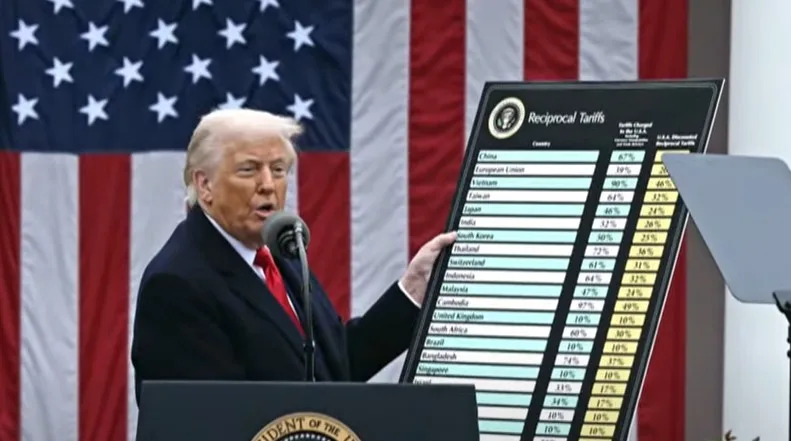
At the center of this week’s tension is Trump’s reciprocal tariff framework. Originally announced in April, the plan threatened steep duties on foreign imports unless countries cut better deals with the U.S. The administration paused the new rates for 90 days — but that pause is set to expire July 9.
Absent final deals, tariffs could automatically revert to levels as high as 70%, hitting industries and countries that fail to secure exemptions or concessions. Treasury Secretary Scott Bessent confirmed on Sunday that President Trump intends to issue formal warning letters starting Monday, with final payments due by August 1 if deals aren’t reached.
“President Trump is going to send letters to some of our trading partners saying that ‘if you don’t move things along, then on August 1st, you will boomerang back to your April 2nd tariff level,’” Bessent said on CNN’s State of the Union.
In practical terms, this means multinational corporations and exporters have just weeks to adjust supply chains, pricing models, and contingency plans. For investors, this short window could trigger sudden price swings in sectors highly exposed to tariff fluctuations — think automakers, semiconductors, and industrial machinery.
Letters Instead of Deals: A Shift in Strategy
When the tariffs were paused this spring, White House trade advisor Peter Navarro confidently predicted the administration would strike 90 deals in 90 days. But reality has proven messier. So far, only a handful of partial deals have been announced — many with minimal detail and uncertain enforcement.
Now, instead of sealing ironclad agreements before the July deadline, Trump’s team appears to be pivoting to a new tactic: use letters to pressure countries into finalizing terms by August 1. The approach buys time — but also raises the risk of brinkmanship, miscalculations, or retaliatory actions from countries feeling boxed in.
“It’s just much easier. We have far more than 170 countries. And how many deals can you make?” Trump said last week, defending his plan to notify nations by letter rather than finalizing face-to-face pacts.
In other words, Trump is gambling that the threat of a tariff snapback — combined with personal letters carrying his unmistakable signature style — will bring trading partners back to the table.
BRICS in the Crosshairs
Adding fuel to the fire is Trump’s pointed warning to countries aligning with the BRICS bloc — Brazil, Russia, India, China, and South Africa — plus new invitees like Saudi Arabia and Egypt. On Truth Social Sunday, Trump declared:
“Any Country aligning themselves with the Anti-American policies of BRICS, will be charged an ADDITIONAL 10% Tariff. There will be no exceptions to this policy.”
This threat comes as BRICS leaders meet in Rio de Janeiro, positioning themselves as a counterweight to U.S. influence. The move signals that the White House sees the bloc’s deeper economic integration — including joint trade initiatives and potential new currencies — as a threat to American dominance.
For investors, this raises fresh geopolitical and currency risks, especially for emerging-market ETFs or commodity-heavy BRICS nations that rely on the U.S. for exports.
Unfinished Business: Vietnam, China, India
The administration’s struggle to land bulletproof agreements is obvious in deals already announced. Just last week, Trump claimed a breakthrough with Vietnam — promising American goods would enter the country duty-free in exchange for a 20% tariff on Vietnamese exports and an even steeper 40% tariff on goods routed through Vietnam from third countries.
Yet the Vietnamese government quickly signaled that major details are still unresolved.
“Currently, the negotiating teams of Vietnam and the U.S. are coordinating and engaging in discussions to concretize the topics covered by the two leaders,” a Vietnamese government spokesperson said, hinting that some U.S. goods may still face tariffs despite Trump’s promise.
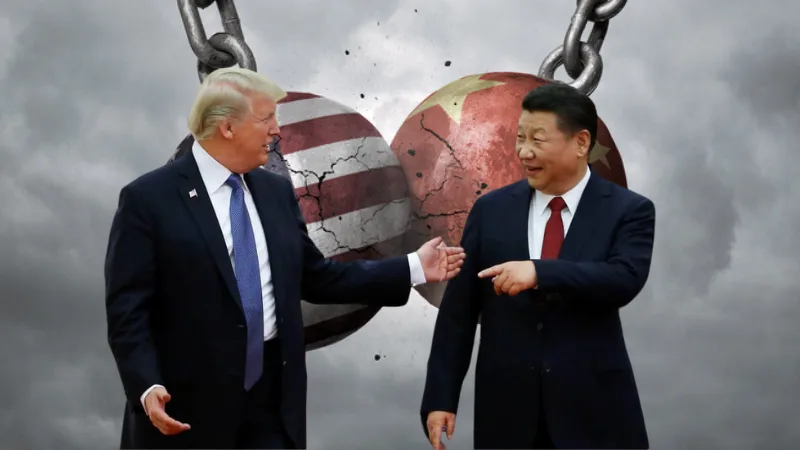
China is another wildcard. In June, Trump’s team touted a “mutual easing” of export controls on strategic products like rare-earth magnets — a key input for everything from electric vehicles to defense technology. But the so-called agreement remains sealed behind closed doors, with Deputy Treasury Secretary Michael Faulkender admitting on CNBC that “some progress has been made” but that China needs to “accelerate access” as promised.
India, meanwhile, sits on the fence. External Affairs Minister Subrahmanyam Jaishankar was in Washington last week for talks, but New Delhi has already prepped countermeasures through the World Trade Organization if a trade deal fails. India has filed notice that it could hike tariffs on select U.S. goods, especially automobiles — a retaliatory move that would stoke fresh tensions between the two economic giants.
What’s at Stake for Investors
For Wall Street, the stakes are clear and immediate. Here’s how these developments could hit portfolios:
1. Manufacturers & Automakers
Industry-specific tariffs on foreign cars have always been one of Trump’s go-to levers. Automakers with global supply chains — think Ford, GM, Toyota, BMW — could see costs spike if tariffs surge back to April levels.
Investor angle: Keep an eye on companies with heavy U.S. production footprints versus those more reliant on overseas assembly. Domestic manufacturers could gain a cost advantage if foreign competitors face fresh tariffs.
2. Rare Earths & Clean Tech
Rare-earth minerals are the hidden gears of modern tech and green energy. If the China deal collapses — or Beijing drags its feet — supply tightness could worsen, hitting producers of EVs, wind turbines, and consumer electronics.
Investor angle: Watch for price action in rare-earth miners like MP Materials ($MP) or Lynas ($LYSCF). Some U.S. juniors may benefit if supply chains shift away from Chinese dominance.
3. Emerging Markets & BRICS Exposure
Trump’s explicit BRICS penalty rattles the thesis behind some emerging-market plays. If the bloc retaliates with its own tariffs, currency restrictions, or alternative trade corridors, companies banking on low-cost exports or imports may find themselves squeezed.
Investor angle: Diversify emerging-market exposure. Overweight sectors that are less trade-dependent (like domestic services) or consider hedges through commodity plays that benefit from regional tensions.
4. Logistics & Shipping
Any tariff reshuffle disrupts global shipping lanes, ports, and customs infrastructure. Container rates, insurance premiums, and shipping timelines can swing wildly.
Investor angle: Monitor shipping stocks (like Maersk or ZIM Integrated) and logistics ETFs. Volatility here can spill over into input costs for multiple industries.
Bottom Line: More Questions Than Answers
In the final stretch before the new deadlines, the White House’s pivot to letters over locked-in deals means investors are flying blind on hard details. Big swings in policy can happen overnight. For now, here’s what savvy investors should watch:
Official texts: If full agreements with Vietnam, China, or India get published, expect quick market reactions.
Truth Social posts: Trump often telegraphs new moves there before formal statements.
Retaliation: Watch BRICS summit communiques or WTO filings for counterpunches.
Key dates: July 9 (pause expiration) and August 1 (final payment deadline) are hard lines on the calendar.
This week’s back-and-forth may decide whether Trump’s tariff strategy cements fresh leverage for U.S. industries — or triggers a new wave of trade blowback that hits global supply chains and investor sentiment alike.
To provide the best experiences, we use technologies like cookies to store and/or access device information. Consenting to these technologies will allow us to process data such as browsing behavior or unique IDs on this site. Not consenting or withdrawing consent, may adversely affect certain features and functions.
Functional
Always active
The technical storage or access is strictly necessary for the legitimate purpose of enabling the use of a specific service explicitly requested by the subscriber or user, or for the sole purpose of carrying out the transmission of a communication over an electronic communications network.
Preferences
The technical storage or access is necessary for the legitimate purpose of storing preferences that are not requested by the subscriber or user.
Statistics
The technical storage or access that is used exclusively for statistical purposes.The technical storage or access that is used exclusively for anonymous statistical purposes. Without a subpoena, voluntary compliance on the part of your Internet Service Provider, or additional records from a third party, information stored or retrieved for this purpose alone cannot usually be used to identify you.
Marketing
The technical storage or access is required to create user profiles to send advertising, or to track the user on a website or across several websites for similar marketing purposes.