President Donald Trump has made tariffs a signature weapon in both his economic and foreign policy playbook. From trade negotiations to international pressure campaigns, he has used import taxes not just as economic leverage but as a political and diplomatic tool. Now, that power is being tested before the Supreme Court in one of the most consequential cases of his presidency.
The Case That Could Redefine Presidential Trade Power
The Supreme Court is reviewing whether President Trump exceeded his authority under the International Emergency Economic Powers Act (IEEPA) by imposing sweeping tariffs without congressional approval. Two lower courts previously ruled that the Constitution grants tariff-setting power to Congress, not the executive branch, and that Trump’s use of IEEPA to justify tariffs went too far.
Trump has described the case as one of the most important in U.S. history. He warned that it would be a “disaster” for the country if the Supreme Court does not overturn the lower court rulings. “I wanted to go so badly,” he told reporters aboard Air Force One, referring to the oral arguments. “I just don’t want to do anything to deflect the importance of that decision.”
Tariffs as Trump’s Foreign Policy Tool
Throughout his second term, Trump has relied heavily on tariffs to achieve goals that extend far beyond trade. He has threatened tariffs to push for ceasefires between warring nations, pressured governments to tighten border security, and even targeted allies like Brazil and Canada for political reasons.
In recent years, the former business mogul has transformed tariffs into an instrument of immediate leverage. He has used them to extract concessions from partners and adversaries alike, often with little warning. Critics argue this approach has made global markets volatile, while supporters claim it has secured better deals for the United States.
“The fact of the matter is that President Trump has acted lawfully by using the tariff powers granted to him by Congress in IEEPA to deal with national emergencies and to safeguard our national security and economy,” said White House spokesman Kush Desai.
White House Press Secretary Karoline Leavitt confirmed that the administration is preparing contingency plans should the Court rule against them. “We do have backup plans,” she said on Fox News. “But ultimately we are hopeful that the Supreme Court will rule on the right side of the law and do what’s right for our country. The importance of this case cannot be overstated. The president must have the emergency authority to utilize tariffs.”
How Trump’s Use of Tariffs Is Different
Modern presidents have typically used sanctions, trade restrictions, and asset freezes to achieve foreign policy objectives. Tariffs, by contrast, have been reserved for carefully defined trade disputes that require months of investigation and justification.
Josh Lipsky, a former Obama White House and State Department adviser who now serves as international economics chair at the Atlantic Council, said Trump has broken that mold. “Presidents have typically treated tariffs as a scalpel, not a sledgehammer,” Lipsky explained. “Trump has used tariffs as the backbone of his national security and foreign policy agenda. All of it is interconnected, and tariffs are at the heart of it.”
For example, Trump recently threatened to impose a 30 percent tariff on European imports. The European Union ultimately negotiated a deal that settled at 15 percent tariffs in exchange for stronger commitments to NATO and continued support for Ukraine’s defense against Russia. The EU’s trade commissioner defended the move as being “not only about trade. It’s about security. It’s about Ukraine.”
What the Supreme Court’s Decision Could Mean
The Court’s ruling will have sweeping implications. If Trump prevails, the decision could permanently expand presidential authority over trade and give the White House the ability to impose tariffs quickly during any declared emergency. That outcome could make U.S. trade policy more unpredictable but also more forceful in negotiations.
If the Court rules against him, it could curb executive power and shift more authority back to Congress. That would slow the tariff process and require greater oversight before future import taxes could be implemented.
Emily Kilcrease, a former U.S. trade representative official who served under both Republican and Democratic administrations, called Trump’s use of IEEPA “a broadscale attack on an economy as a way to incentivize a foreign government to change their posture.” Still, she acknowledged that the case is not clear-cut. “There is a decent chance the Supreme Court could side with Trump because IEEPA gives the president broad, flexible emergency powers,” she said.
The Global and Economic Ripple Effects
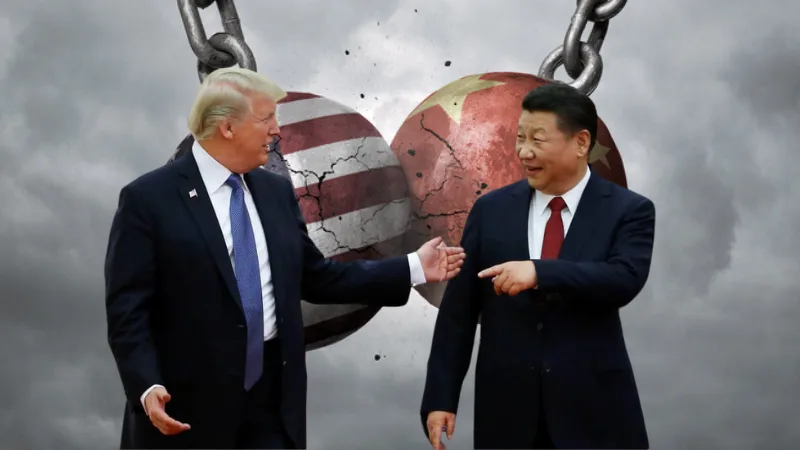
Foreign governments are watching the case closely. Many countries have already adjusted trade policy to brace for Trump’s aggressive tariff approach. Some have sought closer relations with China, which has positioned itself as a defender of free trade amid growing U.S. protectionism.
For investors, the impact could reach from Wall Street to Main Street. Tariffs influence everything from corporate profit margins to consumer prices. Businesses that depend on global supply chains are particularly sensitive to tariff changes. A ruling that alters the legal framework could lead to sudden price swings, margin adjustments, or even production shifts abroad.
Kilcrease said that even if Trump loses the case, tariffs are not going away. “It certainly doesn’t take tariffs off the table,” she noted. “It just makes them a little bit slower.”
Investor Takeaways
- Prepare for policy volatility: Whether Trump wins or loses, the case signals that trade policy will remain a political weapon rather than a purely economic one.
- Watch for supply chain impacts: Companies with international operations may need to reassess sourcing strategies and cost structures.
- Track currency and inflation trends: Tariffs influence price levels, exchange rates, and corporate earnings. A shift in authority could alter those dynamics.
- Look for long-term winners: Domestic producers and companies less exposed to import costs may benefit if tariffs stay. Export-driven sectors could gain if restrictions ease.
Bottom Line
The Supreme Court’s decision will shape not only the future of U.S. trade law but also the balance of power between Congress and the presidency. For President Trump, it represents a test of his ability to continue using tariffs as a fast-acting tool of diplomacy and deterrence. For investors, it is a reminder that politics and markets remain deeply intertwined.
If Trump keeps his tariff authority, global trade partners may see faster, more unpredictable policy shifts. If he loses it, markets may gain stability but lose the shock factor that often drives negotiations. Either way, the outcome will set the tone for how America wields economic power in the world for years to come.
About Author