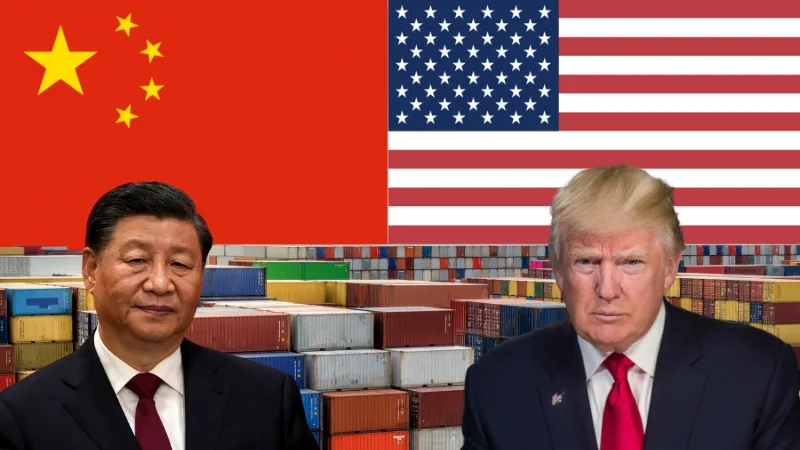
The United States and China have reached a breakthrough trade framework that could reshape global markets, avert a new round of 100% tariffs, and reset one of the world’s most consequential economic relationships.
The announcement came after U.S. Treasury Secretary Scott Bessent confirmed on NBC’s Meet the Press that both sides had agreed to a “very substantial framework” in Kuala Lumpur. The deal focuses on avoiding tariff escalation, reopening agricultural trade, and deferring China’s rare earth export restrictions, a critical move for the technology and defense industries.
“I’m not anticipating that we will proceed with the 100% tariffs,” Bessent said. “And I’m also anticipating that we will get some kind of deferral on the rare earth export controls.” [Reuters]
President Donald Trump and Chinese President Xi Jinping are expected to meet next week to formalize the agreement’s final terms, marking the first major thaw in U.S.–China trade relations since Trump returned to office.
What’s in the Framework
While not yet a fully ratified treaty, the framework represents a significant de-escalation from the tariff brinkmanship that had been weighing heavily on global markets. Here are the key components as they currently stand:
1. Tariff Pause
The United States had been preparing to impose 100% tariffs on a broad range of Chinese imports, including electric vehicles, semiconductors, and consumer electronics. The framework halts that action for now, signaling a willingness by both sides to move back toward negotiation instead of confrontation [Washington Post].
2. Rare Earth Export Deferral
China agreed to defer new export restrictions on rare earth elements — minerals essential for producing EV batteries, smartphones, wind turbines, and military hardware. This single provision could stabilize global supply chains that were bracing for severe disruption.
3. Agricultural Commitments
Beijing has agreed to increase its imports of U.S. soybeans and other agricultural products, providing a much-needed boost to American farmers and signaling that China may once again serve as a major buyer of U.S. commodities [Politico].
4. Fentanyl-Related Cooperation
The framework includes commitments by China to cooperate more closely with the United States in restricting precursor chemicals used in fentanyl production — an issue President Trump has prioritized as part of his broader anti-drug agenda.
5. Tech and Data Security Talks
While not part of the written framework, negotiators confirmed that side discussions are ongoing regarding data security and Chinese-owned apps operating in the United States, including TikTok. Sources told Politico that an understanding has been reached around ownership transparency and U.S. data storage requirements.
Why It Matters Now
The U.S.–China relationship has been the central fault line of global trade for over a decade. Any sign of cooperation or confrontation — immediately ripples through equity markets, commodities, and currencies.
This new framework matters because it interrupts what had been a steady escalation toward a global trade shock. Investors had been bracing for tariffs that could have reignited inflation, squeezed corporate profits, and triggered retaliatory measures from Beijing.
Instead, markets now see a potential opening for renewed growth, supply chain stability, and sector-specific opportunity. Oil prices fell nearly 1% on Monday morning as traders priced in reduced trade-war risk, and Asian equities rose in early trading as optimism spread across markets [Reuters].
Market and Sector Implications
Rare Earths and Strategic Materials
The biggest immediate winner may be companies tied to critical minerals. China controls over 70% of global rare earth processing capacity, and any restriction would have sent costs skyrocketing for Western manufacturers.
With the deferral of export controls, companies like MP Materials (MP) and Lynas Rare Earths (LYC.AX) could see renewed investor interest. The move also benefits U.S. defense contractors dependent on stable supplies for missile guidance systems and radar components.
If this framework evolves into a long-term agreement, it could reduce the urgency of Western governments to accelerate domestic rare earth mining projects, though Washington will likely continue to incentivize domestic production for national security reasons.
Agriculture and Commodities
China’s commitment to boost soybean and grain imports is a clear political and economic win for American farmers. The U.S. Department of Agriculture has reported declining export demand since mid-2023 due to rising Chinese self-sufficiency goals.
A revived export channel could lift prices for soybean futures and benefit agribusiness giants like Archer Daniels Midland (ADM), Bunge (BG), and John Deere (DE), which rely on strong planting and export cycles.
If Beijing follows through, the move could also stabilize rural U.S. economies that have faced uncertainty over export markets since the early tariff rounds of 2018–2020.
Technology and Data Firms
The framework’s discussion of tech and data issues hints that the TikTok ownership and data security dispute could soon find resolution. That’s significant for U.S. tech policy because it sets a precedent: future trade negotiations may include digital data governance alongside goods and services.
Investors should watch how this language develops, particularly as data localization and AI model training become major geopolitical issues.
Manufacturing and Supply Chains
By pausing tariffs, manufacturers operating on thin global supply margins (from automakers to semiconductor firms) gain short-term breathing room. Stocks like Tesla (TSLA), Apple (AAPL), and Intel (INTC), all of which have deep exposure to China’s production ecosystem, could benefit from renewed stability.
However, the long-term strategic rivalry between the U.S. and China isn’t over. Even with this framework, American companies are expected to continue “friend-shoring” — diversifying supply chains into allied nations like India, Vietnam, and Mexico.
Investor Takeaways
1. Tariff Relief = Short-Term Market Tailwind
Expect a relief rally in equities tied to global trade and manufacturing if the framework advances to formal ratification. Investors positioned in global industrial ETFs or Asia-Pacific emerging market funds may see near-term gains.
2. Commodities and Farmland in Focus
A rise in Chinese agricultural demand could support Midwestern farmland values and commodity prices. Investors in farmland REITs or agricultural futures should monitor China’s purchase commitments in the coming weeks.
3. Rare Earth Plays May See a Bounce
Given how sensitive rare earth markets are to political news, the U.S.–China framework could create a window for short-term upside in companies like MP Materials and Lynas. Traders should watch for official confirmation from Beijing on export deferrals.
4. Keep a Hedge
While optimism is warranted, this is still a framework, not a finalized deal. Political risks remain high on both sides. Traders should keep hedges through defensive positions — utilities, energy, and gold — in case negotiations stumble.
5. Watch for Inflation Implications
If tariffs are avoided and supply chains normalize, the U.S. may experience mild disinflationary effects in imported goods prices. That could influence Federal Reserve policy and long-duration bond performance in Q4 2025 and early 2026.
What Happens Next
President Trump and President Xi are scheduled to meet next week to sign or refine the framework’s core principles. Both sides are expected to announce more detailed commitments on tariff schedules, rare earth timelines, and agricultural procurement targets.
A successful meeting could open the door to Phase II negotiations addressing intellectual property protection, state subsidies, and investment reciprocity, areas where past agreements have often stalled.
Markets will also be watching for how this framework impacts allied nations. Japan, South Korea, and the European Union have expressed interest in joining future discussions around critical minerals and AI technology supply chains.
A Strategic Pause, Not a Reset
While this framework signals progress, it does not resolve the deeper structural tensions between Washington and Beijing. The U.S. still views China as its chief strategic and technological competitor, and both nations are racing to dominate next-generation sectors like quantum computing, AI, and green tech manufacturing.
Still, by preventing an immediate tariff war, both sides have bought time and markets have gained breathing room. For investors, this is less about celebration and more about positioning: balancing optimism with risk management.
Bottom Line for Investors
The U.S.–China trade framework represents the most significant easing of economic tensions since 2020. It’s a potential turning point for global markets but not the finish line.
If the framework becomes a formal agreement, it could stabilize commodity flows, revive U.S. agricultural exports, and reduce supply chain shocks heading into 2026. But if talks falter, markets could quickly revert to risk-off mode.
About Author