

Wall Street investors are preparing for a potentially significant shift after Tuesday’s midterm elections, and Morgan Stanley believes the stock market could emerge as the biggest winner regardless of which party controls Congress.
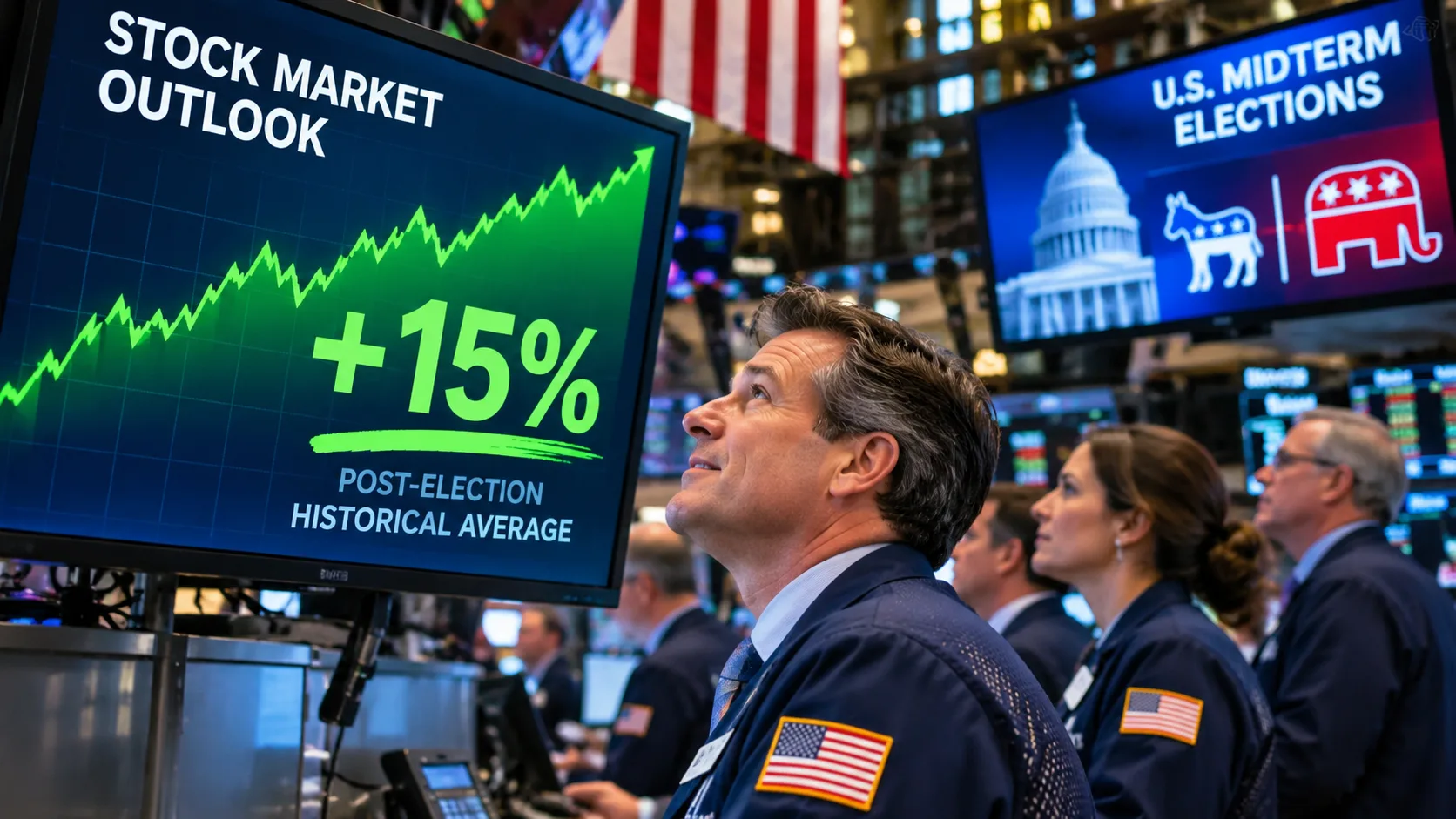
Mike Wilson, the investment bank’s chief U.S. equity strategist, says historical market performance points to a powerful rally in the months following midterm elections. Since 1982, large-cap U.S. stocks have gained approximately 15% in the six months following the vote, with average gains reaching roughly 22% over the subsequent 12 months.
The outlook offers a potentially encouraging signal for investors following months of volatility, political uncertainty and selling pressure in major technology stocks. However, Wilson also cautions that the biggest threats to a market recovery may emerge after Americans finish voting.
Why Morgan Stanley Expects Stocks to Rally
Tuesday’s elections will determine control of Congress, with Democrats favored to make substantial gains and potentially capture both chambers. For investors, Wilson argues that much of the anticipated political outcome has already been reflected in stock prices.
A narrow Democratic victory in the Senate would be consistent with current market expectations, limiting the potential for a significant negative surprise. A more decisive Democratic sweep could raise concerns about future regulation and changes in economic policy, although those effects may take years to materialize.
Morgan Stanley believes the election itself could remove a major source of uncertainty that has weighed on stocks. Historically, midterm elections have frequently marked a turning point for markets as investors move beyond political speculation and refocus on corporate profits, economic growth and interest rates.
The historical numbers are striking. Since 1982, large-cap stocks have gained approximately 15% in the six months following midterm elections and roughly 22% over the following year. Wilson also noted that an equal-weighted measure of large-cap stocks gained approximately 16% during the first six months.
These historical averages do not guarantee that stocks will experience similar gains this time. Nevertheless, they suggest that political uncertainty has often created opportunities for investors willing to look beyond election headlines.
The Bigger Story: The Stock Market May Already Be Recovering
Beyond the election, Wilson sees encouraging changes developing beneath the surface of the market. According to his analysis, the correction that began in June could be approaching its final stages, with several indicators suggesting investors are beginning to return to a broader range of companies.
One important development involves the performance of the equal-weighted S&P 500, which gives every company approximately the same influence on the index rather than allowing the largest technology companies to dominate returns.
Wilson reported that the equal-weighted index gained nearly 5% during the period he examined, outperforming the traditional market-capitalization-weighted S&P 500 by almost six percentage points. Meanwhile, the proportion of S&P 500 companies trading above their 200-day moving averages increased by approximately 20 percentage points to 62%.
That improvement is significant because a healthier market rally typically involves more companies participating in gains. When a handful of technology giants account for most index performance, weakness in those companies can quickly drag down the broader market.
A rally supported by industrial companies, financial institutions, healthcare businesses and other sectors may prove more resilient. Wilson believes this improving participation could help establish the foundation for the market’s next sustained advance.
Why a Democratic Victory Could Also Help Stocks
Investors frequently associate Democratic control of Congress with tighter regulation and higher potential costs for businesses. However, Morgan Stanley identifies several possible economic benefits that could offset those concerns, particularly in areas connected to consumer spending and corporate investment.
A Democratic majority could seek to delay or reverse reductions in Medicaid and federal food assistance programs. Maintaining those benefits could support household spending, particularly among lower-income Americans who typically spend a large share of their available income. That spending can benefit retailers, grocery chains, healthcare providers and other companies dependent on consumer demand.
Another potential effect involves corporate investment and mergers. Businesses concerned about tighter regulations after the 2028 presidential election could accelerate acquisitions, capital spending and strategic transactions while the current regulatory environment remains in place.
However, there are limits to what Congress can change. Major policies involving tariffs, foreign affairs and federal agency regulation remain heavily influenced by the executive branch, meaning many of the forces moving financial markets could continue regardless of which party wins Tuesday.
Two Risks Could Disrupt the Post-Election Rally
Despite his optimism, Wilson identifies two major threats that could overwhelm any relief rally following the elections.
1. Renewed Military Escalation With Iran
Another escalation involving Iran could push energy prices higher, disrupt global shipping and create fresh uncertainty for financial markets. Higher oil prices would increase costs for transportation companies, manufacturers and consumers, potentially squeezing corporate profit margins.
A prolonged increase in energy prices could also complicate the Federal Reserve’s efforts to control inflation, reducing the likelihood of lower interest rates. For investors, that creates a situation in which political uncertainty declines after the election while geopolitical uncertainty increases.
2. Another Round of Tariffs
Additional tariffs could create a similar challenge by increasing costs for American businesses, particularly manufacturers, retailers and technology companies dependent on global supply chains.
Companies may absorb those costs through lower profit margins or pass them along through higher prices. Both outcomes could pressure stocks, particularly if investors begin anticipating slower economic growth alongside persistent inflation.
Wilson’s concern is that either development could offset the positive historical pattern associated with midterm elections. Even a strong post-election rally could struggle if geopolitical tensions or trade restrictions begin threatening corporate earnings.
What This Means for Your Investments
For individual investors, the most important question is whether the election could mark the beginning of a broader recovery. Several areas deserve particular attention, particularly if Treasury yields continue declining and more companies begin participating in market gains.
Large-Cap Stocks Could Benefit First
The strongest historical evidence favors established large-cap companies, including those represented in the S&P 500. These businesses generally have stronger access to financing, more diversified operations and greater ability to withstand temporary economic disruptions.
Morgan Stanley’s outlook suggests investors should pay attention to quality companies whose shares have already experienced significant declines, particularly where earnings and long-term business fundamentals remain strong. A broadening recovery could create opportunities beyond the technology stocks that have dominated market performance in recent years.
Falling Treasury Yields Could Help Dividend Stocks
Interest rates represent another important component of the outlook. Wilson reported that the 10-year Treasury yield had declined by nearly 40 basis points during the period he analyzed, helping improve conditions for certain equity investments.
Lower bond yields can make dividend-paying companies more attractive relative to newly issued fixed-income investments while also reducing borrowing costs for businesses. Utilities, real estate investment trusts and other interest-rate-sensitive sectors could benefit if Treasury yields continue moving lower.
However, investors should remember that declining yields do not automatically guarantee higher stock prices. If rates are falling because economic growth is deteriorating, weaker corporate profits could offset some of those benefits.
Smaller Companies May Need More Help
Wilson remains cautious about the Russell 2000, which tracks smaller publicly traded companies. Smaller businesses often rely more heavily on borrowing and may have less flexibility when financing costs remain elevated.
Although declining interest rates could support these stocks, Wilson believes a more substantial reduction in borrowing costs may be necessary before smaller companies can participate fully in a sustained market rally. That distinction matters for investors considering whether to increase their exposure to small-cap funds immediately after the election.
One Important Reason This Election Could Be Different
The historical averages are compelling, but the current market faces challenges that were less pronounced in several previous election cycles. Elevated stock valuations, substantial artificial intelligence infrastructure spending and ongoing geopolitical risks all have the potential to influence market performance.
When valuations are already high, investors tend to be less forgiving of disappointing earnings or unexpected increases in interest rates. Even if the election removes a major source of uncertainty, stock prices will still need support from corporate profits and the broader economy.
There is also an important limitation to the historical election data. Midterm rallies have frequently occurred during periods when markets were recovering from earlier losses, meaning some of the gains may reflect improving economic conditions rather than the elections themselves.
For that reason, investors should view Morgan Stanley’s historical analysis as an encouraging indicator rather than a reliable prediction of a 15% return. The market’s direction will ultimately depend on earnings growth, interest rates, economic conditions and policy developments.
Three Signals Investors Should Watch After Tuesday
The election results may command the headlines, but the market’s reaction over the following days and weeks could provide more useful information. Three indicators will be especially important in determining whether a sustained recovery is developing.
First, watch Treasury yields. A sustained decline could strengthen the case for a broader stock recovery by reducing financing costs and supporting valuations. Rising yields, particularly if driven by inflation concerns, would suggest financial conditions remain restrictive.
Second, watch market participation. If the equal-weighted S&P 500 continues outperforming the traditional index, that would indicate the recovery is spreading beyond the largest technology companies. Broader participation could make the rally more durable and create opportunities across additional sectors.
Third, watch developments involving Iran and trade policy. A major military escalation or unexpected tariff announcement could quickly change inflation expectations and investor sentiment, regardless of the election results. Either development could also influence the Federal Reserve’s interest-rate decisions.
Together, these indicators provide a more complete picture of whether the post-election rally has the economic support needed to continue.
The Takeaway for Investors
Morgan Stanley’s message is encouraging for Americans concerned about how Tuesday’s elections could affect their retirement accounts and investment portfolios. Historical evidence suggests stocks have frequently delivered strong returns after midterm elections, regardless of which party emerges victorious.
With market participation improving and political uncertainty potentially fading, Wilson believes conditions could soon become more favorable for investors. However, renewed military conflict, additional tariffs and stubbornly high borrowing costs remain significant threats to a sustained recovery.
For long-term investors, the key takeaway is that an election result they dislike does not automatically translate into a weak stock market. History suggests the months following midterms can offer meaningful opportunities, even when the political environment remains deeply divided.
About Author