

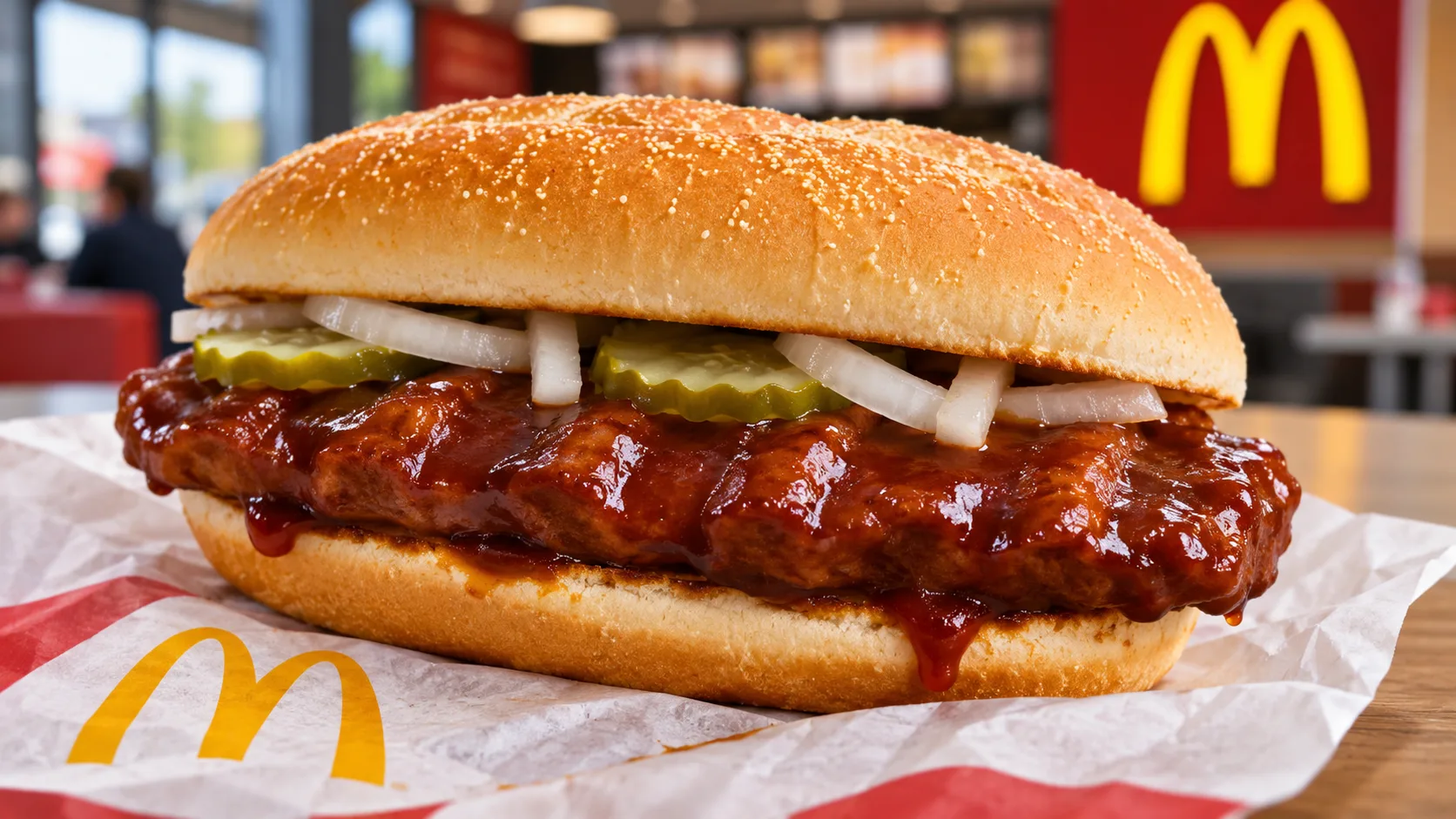
Four consumers accuse McDonald’s of misleading customers about its famous sandwich. Now a federal judge has ruled that the fast-food giant must answer key allegations about what the McRib actually contains.
One of McDonald’s most recognizable sandwiches is at the center of a growing legal controversy. A federal judge has allowed a proposed class-action lawsuit to move forward over allegations that the famous McRib misleads customers into believing they are eating actual pork rib meat.
The lawsuit raises a deceptively simple question: When customers order a sandwich called the McRib, should they reasonably expect it to contain meat from pork ribs? For McDonald’s, the answer could carry consequences extending beyond a single menu item.
Judge Deals McDonald’s a Legal Setback
On Friday, October 30, U.S. District Judge April Perry in Chicago rejected McDonald’s attempt to dismiss the entire lawsuit, allowing several significant consumer protection claims to proceed.
The case was filed in December 2025 by four consumers who allege that McDonald’s deliberately designed and marketed the McRib in a way that creates a misleading impression about its ingredients.
The plaintiffs point to the sandwich’s name, its distinctive rib-shaped patty and its advertising. Together, they argue, those features lead customers to believe the sandwich contains pork rib meat, generally considered a more valuable cut than the processed pork used in many manufactured meat products.
According to the lawsuit, consumers paid a premium for a sandwich they believed contained a higher-value ingredient. The plaintiffs argue that they might not have purchased the McRib, or would have paid less for it, had they understood the nature of the meat being used.
Judge Perry allowed claims involving consumer deception, fraud and unjust enrichment to continue, although she dismissed five other claims without prejudice. The ruling does not establish that McDonald’s misled customers. It means the judge determined that important portions of the complaint deserve further consideration in court.
The Allegations About What’s Inside the McRib
The McRib has been a cult favorite since its introduction in 1981. Its periodic limited-time appearances have helped transform an ordinary fast-food sandwich into a product with a devoted following, generating anticipation among customers whenever it returns to the menu.
The sandwich features a boneless pork patty molded into a shape resembling a small rack of ribs, covered with barbecue sauce and topped with pickles and onions. That distinctive shape is now central to the lawsuit because plaintiffs argue it reinforces the impression that customers are purchasing meat from pork ribs.
The complaint alleges that the sandwich is made from other pork cuts rather than the rib meat customers expected. It also raises allegations about the possible use of lower-cost pork products, including shoulder, heart, tripe and stomach.
However, those ingredient allegations are disputed and have not been proven. McDonald’s has specifically denied that the McRib contains heart, tripe or stomach and maintains that its patty is made with 100% pork sourced from American farmers and suppliers.
The company also says its ingredient information has been publicly available. The dispute therefore centers partly on the difference between the type of animal used and the particular cut of meat consumers believe they are purchasing.
A sandwich can be made entirely from pork while still raising questions about whether its name and presentation create reasonable expectations about the cuts used. That distinction could become a central issue as the case moves forward.
A Consumer Survey Could Become a Major Issue
One of the more striking details in the lawsuit involves consumer surveys submitted by the plaintiffs. According to court filings described in news reports, one survey found that 72% of respondents expected the McRib to contain rib meat, while another found that 67% considered the presence of rib meat important or very important when deciding whether to purchase the sandwich.
Those figures could become significant because consumer deception lawsuits often turn on what an ordinary buyer would reasonably understand from a product’s advertising. The plaintiffs argue that the McRib’s name, its distinctive appearance and its marketing reinforce the belief that the sandwich contains a particular cut of pork.
McDonald’s argued that the sandwich’s distinctive name should not lead reasonable consumers to assume it contains a specific cut of meat. Judge Perry declined to accept that argument as grounds for dismissing the case at this early stage, allowing the competing interpretations to be examined more closely.
The court also considered the role of the sandwich’s shape and promotional materials. Advertising that emphasizes its resemblance to pork ribs could become relevant to determining whether customers were misled about what they were purchasing.
The surveys are evidence offered by the plaintiffs, and their methodology, reliability and ultimate significance remain subject to challenge as the litigation proceeds. McDonald’s will have opportunities to dispute the findings and present its own evidence about consumer expectations.
McDonald’s Says the Lawsuit Is Meritless
McDonald’s has rejected the accusations and defended its marketing practices. The company argues that the sandwich’s ingredients have been accurately disclosed and that the McRib’s name does not guarantee the presence of meat from a particular anatomical cut.
In public statements, McDonald’s has characterized the lawsuit as meritless and said the allegations distort the facts. Its position is that consumers understand the McRib as a branded pork sandwich and that its product descriptions provide sufficient information about what customers are buying.
The company’s defense also rests on a broader consumer expectation. Many prepared foods use brand names, shapes and descriptions that do not literally correspond to every ingredient or production method, and McDonald’s argues that its McRib marketing falls within those accepted practices.
The judge’s decision leaves that disagreement unresolved. Both sides will have an opportunity to develop evidence about the product, the company’s marketing and what consumers reasonably believed they were buying.
Why This Lawsuit Could Matter Beyond McDonald’s
Although the dispute centers on a single sandwich, it touches on a wider issue facing food manufacturers and restaurant chains: how far companies can go in describing and visually presenting their products.
Fast-food advertising has faced increasing scrutiny over the relationship between promotional images and the food customers actually receive. McDonald’s, Burger King and Wendy’s have all faced litigation involving allegations that advertised products appear larger or otherwise different from what customers purchase.
The McRib case introduces a related concern about the perceived quality and identity of ingredients. Instead of focusing primarily on portion sizes or appearance, the plaintiffs are challenging whether the branding of a product creates misleading expectations about the type of meat it contains.
If the plaintiffs ultimately succeed, the outcome could encourage closer examination of product names and promotional imagery throughout the restaurant industry. Companies may face additional pressure to provide clearer descriptions when a product’s branding suggests the presence of a particular ingredient or premium cut.
That could create additional compliance expenses, advertising restrictions or litigation exposure for businesses with heavily branded food products. However, the current ruling establishes no new industry-wide labeling requirement, and its broader significance will depend on how the litigation develops.
What It Could Mean for McDonald’s Investors
For shareholders of McDonald’s, traded on the New York Stock Exchange under the ticker MCD, the immediate financial implications remain uncertain. The lawsuit has not established liability, and there is currently no announced settlement or court-ordered damages award.
Still, the case highlights several areas investors should monitor as the legal proceedings continue.
1. Brand Reputation
McDonald’s relies heavily on consumer trust and the familiarity of its products. A controversy involving the ingredients of an iconic sandwich can attract substantial attention even if the product represents a relatively small share of overall sales.
Negative publicity does not automatically translate into weaker sales, but it can influence perceptions of product quality, particularly when allegations involve transparency and value. For a company whose brand recognition is one of its most valuable assets, that makes consumer reaction worth monitoring.
2. Legal Costs and Potential Settlements
Class-action lawsuits can become expensive even when companies successfully defend themselves. Legal fees, document production, expert testimony and possible settlement negotiations can create costs over an extended period.
If the proposed class is eventually certified, the number of customers potentially represented could become an important factor in evaluating the company’s financial exposure. For now, there is insufficient information to make a credible estimate of possible damages, and the ultimate outcome remains highly uncertain.
3. Marketing and Product Changes
Another potential consequence is a change in how McDonald’s describes or promotes the McRib. The company could ultimately prevail without changing the sandwich, although prolonged litigation could also create an incentive to modify advertising language, provide additional disclosures or pursue a settlement.
Any such changes would need to be evaluated against the McRib’s established brand identity and the commercial value of maintaining consumer familiarity. For major restaurant chains, even relatively small adjustments to established marketing practices can require coordination across advertising, product development and franchise operations.
Why McDonald’s May Have a Stronger Defense Than the Headlines Suggest
The most attention-grabbing element of the case is the allegation that a product called the McRib does not contain rib meat. But the legal question is more complicated than whether the sandwich contains pork ribs.
McDonald’s has long marketed the product as a boneless pork sandwich, and its argument that branded food names do not always identify specific cuts of meat could resonate with consumers and ultimately with the court. The company may also argue that the McRib’s long history and publicly available ingredient information help establish what customers reasonably should expect.
There is also a meaningful distinction between allowing a lawsuit to proceed and finding that a company’s advertising was deceptive. At this stage, Judge Perry was evaluating whether the plaintiffs presented legally plausible claims, while disputed facts about consumer expectations and marketing practices remain unresolved.
For investors, the key question is whether the controversy develops into a substantial financial or operational problem. A headline-generating lawsuit can create reputational pressure without producing a material effect on a company’s long-term profitability, especially for a global business operating tens of thousands of restaurants.
What Happens Next?
The case will now continue through the federal court process, with several important questions still unanswered.
Will the lawsuit receive class-action status? The plaintiffs must meet legal requirements before they can represent a broader group of McRib purchasers. Certification could materially change the scale of the litigation by expanding the number of consumers whose claims might be considered together.
What will the evidence show about consumer expectations? The surveys cited in the complaint may become important, along with additional evidence about advertising, purchasing decisions and ingredient disclosures. McDonald’s will have opportunities to challenge the plaintiffs’ interpretation of that evidence.
Could McDonald’s face financial damages? The plaintiffs are pursuing claims that could potentially lead to compensation or other remedies. No court has awarded damages, and no settlement has been announced, leaving the company’s potential financial exposure uncertain.
Will the company change its marketing? McDonald’s has defended the product and its representations. Any future changes to labeling, advertising or ingredients could signal a shift in its response to the controversy, even if those changes occur before the case reaches a final judgment.
The timing is notable because the McRib has recently returned to select restaurants for another limited-time promotion, putting the sandwich back in public view just as the lawsuit gains attention. That visibility could keep the controversy in the headlines as customers and investors follow the case.
A Famous Sandwich Faces an Uncomfortable Question
More than four decades after its introduction, the McRib has become one of the most recognizable limited-time products in American fast food. Its unusual shape, barbecue flavor and periodic returns have helped create a loyal customer following that few seasonal menu items can match.
Now those same distinctive characteristics are part of a legal challenge. The plaintiffs believe the name and appearance led customers to expect a more expensive cut of meat, while McDonald’s maintains that it has been transparent about its ingredients and that the lawsuit lacks merit.
A federal judge has decided that key allegations deserve further examination. Whether the case results in financial damages, changes to advertising or an eventual victory for McDonald’s remains to be seen.
For consumers, the dispute raises a familiar question about how much a product’s name and appearance should tell them about what they are buying. For McDonald’s and other major food companies, the answer could have implications that extend well beyond the McRib.
About Author