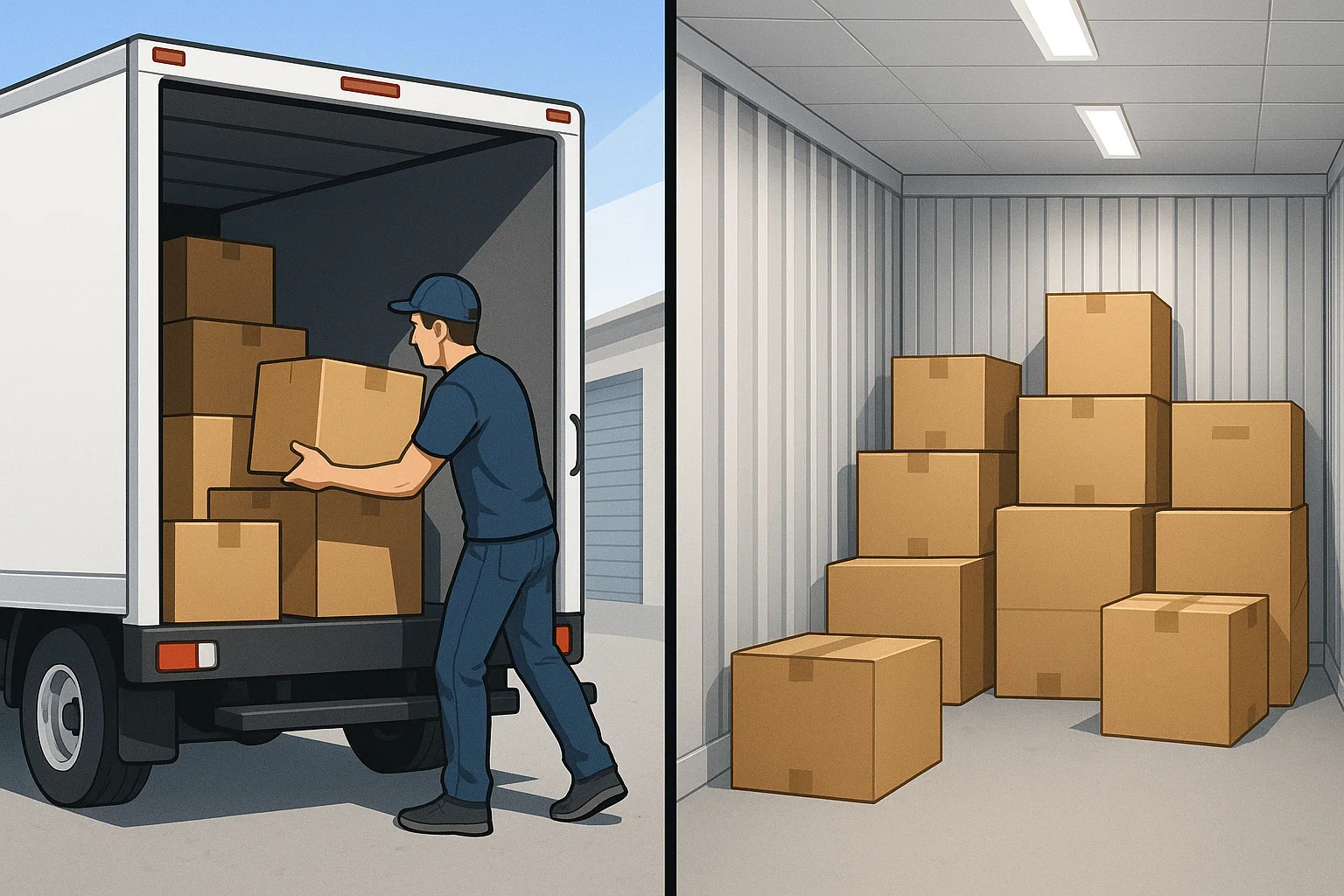
Imagine a company that dominates one business line, a well-known household name in moving trucks and trailers, and quietly builds up a second leg in self-storage. Its first leg is mature, capital intensive and cyclical. Its second is still growing, with higher margins and more predictable returns. Revenue is creeping up, but earnings are being pulled backward by depreciation, fleet procurement cost inflation and weak returns on some recent assets. Now suppose that over the next 12 to 18 months many of those headwinds begin to abate.
That setup describes a compelling but underappreciated opportunity. The stock has underperformed its peers and the market. Its free cash flow is negative in recent quarters, but the pieces are in place for a potential inflection. For patient investors, this might be a setup worth a serious look.
What the Financials Really Say
To evaluate whether this company is due for a turnaround, here is what the latest public filings show. I pulled new results, trend metrics and peer comparisons, and then isolated the levers that could move value materially.
Revenue and Segment Growth
Total “Moving and Storage” revenue grew from about US$5.29B in FY2024 to US$5.49B in FY2025, a 3.7 percent increase. Within that, self-storage revenue rose by 8.0 percent year over year. The company added 6.5 million net rentable square feet (NRSF) in FY2025 (sec.gov).
Meanwhile, equipment rental revenue (truck and trailer rentals) saw smaller growth, roughly 2.8 to 4 percent depending on the metric (tradingview.com).
Margin and Earnings Pressure
Depreciation, particularly from replacement of fleet purchased during high price periods, is a key drag. Elevated depreciation expense and losses on retired equipment sales are reducing reported profits.
Operating margins have slipped. For example, moving and storage operating income dropped from US$896.1 million in FY2024 to US$645.8 million in FY2025. That is a substantial decline that reflects cost inflation, depreciation and capacity underutilization (sec.gov).
Occupancy, Square Footage, and the Self-Storage Lever
At the end of FY2025, the self-storage segment’s unit count occupancy was about 77.0 percent, down from about 79.3 percent the prior year (sec.gov).
But “average monthly square feet occupied” rose. While more units are vacant, the square footage in use is growing and revenue per occupied square foot ticked up 1.5 percent (sec.gov).
Balance Sheet, Cash Flow, and Key Risks
The company has significant debt. In recent reports, net debt is elevated versus earnings, and free cash flow has been negative in several recent quarters (finimize.com).
Fleet renewal, replacement of aging equipment purchased in inflated cost environments, cost of maintenance and cost pressures in insurance and other ancillary services are squeezing margins (investors.uhaul.com).
What Is Working in Favor and Where the Debate Is
From the data, several levers could turn this business from underperformer into value play. But it is not risk free. Below are the upside potential and the biggest open questions.
Upside Drivers (What Could Push Earnings Higher)
- Self-storage maturation. The self-storage units built or acquired recently are coming into service. As occupancy rises, given fixed costs already sunk, marginal margin should improve. The boost to revenue per square foot helps.
- Easing of fleet costs and depreciation drag. If replacement equipment prices moderate, resale values stabilize and depreciation curves flatten, reported profits could benefit meaningfully, not via new tricks but by getting relief on a large non-cash cost.
- Economies of scale and network effects. This company already has thousands of locations and strong brand recognition in moving and rental. It benefits when customers cross use storage and moving, buy supplies, and take other ancillary services. Cost leverage in operations, logistics, maintenance, fuel or energy could pay off.
- Optionality in non-core or under leveraged assets. Insurance, portable moving containers, app and digital channels, and storage onsite that matches moving locations all offer potential to improve margins, raise cash via divestitures or reorganize into higher return units.
Risks and Dragging Factors (What Could Prevent the Turnaround)
High leverage in a rising interest environment is always dangerous. Refinancing risk, interest coverage risk and cash flow pressure if margins do not improve quickly remain real.
Until free cash flow turns sustainably positive, the company is in a bridging mode. Every cent of capital expenditure matters. Investors need good visibility on cash flow recovery.
The self-storage business is somewhat lumpy. If demand weakens because of a housing slowdown, fewer moves or macro slack, occupancy could fall further and hurt margin leverage.
The company is navigating a shifting regulatory environment with emissions rules and potential incentives and has been vocal about how the “race to zero” for trucks has hurt supply and cost. If regulatory or supply chain issues persist, cost savings from fleet renewal may be delayed.
Where Valuation Appears Versus Where It Needs to Be
Here is how the market is pricing in these potentials and what needs to happen for them to justify higher share price.
Current price to sales metrics are modest. One report puts the trailing twelve month price to sales around 1.8 to 1.9 times (stockstory.org).
Price to book seems slightly above book value (or modest premium) but not extreme (finimize.com).
Earnings per share have dropped in recent periods. One recent quarter saw EPS for the non voting shares of about 0.73 dollars, down from about 1.00 dollars year over year for the same period (investors.uhaul.com).
Thus, for the stock to move materially higher, investors are betting on margins recovering, self-storage occupancy improving, free cash flows becoming positive, or some corporate actions like dividends, buybacks and spin offs boosting returns.
Forward Looking Scenarios: What to Watch Over Next 12 to 18 Months
To judge whether this stock will make a U turn, here is what I will be looking for and what investors should watch for along with what upside those signals could deliver.
| Signal | What to Watch | Implication / Upside |
|---|---|---|
| Margin stabilization | Quarterly reports showing depreciation expense and losses on retired equipment begin to fall and operating margin in the moving rental business stops its declines. | If margins recover by even 200 to 300 basis points, that could translate into significant earnings per share uplift given the scale. |
| Sustainably higher storage occupancy and usage per square foot | Self-storage segment occupancy rising above 80 percent in unit count, steady or rising revenue per square foot, growth in portable storage. | Storage segment is higher margin, so even incremental gains here flow more to earnings and could make storage the biggest driver of profit growth. |
| Free cash flow turning positive | Reports with positive or less negative cash flow, capital expenditure stabilizing, fleet replacement costs moderating. | Free cash flow positivity tends to spur valuations and may allow for dividends or buybacks or at least reduce risk premium. |
| Balance sheet improvements | Better debt to EBITDA ratios, interest coverage ratios improving, manageable refinancing. | Lower financial risk and a lower discount rate from the market, making a higher multiple possible. |
| Corporate actions and disclosure | More transparent segment profit reporting, possible spin outs, share buyback or initiating a dividend, clarifying long term targets. | Could unlock latent value and help attract more analyst coverage and institutional interest. |
What Makes This Worth Considering Now
Putting it all together, here are some practical implications for investors thinking about this name, especially if you are holding or considering entry.
This is not a “set it and forget it” trade. Volatility will likely continue. Moves are cyclical. If you buy, you need to accept the possibility of earnings dips, margin pressure and negative cash flows before improvement.
Valuation seems cautiously priced for some of the downside. The market is not giving full credit for potential upside. It seems to be discounting a significant probability of margin erosion, regulatory cost or macro weakness. That gives risk reward skewed toward the upside if the company delivers on improvements.
Time horizon matters. If you believe demand for moving and storage is stable or rising, such as housing turnover, urban to suburban migrations, downsizing and people needing storage, then staying through the next 12 to 24 months could produce outsized returns. But if macro deteriorates, such as housing, interest rates, credit and inflation, downside risk remains.
Diversification of business lines is a strength but also obscures clarity. This business is not just moving trucks and trailers. It has growing self-storage, insurance and portable moving container segments. Investors should insist on seeing segment profitability, not just revenue, to get a clear view of what is working and what is not.
Watch external tailwinds. Things like regulatory relief in emissions policies, stabilization of inflation in equipment and supplies, improving real estate fundamentals in storage markets and interest rate stability could all act as catalysts.
Verdict: Is This One to Buy, Wait, or Avoid
Here is where I come out with the benefit of the data and what seems likely.
If you are a value oriented medium term investor, looking at 12 to 24 months, this company is appearing more attractive now than maybe it has in years. The downside seems moderately protected if the worst case continues and the upside, if key levers move, is nontrivial.
If you want near term cash flow, dividends or safety, this is not your best pick. The free cash flow is negative, dividend yield is minimal, the company is investing heavily and debt burdens are non negligible. The risk profile is higher than many in the storage REIT space or more mature rental peers.
A “watch for entry” strategy could make sense. Monitor for next earnings reports showing margin improvement, stabilization in fleet costs, modest positive free cash flow and better disclosure. If those show up, the risk premium could compress quickly.
Where This Could Be in Two Years
If the company executes well, by late FY2027 or early FY2028 it could look substantially different.
Self-storage may become a larger share of profits, not just revenue. If occupancy and pricing in storage rise, that business could trade similarly to REITs or storage peers with higher EBITDA multiples.
Depreciation and fleet replacement costs hopefully fall from their peaks. Resale values and residual values of older equipment should improve modestly as supply chains settle and demand for internal combustion engine vehicles stabilizes in relevant niches.
Possible strategic moves include spinning off or joint venturing some parts, such as portable containers, resuming buybacks or beginning modest dividend, and possibly clearer metrics for moving versus storage margins for investors.
The market could re rate the stock multiple higher if free cash flow turns positive and risks shrink. Traders potentially lifting the valuation multiple closer to storage peers or high quality industrials.
About Author