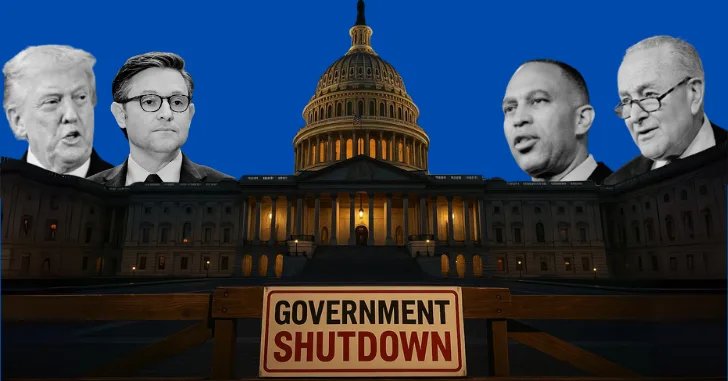
The White House is upping the ante in Washington’s funding standoff. In a memo obtained by Politico, the Office of Management and Budget (OMB) has told federal agencies to prepare for permanent workforce reductions, not just the typical furloughs if a government shutdown begins next week.
The directive, sent by OMB Director Russ Vought, tells agencies to create “reduction-in-force” plans for programs without outside funding or that are “not consistent with the President’s priorities.” According to the memo, any cuts made after the funding deadline would be permanent, marking a dramatic escalation from standard shutdown procedures.
The Stakes Going Into October
Without a bipartisan agreement, the government will shut down at 12:01 a.m. on Wednesday, Oct. 1. Republicans have put forward a seven-week stopgap bill to fund the government through late November and say it’s the only plan on the table. No meetings are scheduled between President Trump and Democratic leaders before the deadline.
Democrats are demanding the restoration of hundreds of billions of dollars in healthcare spending, including enhanced Affordable Care Act subsidies and a reversal of Medicaid cuts enacted under the GOP’s tax-and-spending law. They’ve also called for the release of frozen federal funds, arguing that withholding them is worsening the healthcare crisis.
Political Firestorm Over Mass Firings
Senate Minority Leader Chuck Schumer (D., N.Y.) slammed the OMB plan as an “attempt at intimidation” and raised doubts about whether such firings would stand up in court. House Minority Leader Hakeem Jeffries (D., N.Y.) went further on X, calling Vought a “malignant political hack.”
President Trump, for his part, canceled a planned meeting with Democrats on Tuesday, calling their demands “unserious and ridiculous.” Jeffries and Schumer responded that Trump and the GOP “continue to march this country toward a painful Republican shutdown, while exacerbating the healthcare crisis that they have unleashed.”
What Happens If a Deal Is Struck
The memo also notes that if Congress passes a short-term spending bill by the Sept. 30 deadline, “the additional steps outlined in this email will not be necessary.” For now, agencies are moving ahead with the plans.
The Senate is set to return on Monday. GOP leaders insist their current proposal which keeps funding at existing levels for seven weeks and includes additional security money for lawmakers and federal officials after growing concerns of safety after the killing of conservative activist Charlie Kirk — is the only viable option. The House narrowly passed the bill last week but isn’t scheduled to return until after Oct. 1, making it harder for Democrats to push changes.
Although Republicans control both chambers, they still need Democratic votes in the Senate due to the 60-vote threshold for most legislation. That gives Democrats leverage even as the White House signals it is prepared to wield its Department of Government Efficiency to “shift into overdrive” if a shutdown occurs, as Schumer warned back in March.
Why It Matters for Investors and Taxpayers
A prolonged shutdown with permanent job cuts could ripple far beyond Washington. Federal workers make up a significant slice of consumer spending in key metro areas, and layoffs would depress demand even more than temporary furloughs. Contractors reliant on federal agencies could also see funding dry up.
For investors, the showdown adds a new layer of policy risk on top of the usual budget brinkmanship. Healthcare stocks, defense contractors, and government-dependent industries could all be jolted by whatever deal or lack of deal emerges in the coming days.
About Author