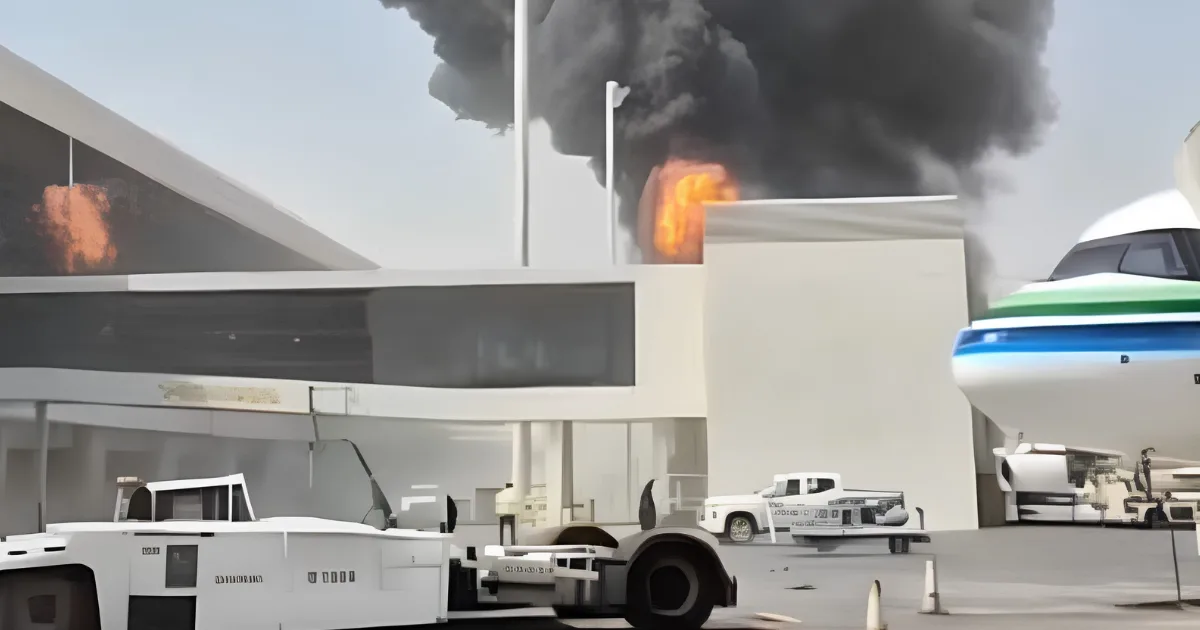
The attack on King Khalid International Airport in Riyadh on Saturday, October 10, prompted Saudi Arabia to threaten retaliation against Iran-backed Houthi militants in Yemen. Saudi officials are also reportedly seeking urgent American military assistance.
Asked whether the United States would join Saudi Arabia in striking the Houthis, Trump left the possibility open.
“We may. We’re going to look at it,” Trump told reporters Saturday. “We just found out about the recent attack. So, we’ll make a decision. We move very quickly.”
A decision to intervene could open another major military front for Washington as the ongoing conflict with Iran continues to threaten oil production, commercial shipping and energy prices around the world.
Saudi Arabia Threatens Retaliation After Deadly Airport Strike
Saturday’s attack was the latest in a series of strikes targeting Saudi Arabia’s main international airport.
According to Saudi aviation authorities, the victims included four Saudi citizens, two Bangladeshis and one American. Citizens of Egypt, Jordan, Syria, Palestine and Sudan were also among those killed.
More than 300 people were injured, some critically, and airport operations were suspended.
Saudi Arabia’s military coalition blamed the Houthis for the attack and described the strike on civilian aviation facilities as a war crime.
The Houthis had previously claimed responsibility for another attack on the airport Thursday that killed three Saudi nationals. As of early Sunday, reporting differed on whether the group had formally claimed Saturday’s strike.
Following the latest attack, the Houthis warned airlines, airport employees and travelers against using Saudi airports and airspace, signaling that additional attacks remain possible.
According to reporting from MS NOW, two Saudi government officials said the kingdom has requested urgent defensive assistance from Washington.
The White House has yet to announce a decision on direct American military participation.
A Second Front Could Put More Pressure on U.S. Forces
The potential expansion of American operations comes at a particularly difficult moment for the U.S. military.
Washington is already heavily committed to the conflict with Iran, which began with U.S. and Israeli airstrikes on February 28. Bringing American forces into another sustained campaign against the Houthis would require additional aircraft, intelligence resources, missile defenses and other military capabilities.
There is also the question of effectiveness.
The United States previously conducted strikes against Houthi targets in Yemen, including during Operation Rough Rider, which concluded in May 2025.
Despite those operations, the militants have demonstrated their ability to launch long-range attacks against Saudi Arabia and threaten shipping lanes surrounding the Arabian Peninsula.
A renewed American campaign could target Houthi missile launchers, weapons storage facilities, command centers and other military infrastructure. However, suppressing a group’s ability to launch missiles and drones can require sustained operations.
For Washington, the military calculation extends beyond Yemen. Additional commitments could complicate efforts to maintain pressure on Iran while preserving forces for potential emergencies elsewhere.
The Bigger Threat: Two Critical Oil Shipping Routes Under Pressure
For investors, the most significant economic danger may lie beyond the airport attack itself.
The Houthis have been threatening commercial shipping through the Bab el-Mandeb Strait, a narrow waterway connecting the Red Sea with the Gulf of Aden.
Meanwhile, Iran has disrupted tanker traffic through the Strait of Hormuz, one of the world’s most important energy transportation corridors.
That creates an unusually dangerous situation for global energy markets.
Two critical shipping routes surrounding the Arabian Peninsula are facing security threats at the same time.
The Strait of Hormuz is a major export route for oil and liquefied natural gas from Persian Gulf producers. Bab el-Mandeb provides access to the Red Sea and, ultimately, the Suez Canal, a key trade route between Asia and Europe.
When ships cannot safely pass through these waterways, energy companies and shipping operators may be forced to reroute cargoes, pay higher insurance premiums or delay deliveries.
Longer voyages can also reduce the effective availability of tankers, pushing transportation costs higher even when the underlying supply of oil has not changed.
That distinction matters because shipping disruptions can sustain elevated energy prices even if production facilities remain operational.
Oil Prices Could Face Renewed Upward Pressure
Energy markets are already absorbing the consequences of months of conflict.
West Texas Intermediate crude was last quoted around $91.66 per barrel on October 10, reflecting how significantly the Middle East war has affected energy prices.
A sustained Houthi campaign against Saudi infrastructure or Red Sea shipping could introduce another source of volatility.
Saudi Arabia remains one of the world’s most important oil exporters. While Saturday’s strike targeted an airport rather than production facilities, it demonstrated the militants’ ability to reach critical infrastructure deep inside the kingdom.
Investors will be watching for any indications that oil facilities, export terminals or additional transportation networks could become targets.
Energy and Shipping Stocks Could React Differently
Higher oil prices can benefit certain energy producers, including companies such as Exxon Mobil (NYSE: XOM) and Chevron (NYSE: CVX), depending on production costs and exposure to disrupted operations.
Energy-focused exchange-traded funds, including the Energy Select Sector SPDR Fund (NYSEARCA: XLE), may also attract attention if crude prices rise.
Shipping companies face a more complicated environment.
Higher tanker freight rates can benefit some vessel operators when they have ships available in the right locations. However, increased insurance costs, security threats and disrupted trade routes can offset those gains.
Airlines, transportation businesses and other fuel-intensive industries face a different problem. Sustained increases in energy prices can squeeze profit margins and ultimately raise costs for consumers.
Why an American Intervention Might Not Bring Oil Prices Down
There is an important risk investors should consider before assuming that additional American military involvement would stabilize energy markets.
A successful military campaign could eventually reduce attacks and improve shipping security. In the near term, however, additional strikes could trigger further retaliation.
The Houthis have already demonstrated a willingness to attack Saudi civilian infrastructure. A direct American role could expand the range of potential targets and increase uncertainty surrounding regional shipping.
Even relatively limited military operations could force commercial shipping companies to reassess routes, insurance coverage and security arrangements.
That means oil prices could remain elevated despite increased efforts to protect supply routes.
The duration and geographic reach of the conflict may ultimately matter more to energy markets than the immediate military outcome of any single strike.
Three Developments Investors Should Watch
1. Trump’s Decision on Military Action
A formal announcement of direct U.S. participation would mark a significant escalation in the Yemen conflict. Investors should pay attention to whether Washington authorizes a limited operation or prepares for a broader campaign.
2. Houthi Attacks on Energy Infrastructure and Shipping
Additional strikes on Saudi export facilities, oil infrastructure or commercial vessels could increase the risk premium built into crude prices. Disruptions around Bab el-Mandeb and Hormuz deserve particular attention.
3. Oil Prices and Tanker Freight Rates
A sustained rise in crude prices, freight rates and maritime insurance costs could indicate that the conflict is creating lasting transportation problems. Any normalization in shipping traffic would be an encouraging signal for energy markets.
The Stakes Are Getting Higher
Trump has yet to commit American forces to Saudi Arabia’s campaign against the Houthis, but the administration is now considering an intervention that could further expand an already costly regional conflict.
For investors, the central concern is the growing threat to energy supplies and transportation networks.
With Iran threatening shipping in the Strait of Hormuz and the Houthis pressuring Red Sea routes, the world’s energy markets are facing two major chokepoints under pressure simultaneously.
About Author