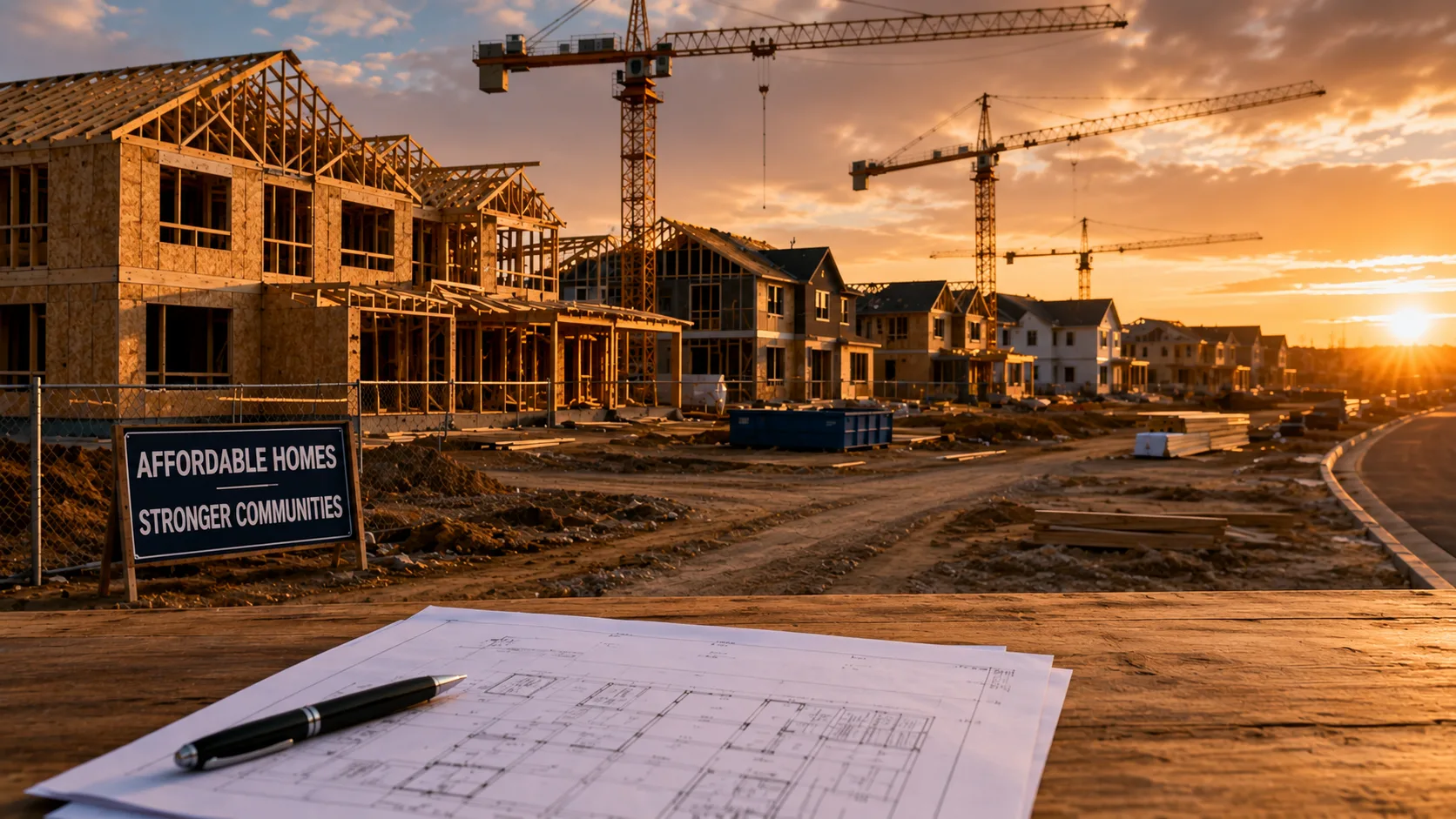
A bipartisan housing package that appeared destined to become law suddenly found itself caught in Washington’s latest political standoff.
President Donald Trump abruptly canceled plans Wednesday to sign a housing affordability bill that had passed both chambers of Congress by overwhelming margins, saying he would not move forward until lawmakers advance separate voter-eligibility legislation that remains stalled in the Senate.
The move stunned lawmakers from both parties and raised fresh questions about the future of one of the most significant housing reform efforts in years.
For Americans struggling with high home prices, elevated mortgage rates, and a shortage of available housing, the surprise delay comes at a particularly sensitive moment.
Just hours before Trump canceled the signing ceremony, White House officials had been praising the legislation as a cornerstone of the administration’s affordability agenda.
Instead, the bill has now become leverage in a broader political battle that could reshape its path forward.
A Celebration That Never Happened
The signing ceremony was scheduled for noon Wednesday at the Capitol.
Lawmakers who helped craft the legislation were reportedly preparing final remarks. White House officials had spent the previous day highlighting the bill’s potential impact on housing affordability.
Then came Trump’s announcement.
In a series of social-media posts Wednesday morning, the president declared the housing legislation was of “minor importance” compared with his efforts to pass the SAVE America Act, a voting-reform measure that would impose nationwide voter-identification requirements and require proof of citizenship for voter registration.
Trump said he considers the voting legislation a national emergency and reiterated his pledge not to sign legislation until Congress takes action on the issue.
The announcement blindsided lawmakers on Capitol Hill.
Even Senate Majority Leader John Thune appeared surprised when questioned by reporters, saying he had just learned of Trump’s decision.
Why Both Parties Were Backing This Bill
The housing package, known as the 21st Century ROAD to Housing Act, is unusually bipartisan by modern Washington standards.
The Senate approved the measure by an 85-5 vote. The House followed with a decisive 358-32 vote.
Such margins are increasingly rare in today’s political environment.
The legislation combines more than 50 separate housing-related provisions designed to make it easier, faster, and less expensive to build homes across the country.
Key measures include:
- Faster federal environmental reviews for qualifying housing developments
- Expanded opportunities for manufactured housing
- Incentives encouraging local governments to increase housing supply
- Reduced regulatory barriers for builders
- Additional tools aimed at accelerating residential construction
Supporters argue that increasing supply remains the most effective long-term solution to America’s affordability crisis.
The Real Problem Washington Is Trying to Solve
For years, economists have pointed to a simple reality: America has not built enough homes.
Following the 2008 housing crash, construction activity remained below historical norms for more than a decade. Population growth continued while housing inventory struggled to keep pace.
The result has been a persistent supply shortage that has helped push home prices sharply higher.
At the same time, mortgage rates remain well above the ultra-low levels seen during the pandemic.
The combination has left many first-time buyers priced out of the market and existing homeowners reluctant to sell because doing so would mean giving up low-rate mortgages.
Housing affordability has become one of the most significant economic concerns facing middle-class families.
That reality helped create the unusual bipartisan coalition supporting the legislation.
When Politics Collides With Policy
The housing bill’s sudden delay has little to do with housing itself.
Instead, it reflects a growing battle over election laws.
Trump’s preferred legislation, the SAVE America Act, would require proof of citizenship for voter registration and establish nationwide voter-ID standards.
The president has also advocated for additional election reforms, including restrictions on certain forms of mail-in voting.
The challenge is that Senate leaders have acknowledged the measure currently lacks enough support to pass.
That creates an unusual situation.
A housing bill that already secured overwhelming bipartisan support now finds itself tied to legislation facing a far more difficult path through Congress.
For supporters of the housing package, the concern is that a widely supported affordability measure could become trapped in a broader political struggle.
The Stakes Extend Beyond Homebuyers
Housing affordability is not simply a consumer issue.
It has become an increasingly important economic issue with implications for inflation, labor mobility, economic growth, and Federal Reserve policy.
Housing costs remain one of the largest contributors to overall inflation measures.
Many economists believe expanding housing supply is one of the few solutions capable of easing shelter inflation without creating new economic distortions.
More housing construction could also benefit a wide range of industries, including:
- Homebuilders
- Construction suppliers
- Mortgage lenders
- Real estate services firms
- Building materials companies
The legislation’s supporters argue that increasing supply would produce benefits extending well beyond prospective homebuyers.
What Happens Next Could Surprise Everyone
The political drama may not be over.
Under the Constitution, legislation passed by Congress can become law without a presidential signature if the president neither signs nor vetoes the bill while Congress remains in session for the required period.
Whether that ultimately occurs remains unclear.
The White House has not indicated whether it plans to formally veto the legislation or simply delay action.
Meanwhile, lawmakers continue to assess how Trump’s decision may affect the bill’s future.
For investors, the situation highlights how quickly policy expectations can change even after legislation appears headed toward enactment.
The housing bill had already cleared Congress with overwhelming support.
Now its fate depends on a separate political battle unfolding hundreds of miles away from the housing markets it was designed to influence.
The Bigger Picture for Investors
The broader investment story remains the same: housing affordability continues to be one of the most important economic challenges facing the United States.
Whether through this legislation or future proposals, pressure is likely to remain on policymakers to address housing supply shortages and affordability concerns.
Investors should continue watching developments involving homebuilders, housing-related industries, mortgage markets, and federal housing policy.
The ultimate outcome of this latest standoff may determine whether one of Washington’s most ambitious housing reform packages becomes law—or becomes another example of how political priorities can abruptly alter the path of economic policy.
About Author