
After devastating Republican election losses, President Donald Trump acknowledged his immigration crackdown may have gone too far, opened the door to a deal with Democrats and raised new questions about the future of his administration.
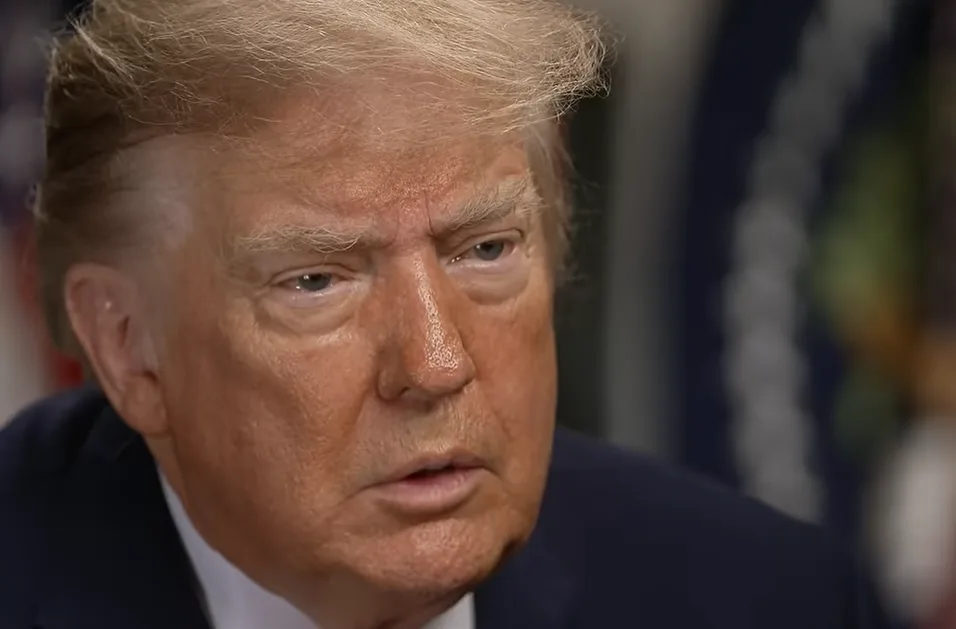
President Donald Trump delivered one of the most revealing interviews of his second term Sunday night, acknowledging political mistakes while defending controversial decisions involving Iran, artificial intelligence and his family’s business interests.
Speaking with CBS News correspondent Ross Douthat on 60 Minutes, Trump addressed the Republican Party’s sweeping midterm defeat, his potential successor in 2028 and his refusal to forgive political opponents.
The interview offered an unusually candid look at a president confronting a dramatically different political landscape. With Democrats having captured both chambers of Congress, Trump faces two final years in office with substantially less legislative freedom and the prospect of aggressive congressional investigations.
Several of his comments also carried potential consequences for businesses, financial markets and investors.
Trump Acknowledges His Immigration Crackdown Went Too Far
Perhaps the biggest surprise came when Trump conceded that his administration’s aggressive deportation policies may have cost Republicans votes in last week’s midterm elections.
While defending his record on border security, the president acknowledged that immigration enforcement had sometimes become excessively harsh, particularly when longtime residents working in American businesses were deported.
“I think it might be too tough, yeah,” Trump said.
The admission represents a significant shift in tone from a president who has made mass deportations a defining priority of his second administration.
Trump also expressed willingness to negotiate with Democrats over immigration, suggesting that a bipartisan agreement could provide relief for certain undocumented immigrants who have lived and worked in the United States for years.
He described reaching an agreement as “actually doable.”
The economic implications could be significant.
Industries including agriculture, construction, hospitality and food services rely heavily on immigrant labor. Changes in enforcement priorities could affect labor availability, operating costs and employers’ ability to fill positions.
For investors, an immigration compromise could ease some labor-market pressures in affected industries. Any agreement would depend on the details of the legislation and whether the White House and congressional Democrats can find common ground.
There is also an important complication.
Shortly after recording the interview Friday, Trump announced that Stephen Miller, a principal architect of his administration’s hard-line immigration policies, would replace Susie Wiles as White House chief of staff.
Miller’s elevation raises immediate questions about how far the president is prepared to go in moderating his immigration agenda.
Trump’s softer rhetoric and his decision to promote Miller send potentially conflicting signals about the administration’s priorities.
Trump Refuses to Commit to Supporting JD Vance in 2028
The president also introduced uncertainty into the Republican Party’s next presidential election.
Vice President JD Vance has long been viewed as a leading potential successor to Trump. However, the president declined to guarantee that he would endorse anyone in the 2028 Republican primary.
Asked whether he expected to support a candidate, Trump responded, “Probably. Not necessarily.”
He pointed to several Republicans he considers strong potential contenders, including Vance and Secretary of State Marco Rubio.
The comments suggest that Trump intends to retain considerable influence over the party’s future without committing himself to a particular successor.
They also come amid reported tensions following the Republican election losses.
Vance publicly attributed part of the party’s defeat to the war in Iran, which has become politically costly as Americans contend with higher energy prices and the economic consequences of the conflict.
Trump acknowledged that the war hurt Republicans politically, but he defended his decision to launch it as necessary to prevent Iran from acquiring nuclear weapons.
The president suggested that Vance should have addressed whether the military intervention was justified despite its political consequences.
For investors, the succession question matters because the Republican Party’s direction after Trump remains unsettled.
A Vance presidency, a Rubio presidency or another Republican administration could produce different approaches to trade, foreign policy, technology regulation and fiscal priorities.
The next two years will offer important clues about whether Trump’s economic policies become the enduring foundation of Republican policymaking or begin to evolve as a new generation of candidates competes for leadership.
Trump Says He Will Never Forgive Some Political Enemies
One of the interview’s most striking moments came during an unusually personal exchange about Trump’s mortality and religious beliefs.
Douthat asked the 80-year-old president about his hopes for the afterlife and whether he would be willing to forgive political adversaries, including former FBI Director James Comey and former House Speaker Nancy Pelosi.
Trump acknowledged that he hoped to go to heaven, but he rejected the suggestion that he could forgive certain opponents.
“I probably cannot do that, no, because I do hate some of my enemies and I always will,” he said.
The statement underscored the personal nature of Trump’s political rivalries even as he prepares to govern alongside newly empowered Democrats.
Those relationships could become particularly consequential as congressional Democrats gain control of committees with broad investigative authority.
Democratic leaders have already signaled interest in examining the administration’s activities and potential conflicts of interest.
Trump’s refusal to forgive political opponents does not necessarily prevent bipartisan negotiations. His willingness to discuss an immigration agreement suggests some room for cooperation on specific issues.
However, the combination of personal hostility and divided government could make cooperation on budgets, taxation and other major legislation especially difficult.
For financial markets, the concern is that persistent political confrontation could increase the risk of legislative gridlock, funding disputes and uncertainty over federal policy.
Trump Defends His Family’s Growing Wealth
The president faced pointed questions about his personal finances and the business activities of his family during his second term.
Douthat challenged Trump over reports that his net worth had increased substantially since returning to the White House.
The conversation focused partly on World Liberty Financial, a cryptocurrency venture associated with the Trump family that has attracted foreign investment, including participation from interests connected to Abu Dhabi.
Douthat questioned whether such arrangements presented potential conflicts of interest, particularly given the president’s authority over financial regulation and foreign policy.
Trump rejected suggestions of wrongdoing and said he spends little time monitoring his personal finances.
“I devote almost no time to my net worth. I don’t care,” he said.
The president emphasized that his sons manage the family’s business interests and argued that they should be permitted to continue conducting business while he serves in office.
He did not announce any new steps to separate himself from those interests.
The exchange highlights a larger issue for the cryptocurrency industry.
Digital assets have become increasingly intertwined with Washington policymaking, including debates over stablecoins, financial oversight and the appropriate role of federal regulators.
Questions surrounding political figures’ financial interests could intensify as Democrats prepare to assume control of congressional investigative committees.
For cryptocurrency investors, greater scrutiny could mean additional hearings, disclosure demands and pressure for tighter oversight.
That scrutiny could create uncertainty for politically connected ventures while also influencing broader debates about regulation across the digital-asset industry.
Trump Signals Support for AI Growth Despite Safety Concerns
Artificial intelligence emerged as another major topic during the interview, with Trump emphasizing his determination to keep American companies ahead of China.
The president acknowledged the potential risks of increasingly powerful AI systems but warned against imposing restrictions that could weaken American technological leadership.
“I don’t mind guardrails. But I don’t wanna put us in a deep second position,” Trump said.
He argued that China faces fewer regulatory constraints, creating pressure for American companies to move quickly in developing increasingly sophisticated AI technology.
Trump also described an incident in which his administration allegedly threatened an unidentified AI industry figure with imprisonment over unspecified misconduct.
He did not identify the individual or company, and the circumstances of the alleged incident could not be independently established from his remarks.
The broader message was that the administration remains committed to AI development while reserving the right to intervene when it believes companies cross legal or safety boundaries.
For investors, that position could be consequential.
The AI investment boom has driven enormous capital spending on data centers, semiconductor manufacturing, electrical infrastructure and advanced computing systems.
Companies developing AI chips and cloud infrastructure depend partly on a regulatory environment that allows continued expansion.
A relatively permissive federal approach could benefit companies across the AI supply chain, including semiconductor manufacturers, cloud computing providers, power producers and data center operators.
At the same time, uncertainty surrounding future safety standards and government enforcement remains a meaningful risk.
Trump’s comments suggest that technological competition with China will continue to weigh heavily in regulatory decisions.
The Iran War Remains a Major Economic Risk
Beyond the five headline-grabbing revelations, Trump’s discussion of Iran may have been the interview’s most financially consequential exchange.
The president acknowledged that the war had contributed to Republican election losses, particularly as higher gasoline prices weighed on households.
Nevertheless, he strongly defended the military campaign, maintaining that preventing Iran from acquiring nuclear weapons justified the economic and political consequences.
Trump also indicated that he was not currently seeking a further military escalation.
That distinction is important for energy investors and the broader economy.
A prolonged or intensifying conflict could keep pressure on oil prices, raise transportation costs and complicate the Federal Reserve’s efforts to manage inflation.
Higher energy prices can also reduce consumer purchasing power, particularly among retirees and households living on fixed incomes.
Conversely, credible diplomatic progress that reduces the risk of supply disruptions could ease some inflationary pressure.
The president’s remarks offer a possible opening for diplomacy, although they provide little certainty about the eventual outcome.
Secretary of State Marco Rubio cautioned Sunday that negotiations were still far from a breakthrough, underscoring the gap between diplomatic optimism and an actual agreement.
What the Interview Reveals About Trump’s Final Two Years
The most important development may be the contradiction between Trump’s willingness to acknowledge political mistakes and his determination to defend the central policies of his presidency.
On immigration, he expressed concern about excessive enforcement while elevating one of the policy’s strongest advocates.
On Iran, he recognized the political and economic damage associated with the war while maintaining that launching it was the correct decision.
On artificial intelligence, he welcomed some safeguards while insisting that American companies must retain their competitive advantage over China.
And on relations with Democrats, he entertained the possibility of compromise even as he declared that he would never forgive certain political enemies.
These competing signals suggest a president weighing the electoral consequences of his agenda while remaining deeply committed to much of it.
For investors, the practical question is which messages translate into actual government decisions.
A Presidency Entering a New Phase
Trump’s 60 Minutes interview offered a rare acknowledgment that some of his administration’s decisions may have carried meaningful political costs.
However, the president showed little inclination to abandon his broader priorities, particularly on Iran, technological competition with China and his confrontational approach to political opponents.
With Democrats preparing to control Congress and the Republican Party beginning to contemplate life after Trump, the administration faces a more challenging political environment.
For investors, the next two years will be shaped by how those pressures affect economic policy, corporate regulation and geopolitical stability.
The most important takeaway is that Trump’s political constraints have changed considerably. Whether his policies change with them will have consequences well beyond Washington.
About Author